This with 11 1 dots tutorial walks you through every step from the dot grid to the final pattern.
For another beginner-friendly variation, try Pongal Pot Rangoli Designs 9 To 9 Dots Sankranti.
Exploring Beautiful Lotus Rangoli Designs
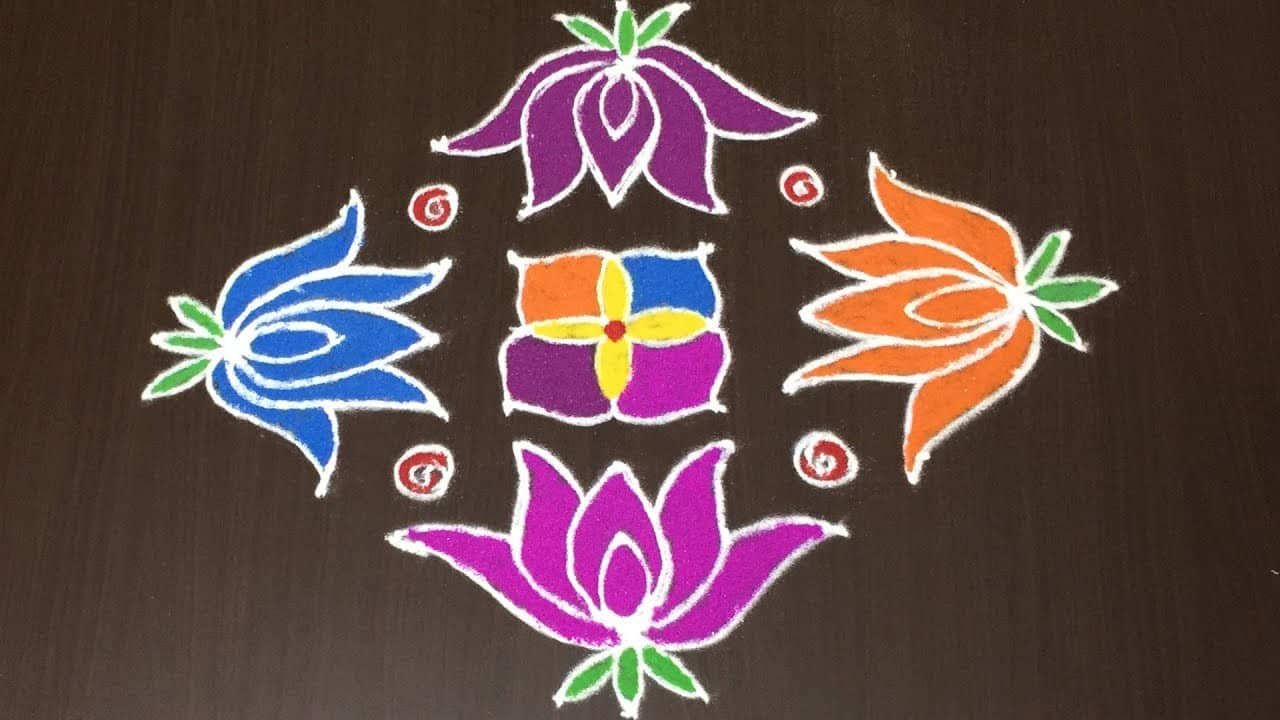
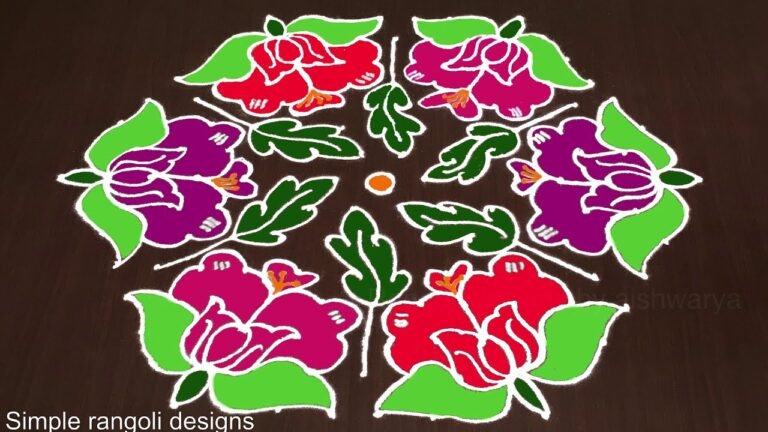
Lotus rangoli designs are a stunning way to enhance the beauty of your home during festivals and special occasions. Using 11-1 dots as a base, you can create intricate patterns that symbolize purity and prosperity. Traditional materials such as colored powders, rice flour, or flower petals can be used to fill in the designs, adding vibrancy. Whether for Diwali or a wedding, these lotus rangoli designs will surely impress your guests and bring a festive spirit to your celebrations.
Learn more about the tradition of Rangoli on Wikipedia.
Lotus Rangoli Designs With is the kind of design that looks intricate but is genuinely beginner-friendly once you follow the dot grid.
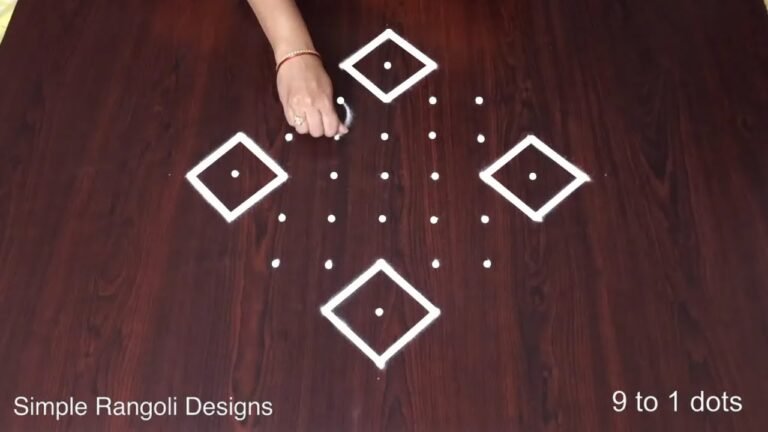
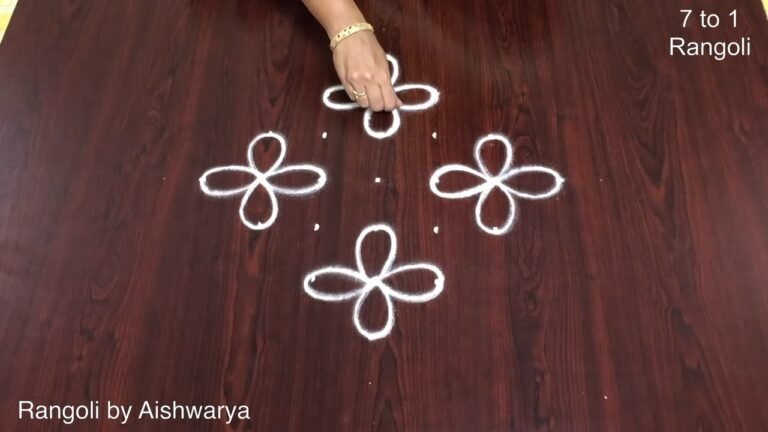
Want to draw a beautiful four-lotus kolam using an 11-1 dot grid? This easy step-by-step tutorial makes the design structured, symmetrical, and beginner-friendly. In this video, we demonstrate how to create a four lotus kolam with 11-1 dots, starting from proper dot placement to forming balanced petals on all sides. The 11 to 1 decreasing grid creates an elongated base that allows the lotus motifs to flow evenly across the design.
🌸 What You’ll Learn Step by Step: Correct placement of the 11-1 decreasing dot line Dividing the layout into four balanced sections
Forming smooth and symmetrical lotus petals Simple finishing techniques for a neat final look The four-lotus layout symbolizes harmony and balance, making it a perfect choice for entrances and pooja spaces. The 11-1 grid provides a clean structure that helps maintain alignment while shaping multiple floral patterns.
Even though the layout is long, the structured dot placement guides spacing naturally. The tutorial format allows you to follow each stage carefully and recreate the design with confidence. Watch till the end to see the complete transformation — the final symmetrical reveal highlights how the 11-1 dot grid turns into an elegant four-lotus kolam. If you enjoy elongated floral grids, explore other formats like 13-1 and 15-1 to expand your creative rangoli collection.
Save this design and recreate it to enhance your entrance beautifully.
Tip: Use chalk to lightly mark your dot grid first — it wipes away cleanly once your rangoli is finished.
About this design: Lotus Rangoli Designs is a beginner-friendly pattern that comes together in just a few minutes. Once you have practised the lotus rangoli designs dot grid, you can scale it up for festival mornings or scale it down for a daily doorstep. Many learners on our channel make this lotus rangoli designs their go-to design once they get the rhythm of the curves.
With 11 1 Dots — Step by Step Guide
Here is how to draw it, line by line. Take your time on the corners and the symmetry will take care of itself.
- Clear a flat surface and set down your dot grid using rice flour or chalk.
- Confirm the dot spacing is even — uneven dots are the biggest cause of wobbly curves.
- Begin tracing from the centre outward, following the curves shown in the video above.
- Fill the petals and sections with your chosen colours, working one area at a time.
- Finish the edges with a fine line for a sharp, photograph-ready result.
What You Will Learn
- 11-1 Dots Lotus Kolam
- Four Lotus Rangoli 11-1
- Easy Floral Kolam Tutorial
- 11-1 Dots Kolam Design
- Lotus Muggulu With Dots 11-1
- 11-1 Pulli Kolam
Frequently Asked Questions
How do I draw this rangoli?
Start by marking an even dot grid on a flat, clean surface. Once the grid is in place, connect the dots following the curves shown in the video. Even spacing between dots is the single biggest factor for a clean finish.
Is this suitable for beginners?
Yes, and it is one we recommend to first-timers. The small grid keeps the design manageable while still teaching the core technique.
What materials do I need?
Rice flour, coloured rangoli powders, and a clean stretch of floor or paper. Some draw with chalk first to set the grid before powdering over it.
How long does it take?
About 3 min 49 sec on screen, perhaps 15 minutes for a relaxed first attempt. By the second try most people are noticeably quicker.
A reminder that beautiful art does not need expensive materials — just a steady hand, a clean surface, and a few pinches of rice flour.

Leave a Reply