If you enjoy dot-grid muggulu, 13 To 1 Dots is a satisfying pattern that comes together in just a few minutes.
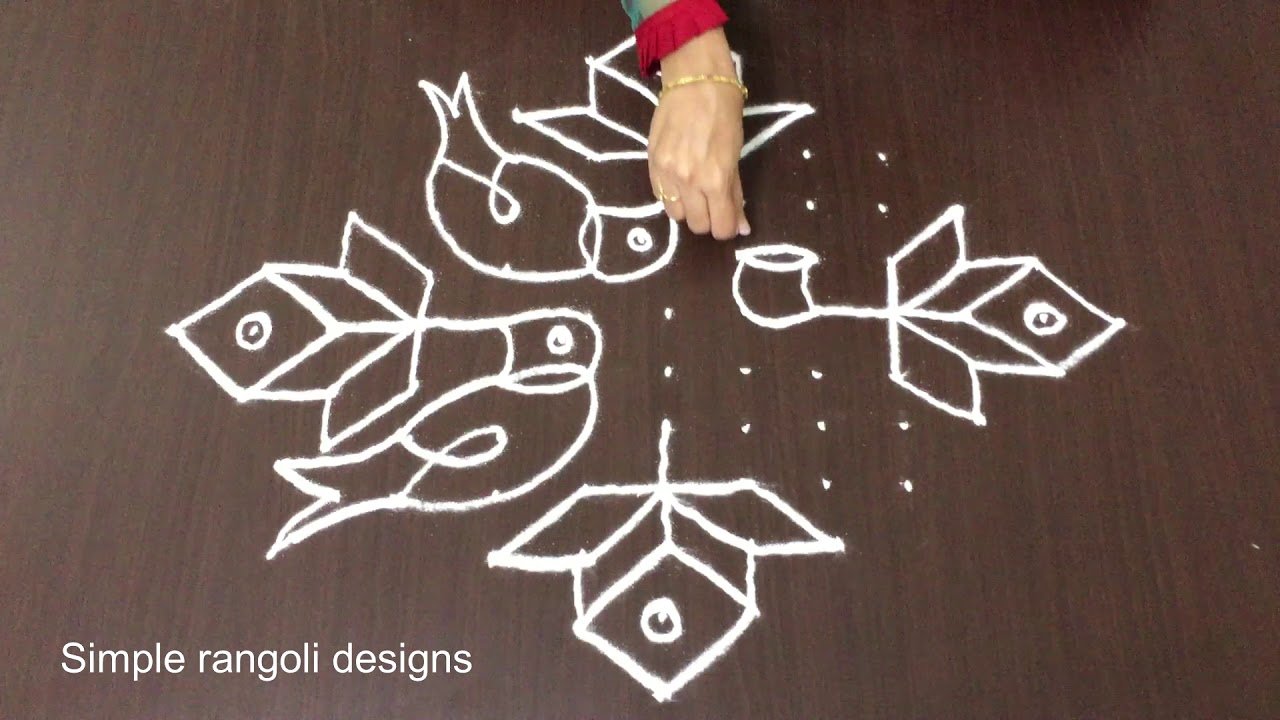
Looking for a unique parrot kolam using a 13-1 dot grid? This easy muggulu design is creative, symmetrical, and perfect for a standout entrance. In this video, we create a 13-1 dots parrot kolam, structured on a straight decreasing grid that forms a graceful elongated layout. The 13 to 1 format is ideal for shaping smooth parrot outlines while maintaining clean alignment and balance.
🦜 What You’ll Learn Step by Step: Proper placement of the 13-1 decreasing dot line Forming symmetrical parrot shapes smoothly
Maintaining balance along the central axis Clean finishing techniques for a polished look Parrot-themed kolam designs symbolize joy and liveliness, making them a beautiful choice for festive entrances and special occasions. The elongated 13-1 grid provides a structured base that helps maintain proportion and spacing throughout the design.
Even though the layout appears detailed, the dot placement naturally guides each curve. The step-by-step method ensures a neat and satisfying final result. Watch till the end to see the complete transformation — the final symmetrical reveal highlights how the 13-1 dot structure turns into a beautiful and unique parrot kolam. If you enjoy themed elongated grids, explore other formats like 11-1 and 15-1 to expand your creative rangoli collection.
Save this design and recreate it to enhance your entrance beautifully.
Tip: Use chalk to lightly mark your dot grid first — it wipes away cleanly once your rangoli is finished.
The 13 to 1 dots muggulu design featuring a parrot is a delightful representation of joy and liveliness, perfect for festive occasions. This unique kolam employs a decreasing dot grid that facilitates the creation of smooth, symmetrical shapes. The elongated structure not only enhances the visual appeal but also ensures that each curve and outline is balanced. For those who enjoy exploring various styles, you might also like the Unique Pattern Rangoli Design 12-2 Dots as an alternative.
Creating this parrot kolam involves precise dot placement, guiding you through each curve with ease. The symmetrical design is especially fulfilling, as it maintains a polished look when completed. With a little practice, this beginner-friendly approach to a 13 to 1 dots layout can result in a charming display at your entrance. For additional inspiration, consider the How to Draw 12×2 Deepam Rangoli Designs that also utilizes structured dot patterns. Learn more about this traditional art form by visiting this link.
13 To 1 Dots — Step by Step Guide
Read through the steps before you begin so the sequence feels familiar when you start drawing.
- Clear a flat surface and set down your dot grid using rice flour or chalk.
- Confirm the dot spacing is even — uneven dots are the biggest cause of wobbly curves.
- Begin tracing from the centre outward, following the curves shown in the video above.
- Fill the petals and sections with your chosen colours, working one area at a time.
- Finish the edges with a fine line for a sharp, photograph-ready result.
What You Will Learn
- 13-1 Dots Parrot Kolam
- Easy Unique Muggulu 13-1
- Parrot Rangoli With Dots 13-1
- 13-1 Dots Kolam Design
- Elongated Themed Rangoli 13-1
- 13-1 Pulli Kolam
Frequently Asked Questions
How do I draw this rangoli?
Set down the dot grid in pencil or chalk, then follow the loops one petal at a time. If a curve goes off, wipe it and retry — kolam is forgiving.
Is this suitable for beginners?
Yes — this design is shaped specifically with newcomers in mind. The dot grid is small enough to manage, and the curves are gentle. Most learners get it right by the second try.
What materials do I need?
Rice flour, coloured rangoli powders, and a clean stretch of floor or paper. Some draw with chalk first to set the grid before powdering over it.
How long does it take?
The video clocks in at 3 min 50 sec. Allow about quarter of an hour to draw the design at a comfortable pace.
A reminder that beautiful art does not need expensive materials — just a steady hand, a clean surface, and a few pinches of rice flour.
Leave a Reply