
Definition
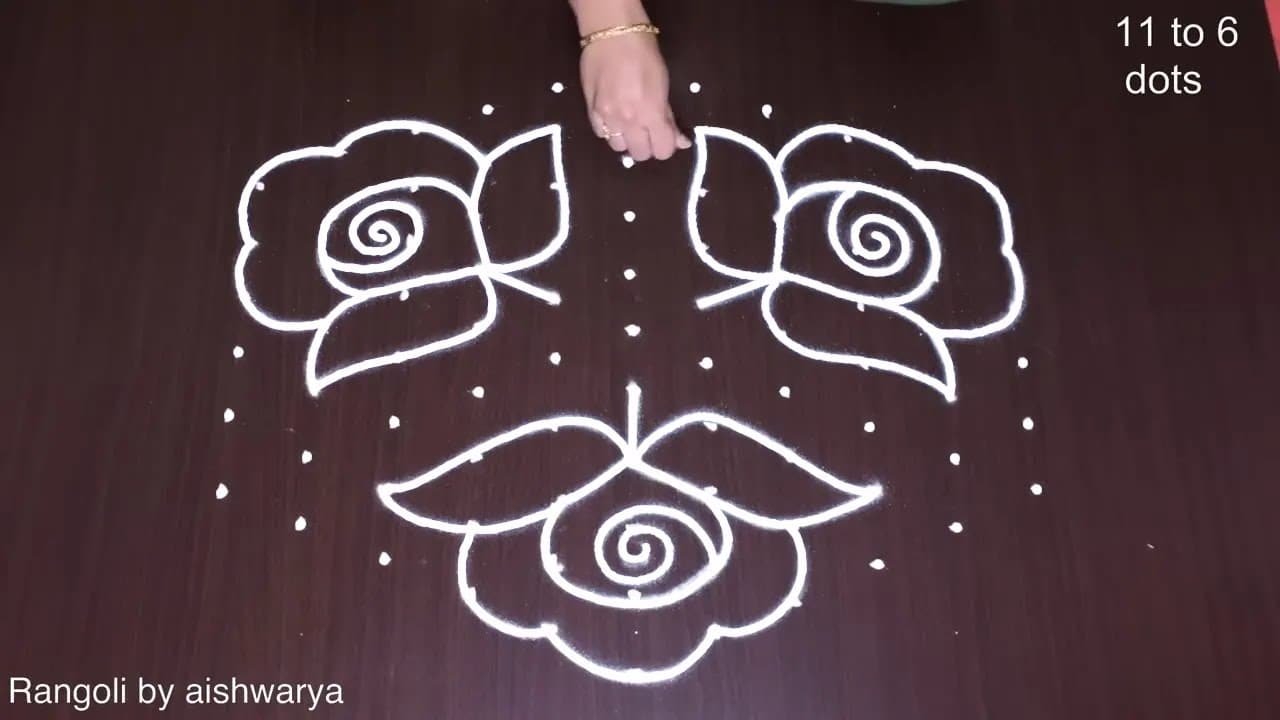
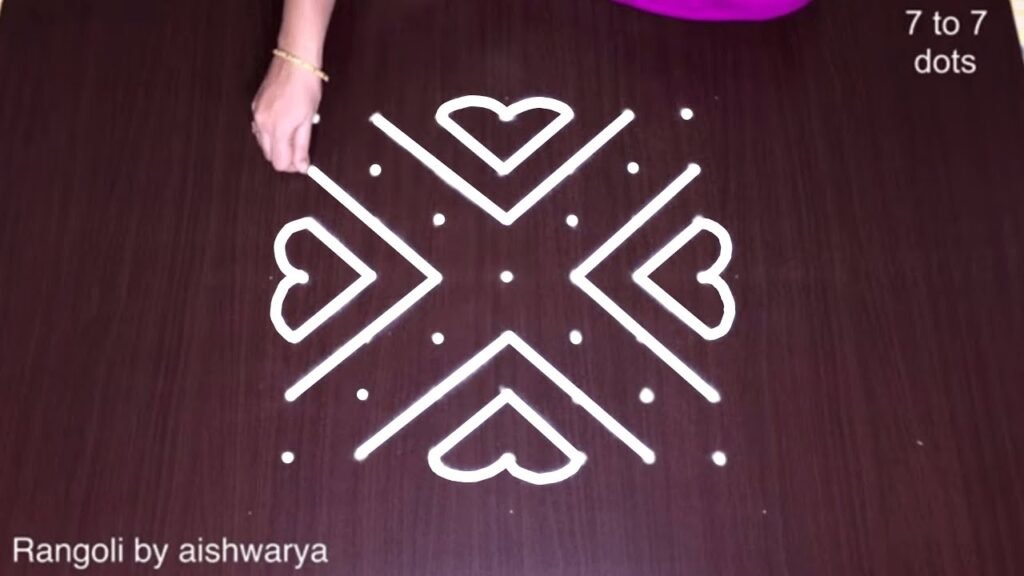
Muggulu (singular muggu) are the Telugu threshold drawings of Andhra Pradesh and Telangana — the Telugu-speaking counterpart to the Tamil kolam within the wider rangoli family. The dotted variety, chukkala muggulu, is built on a grid of dots (chukkalu) in the same structural manner as the pulli kolam.
History
Like the kolam, the muggu is carried by daily household practice and taught by demonstration across generations. Jyotsna Kilambi’s study of threshold drawings in Hyderabad remains the standard ethnographic account, documenting the repertoire, its transmission among women, and the practice’s place in the rhythm of the household day.
Description
Daily muggulu are drawn each morning at the cleaned threshold, traditionally in rice flour or the white stone powder sold for the purpose. The dotted grid is laid first and the design either joins the dots or winds around them. In the winter month of Dhanurmasam, culminating at the festival of Sankranti, muggulu reach their annual peak: large, colour-filled compositions that can occupy the whole street frontage, often ornamented with gobbemmalu — small balls of cow dung set with flowers — placed at the design’s centre.
Cultural Context
Practitioners describe the morning muggu, like the kolam, as auspicious and welcoming — a threshold made ready for the day and for visitors human and divine. The Sankranti season carries the strongest associations: the month-long escalation of designs is commonly understood as an invitation to prosperity, and competitive elaboration between households is part of the festival’s texture. As throughout this encyclopedia, these meanings are attributed to the communities that hold them.
Regional Variations
Within Telugu practice, chukkala (dotted) muggulu sit alongside freehand designs and the sweeping curved rangavalli style; vocabulary and emphasis vary between Andhra and Telangana households. Structurally, the dotted muggu and the Tamil pulli kolam are close cousins — the same grid logic under different names.
Related Topics
See Rangoli for the umbrella practice and Kolam for the Tamil tradition; the shared dot-grid method is described in Pulli Kolam.
Gallery
References
- Jyotsna Kilambi, “Toward an Understanding of the Muggu: Threshold Drawings in Hyderabad”, RES: Anthropology and Aesthetics 10, 1985.
- Vijaya Nagarajan, Feeding a Thousand Souls, Oxford University Press, 2018.
Further Reading
- Marcia Ascher, Mathematics Elsewhere, Princeton University Press, 2002 — for the shared mathematics of dot-grid threshold designs.