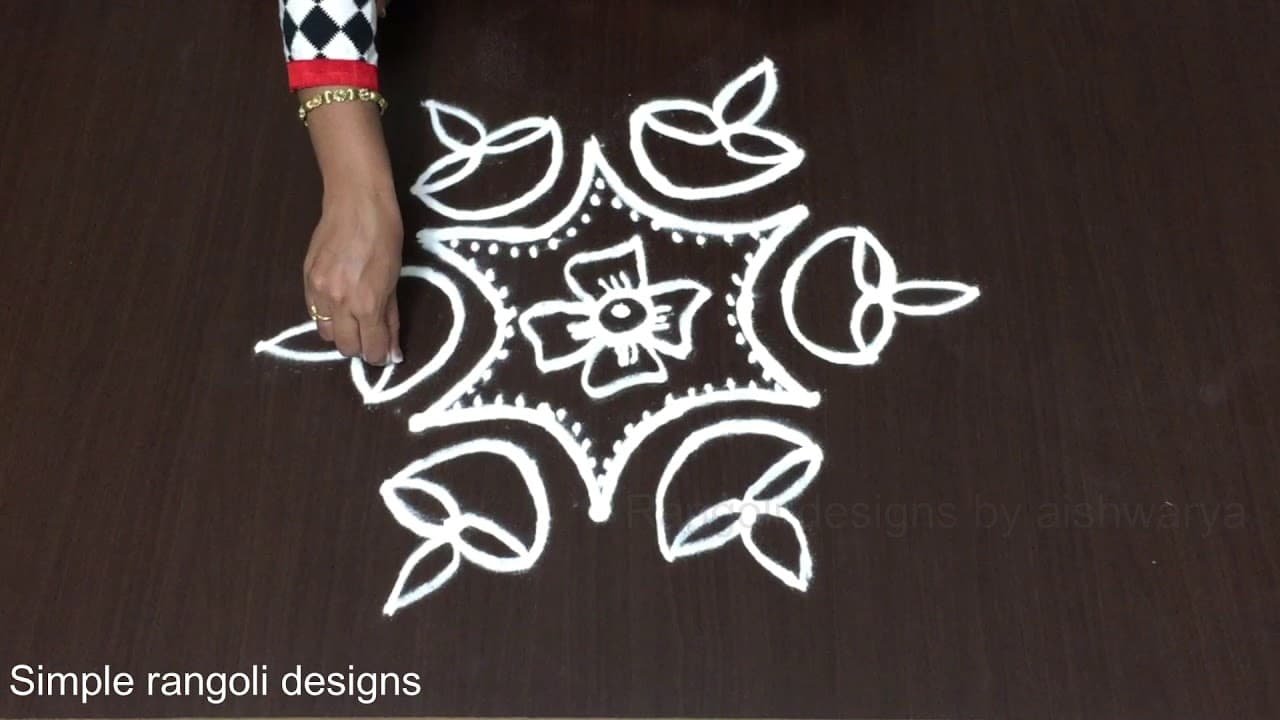
This kolam designs with diyas tutorial walks you through every step from the dot grid to the final pattern.
For another beginner-friendly variation, try Pandaga Muggulu Beautiful Deepam.
Learn more about the tradition of Rangoli on Wikipedia.
Looking to learn Deepavali Kolam Designs With? This step-by-step guide walks you through every line, dot, and curve.
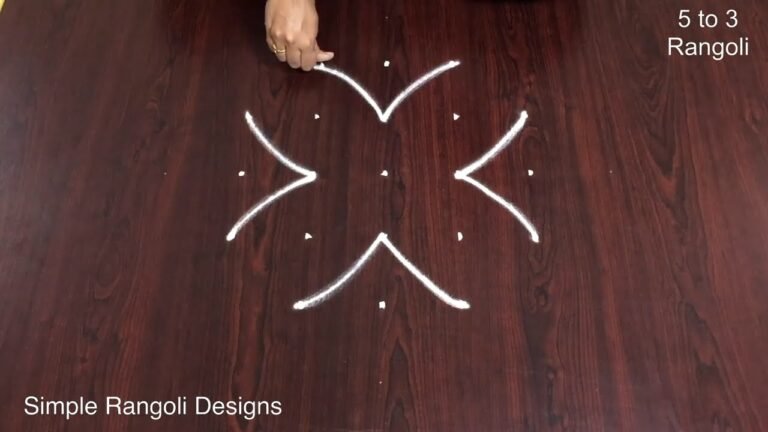
Looking for a small and festive rangoli for Diwali? This 5 to 3 dots lamp kolam is a simple and elegant design perfect for Deepavali decoration. In this video, I guide you step by step to draw a 5 to 3 decreasing dot grid rangoli inspired by traditional lamp patterns. The compact structure makes it quick and easy to complete, while the balanced curves give the kolam a bright and festive appearance.
We begin by placing a neat 5 to 3 straight dot layout, ensuring proper spacing for symmetry. Then, the outer lamp framework is formed smoothly around the dots. Inner detailing enhances the shape and gives the design a clean and finished look. Once complete, the kolam looks festive yet remains simple enough for beginners. How to construct a proper 5–3 decreasing dot grid How to create balanced lamp shapes using dots
How to maintain symmetry in small kolams Easy finishing tips for a festive Deepavali look This design is ideal for apartment entrances, pooja spaces, and small celebration areas during Diwali. Even with fewer dots, the structure creates a neat and eye-catching result.
Watch till the end to see the full transformation from simple dots to a complete festive rangoli — the final reveal highlights a compact and symmetrical Deepavali kolam. If you enjoy small dot kolams, explore more 5 to 3 dots rangoli, Diwali special muggulu, and easy festival designs on the channel.
Tip: Use chalk to lightly mark your dot grid first — it wipes away cleanly once your rangoli is finished.
This design belongs to the broader tradition of rangoli and kolam art practised across South India. Explore more in our 5 to 3 dots Rangoli Designs collection.
About this design: Kolam Designs With Diyas is a beginner-friendly pattern that comes together in just a few minutes. Once you have practised the kolam designs with diyas dot grid, you can scale it up for festival mornings or scale it down for a daily doorstep. Many learners on our channel make this kolam designs with diyas their go-to design once they get the rhythm of the curves.
Kolam Designs With Diyas — Step by Step Guide
If you have drawn dot rangoli before, this will feel familiar. If you have not, the dot grid will guide you.
- Clear a flat surface and set down your dot grid using rice flour or chalk.
- Confirm the dot spacing is even — uneven dots are the biggest cause of wobbly curves.
- Begin tracing from the centre outward, following the curves shown in the video above.
- Fill the petals and sections with your chosen colours, working one area at a time.
- Finish the edges with a fine line for a sharp, photograph-ready result.
What You Will Learn
- 5 To 3 Dots Rangoli
- Diwali Lamp Kolam 5 To 3
- Deepavali Muggulu 5 3 Dots
- Simple 5 3 Chukkala Muggulu
- Small Deepavali Rangoli Design
- 5 3 Dot Grid Kolam
Frequently Asked Questions
How do I draw this rangoli?
Begin with the dot grid — this is the skeleton of the design. With rice flour or chalk, place each dot at equal intervals. Then trace the curves slowly, one section at a time.
Is this suitable for beginners?
Absolutely. You can pause and rewind the video at every step. The pattern is straightforward once you have the grid down.
What materials do I need?
Just three things: powder (white plus any colours you want), a flat dry surface, and a few minutes of focus. A small bowl per colour helps keep things tidy.
How long does it take?
Plan for roughly 5 min 1 sec to watch and 15 minutes to draw. The second attempt is always cleaner than the first — that is the nature of dot kolam.
Try it once, share your version with a friend, and keep exploring our collection — there is a design here for every festival, every entrance, and every skill level.
Leave a Reply