There is something timeless about Simple Small New Muggulu — the symmetry, the rhythm of the dots, and the soft curves it produces.
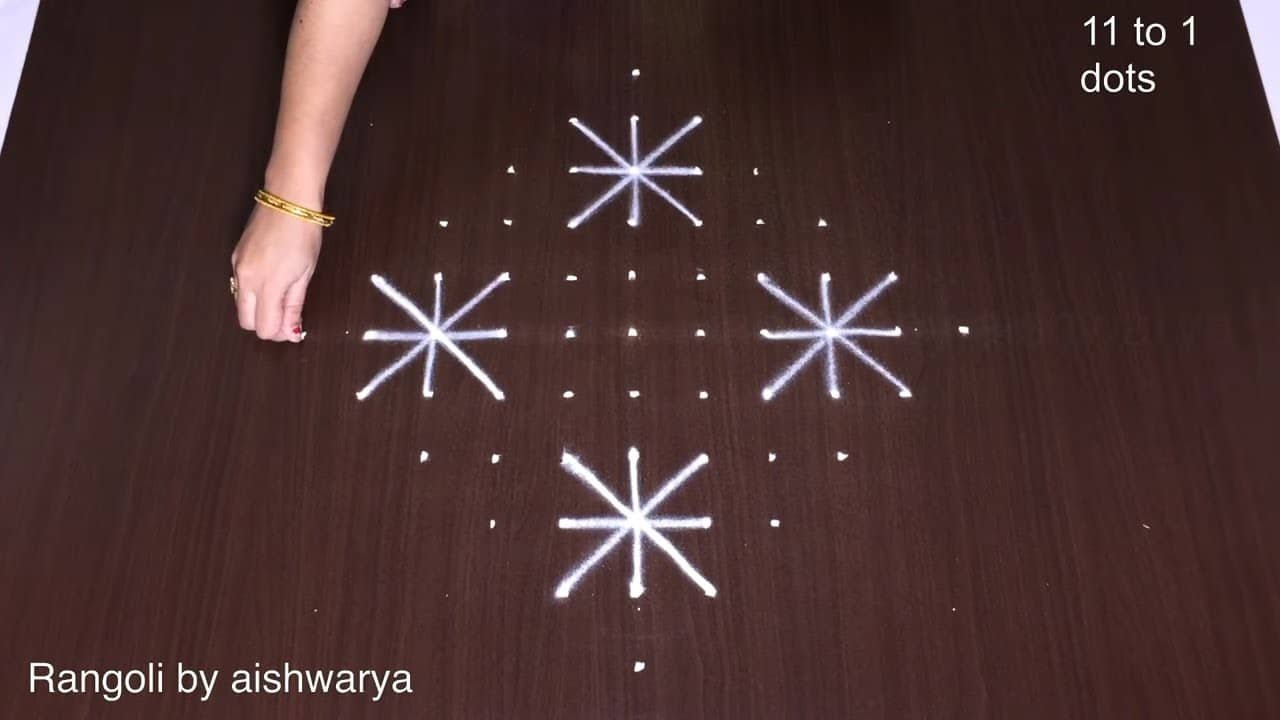
Simple Small New Muggulu | Easy 11*1 dots Kolam | Daily Rangoli Designs. This tutorial will show you how to draw Beautiful Indian traditional art Diwali Rangoli patterns using materials such as dry rice flour, colored sand or flower petals Rangoli designs by Aishwarya. Simple rangoli Kutti Kolam pattern is created on the floor in living rooms or courtyards. Draw the Lines step by step as it is shown in this video and will be awesome Rangoli Design. 😲 The Diwali rangoli pattern here is one of the amazing latest kolam designs. Simple Rangoli Designs and easy rangoli designs by Aishwarya with dots for beginners and intermediate.
1. Diwali Rangoli 2. Pongal kolams 3. Pongal rangoli designs
4. Sankranthi designs 5. Easy rangoli for sankranthi 6. Pongal designs
7. Latest rangoli for sankranthi 8. Marzaghi kolams 9. Best kolangal
10. Easy rangoli designs 11. Rangoli Designs for Bhaubeej 12. Thipkyanchi Rangoli Designs
13. Simple Karthigai Kolam 14. Karthika Masam Chukkala Muggulu 15. Tulasi Kota Muggulu
Tip: A slightly damp brush along the edges gives a sharper finish, especially for festival photographs.
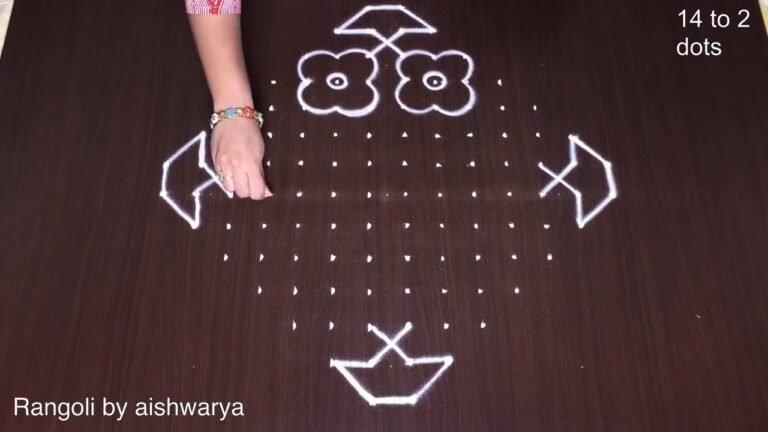
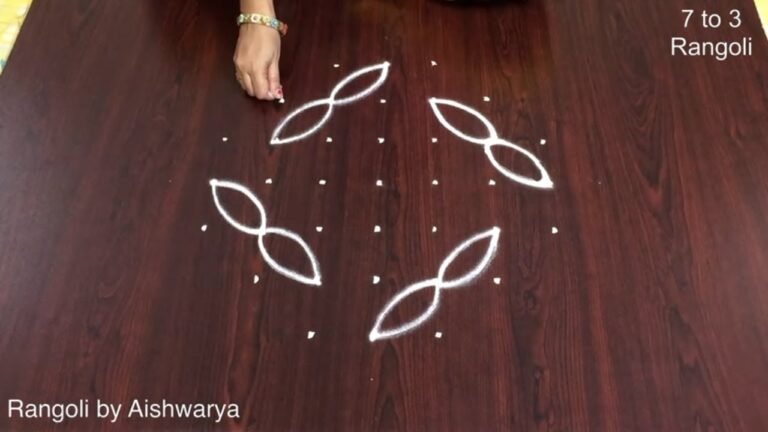
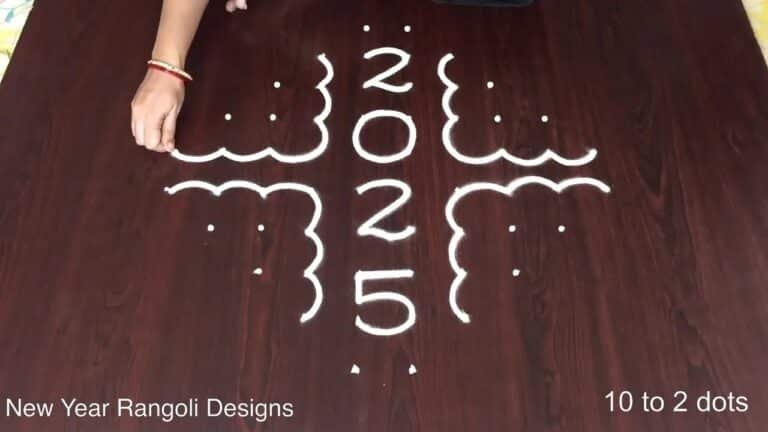
This simple small new muggulu design features 11 dots in a single line, making it an excellent choice for beginners looking to practice their rangoli skills. Often created during festivals like Diwali, this pattern can be easily adorned with colorful powders or flower petals to enhance its visual appeal. The straightforward approach of this design allows for quick completion, making it perfect for daily use or special occasions. For more designs, you can explore Aarti of Rangoli Happy New Year or check out Every Day Morning Rangoli.
Traditionally, muggulu is drawn in courtyards or living spaces using materials like rice flour, which attracts ants and other small creatures. The simplicity of this 11-dot design makes it suitable for anyone, whether you’re a seasoned artist or just starting your rangoli journey. Engaging in this art form not only beautifies your space but also connects you with the cultural heritage of India. For a broader understanding of this beautiful practice, visit Rangoli on Wikipedia.
Simple Small New Muggulu — Step by Step Guide
Follow the steps below to recreate this design at home. Pause the video whenever you need — there is no hurry.
- Clear a flat surface and set down your dot grid using rice flour or chalk.
- Confirm the dot spacing is even — uneven dots are the biggest cause of wobbly curves.
- Begin tracing from the centre outward, following the curves shown in the video above.
- Fill the petals and sections with your chosen colours, working one area at a time.
- Finish the edges with a fine line for a sharp, photograph-ready result.
What You Will Learn
- Simple Rangoli Designs
- Rangoli
- Muggulu
- Rangoli Designs
- Rangoli Kolam
- Kolam
Frequently Asked Questions
How do I draw this rangoli?
Set down the dot grid in pencil or chalk, then follow the loops one petal at a time. If a curve goes off, wipe it and retry — kolam is forgiving.
Is this suitable for beginners?
It is one of the more forgiving designs in our collection. Beginners often pick it as a confidence-builder before moving on to larger grids.
What materials do I need?
You will need rice flour or rangoli powder (white, plus your choice of colours), a flat surface like a clean floor or courtyard, and optionally a dot stencil if you are new to grid-drawing.
How long does it take?
A 3 min 14 sec video shows the complete sequence. On paper or floor, expect to spend around a quarter of an hour from grid to finished pattern.
If you enjoyed this design, browse our other dot-pattern tutorials — they share the same approach and build naturally on the techniques here.
Leave a Reply