11 By 3 Dots combines tradition with simplicity, making it one of the most rewarding designs to practice at home.
For another beginner-friendly variation, try Chukkala Muggulu For Sankranthi.
Learn more about the tradition of Rangoli on Wikipedia.
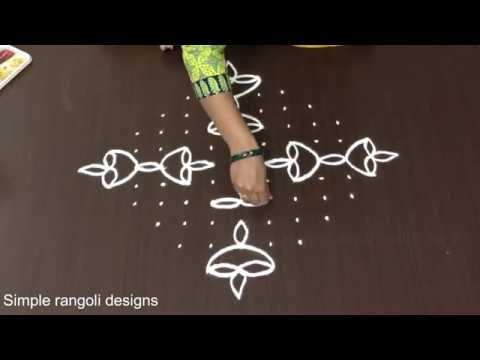
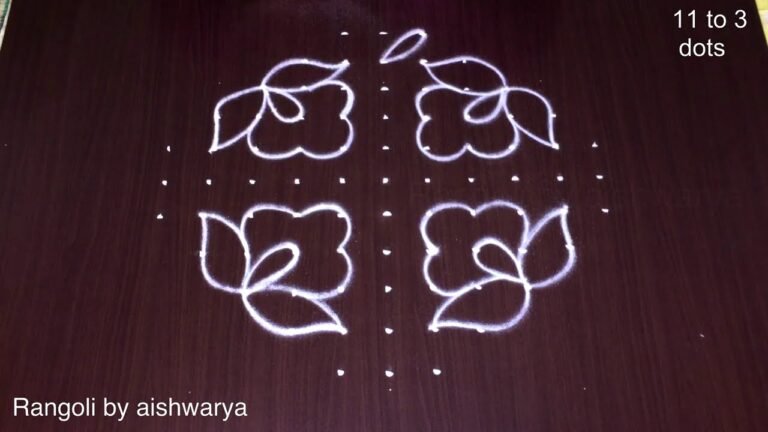
Searching for a simple and elegant kolam for Deepavali? This 11 by 3 dots rangoli is an easy and beautiful design perfect for festive decoration. In this video, I guide you step by step to draw a 11×3 straight dot grid kolam that looks neat and festive. The rectangular layout makes it quick to complete, while the lamp-inspired detailing gives the design a traditional Deepavali touch. Even with fewer rows, this structure creates a balanced and eye-catching pattern.
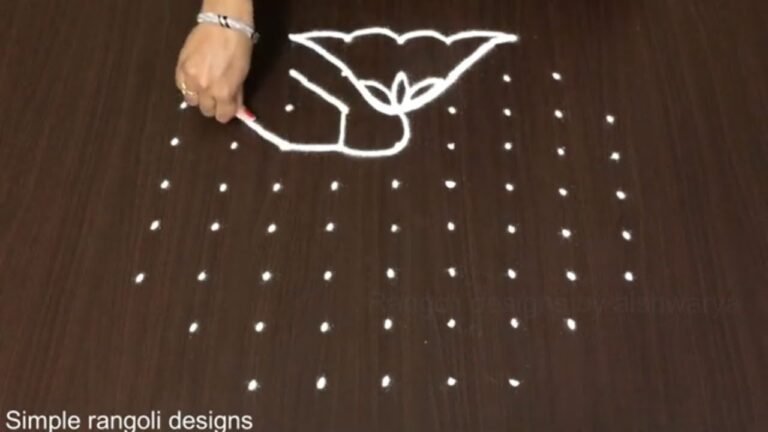
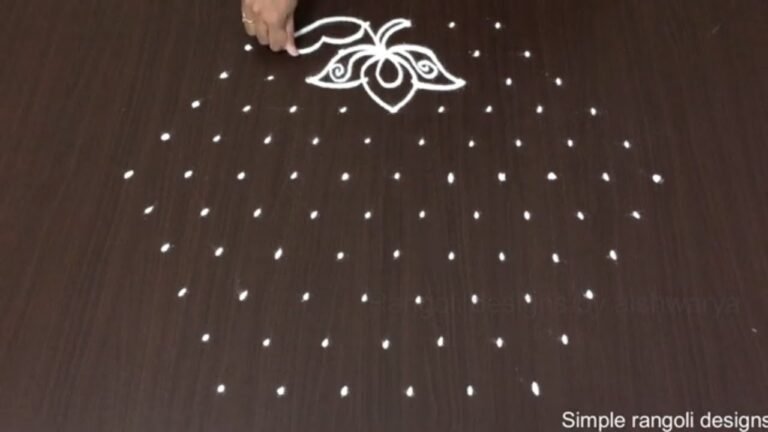
We begin by placing a clean 11 by 3 straight dot structure, ensuring proper spacing and alignment. Then, the outer framework is formed by connecting the dots smoothly into a symmetrical pattern. Simple inner detailing enhances the design without making it complicated. The final result is a compact yet festive kolam suitable for entrances and pooja areas. How to construct a proper 11–3 dot grid How to maintain symmetry in narrow rectangular layouts
How to create a festive lamp-style finish Tips to keep simple kolams neat and attractive This design is ideal for Deepavali celebrations, especially for small spaces where a quick and elegant rangoli is needed. The structured dot approach ensures a clean result every time.
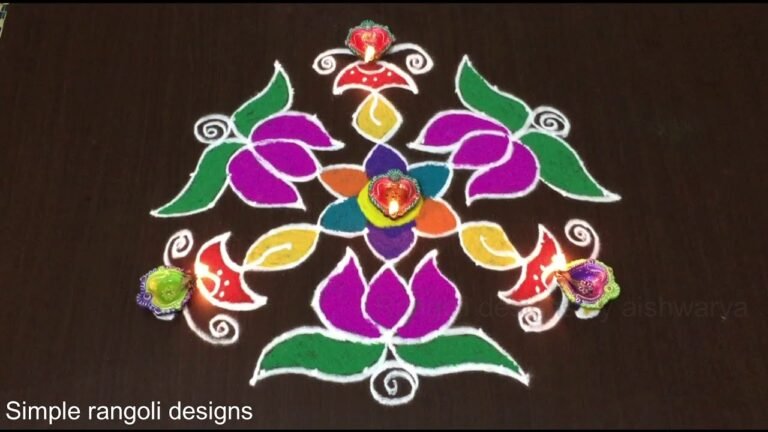
Watch till the end to see the full transformation from simple dots to a complete Deepavali kolam — the final reveal showcases a bright and symmetrical festive design. If you enjoy structured dot kolams, explore more 11 by 3 dots rangoli, Deepavali special muggulu, and easy festival designs on the channel.
Tip: Practice on paper first if you are new to dot kolam. The grid is the same; only the surface changes.
11 By 3 Dots — Step by Step Guide
Follow the steps below to recreate this design at home. Pause the video whenever you need — there is no hurry.
- Clear a flat surface and set down your dot grid using rice flour or chalk.
- Confirm the dot spacing is even — uneven dots are the biggest cause of wobbly curves.
- Begin tracing from the centre outward, following the curves shown in the video above.
- Fill the petals and sections with your chosen colours, working one area at a time.
- Finish the edges with a fine line for a sharp, photograph-ready result.
What You Will Learn
- 11 By 3 Dots Rangoli
- Deepavali Kolam 11X3
- Simple 11 3 Dots Muggulu
- Easy Deepavali Rangoli Design
- 11 3 Chukkala Muggulu
- Rectangular Dot Grid Kolam
Frequently Asked Questions
How do I draw this rangoli?
The grid comes first. Use a soft chalk to dot the surface, count twice to confirm the spacing, then start connecting them following the video. Work from the centre outward.
Is this suitable for beginners?
Yes, and it is one we recommend to first-timers. The small grid keeps the design manageable while still teaching the core technique.
What materials do I need?
White rice flour for the outline, coloured powders for the fill, and a clean dry floor. That is the essentials list — you can add a stencil if you prefer.
How long does it take?
The video runs 4 min 48 sec. In practice, most learners take between 10 and 20 minutes — a little longer the first time, faster as the pattern becomes familiar.
We rotate festival designs through the year — bookmark the homepage and you will find a new pattern every morning.
Leave a Reply