
Drawing 11 Dots Rangoli For is a relaxing, almost meditative practice. The dots guide your hand and the design unfolds naturally.
For another beginner-friendly variation, try 7 Into 7 Dots Festival Rangoli.
Learn more about the tradition of Rangoli on Wikipedia.
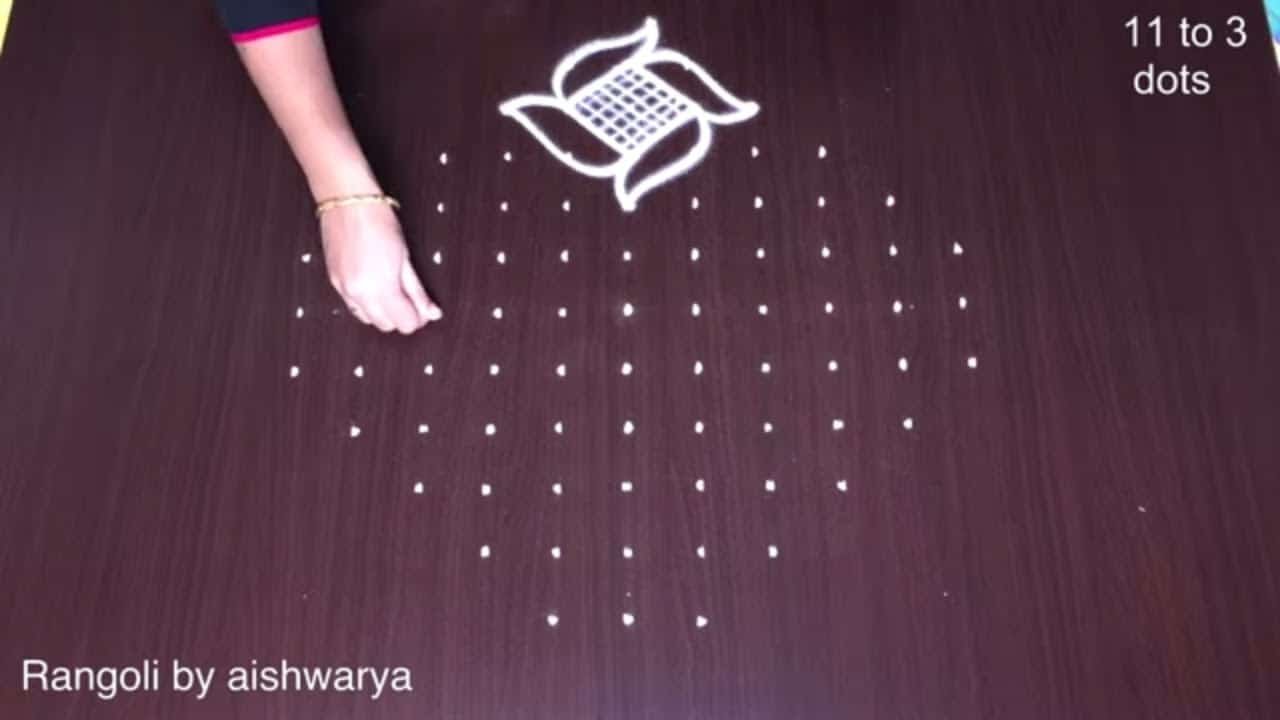
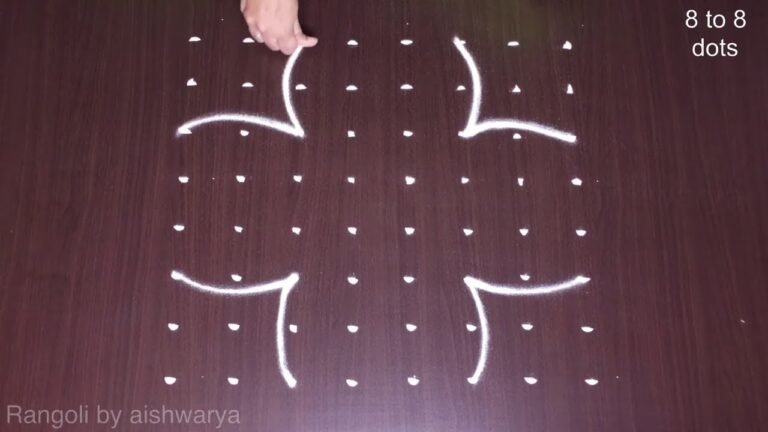
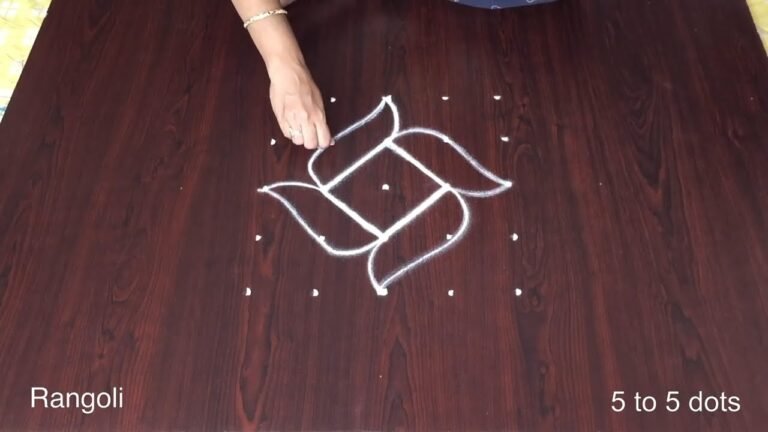
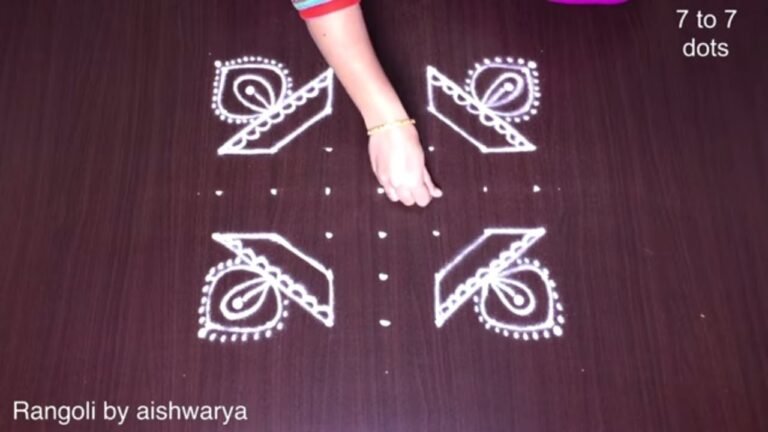
Learn how to create 11x3x3 Dots Attractive Rangoli Designs Creative | New Muggulu Simple Kolam for Diwali step by step in this easy tutorial! Perfect for beginners, this simple rangoli with dots uses everyday materials like dry rice flour, colored sand, or vibrant flower petals. Designed by Aishwarya, this kolam pattern is ideal for decorating your living room floor, courtyard, or doorstep. Follow along as we guide you through drawing the lines effortlessly to achieve an awesome rangoli result. Drawing kolam every morning is a cherished Indian tradition that invites positive energy and vibrations into your home. Rangoli, also known as kolam or muggulu (in Andhra Pradesh and Telangana), is a timeless part of Indian culture, handed down through generations. Crafted with kolam powder (muggu pindi or crushed limestone), rice flour, or a blend of both, these designs come in various styles like dots kolam, sikku kolam, padi kolam, and Margazhi kolam. Elevate your celebrations with special festival rangoli! Create deepam kolam for Diwali (Deepavali), large Dhanurmasam muggulu for Sankranthi (Pongal), or intricate patterns for Vijaya Dashami (Dasara). It's believed that drawing muggulu at your doorstep brings good luck and prosperity to your family. Enhance your designs with fresh flowers for any occasion. For more #simplerangolidesigns freehand and dotted rangoli tutorials, including creative kolam ideas for all skill levels. Watch now and master beautiful rangoli designs today! My Simple Rangoli Designs Channel Contains :
1. Rangoli 2. Muggulu 3. Rangoli Designs
4. Kolam 5. Simple Rangoli 6. Chukkala Muggulu
7. Simple Rangoli Designs 8. Muggulu Designs 9. Kolam Designs
10. Sankranthi Muggulu 11. Rangoli Design 12. Tipkyanchi Rangoli
13. Pongal Kolam 14. New Year Muggulu 15. Kolangal
Tip: Practice on paper first if you are new to dot kolam. The grid is the same; only the surface changes.
About this design: 11 Dots Rangoli is a beginner-friendly pattern that comes together in just a few minutes. Once you have practised the 11 dots rangoli dot grid, you can scale it up for festival mornings or scale it down for a daily doorstep. Many learners on our channel make this 11 dots rangoli their go-to design once they get the rhythm of the curves.
11 Dots Rangoli — Step by Step Guide
These steps are written for absolute beginners. Watch once, draw once, then watch again — that is how the pattern locks in.
- Clear a flat surface and set down your dot grid using rice flour or chalk.
- Confirm the dot spacing is even — uneven dots are the biggest cause of wobbly curves.
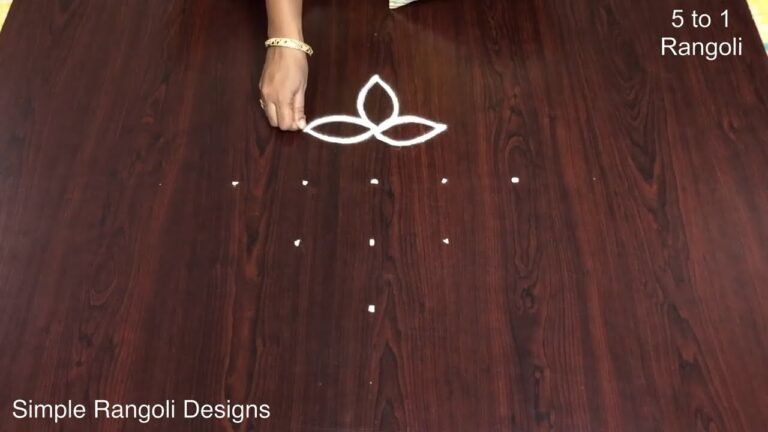
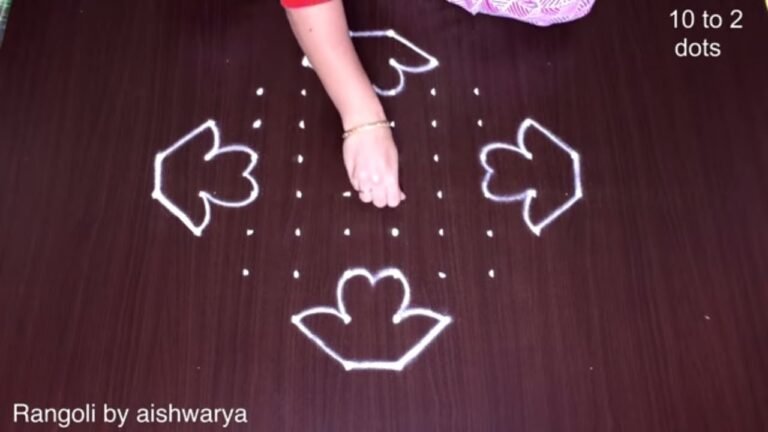
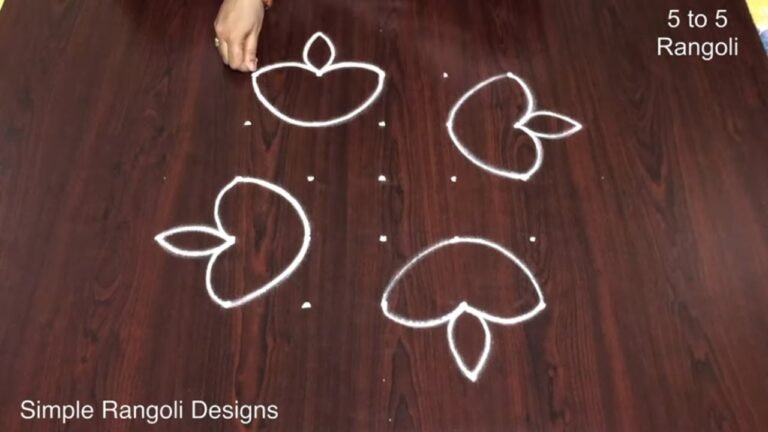
- Begin tracing from the centre outward, following the curves shown in the video above.
- Fill the petals and sections with your chosen colours, working one area at a time.
- Finish the edges with a fine line for a sharp, photograph-ready result.
What You Will Learn
- Simple Rangoli Designs
- Rangoli
- Muggulu
- Rangoli Designs
- Rangoli Kolam
- Kolam
Frequently Asked Questions
How do I draw this rangoli?
The grid comes first. Use a soft chalk to dot the surface, count twice to confirm the spacing, then start connecting them following the video. Work from the centre outward.
Is this suitable for beginners?
Absolutely. You can pause and rewind the video at every step. The pattern is straightforward once you have the grid down.
What materials do I need?
You will need rice flour or rangoli powder (white, plus your choice of colours), a flat surface like a clean floor or courtyard, and optionally a dot stencil if you are new to grid-drawing.
How long does it take?
Plan for roughly 8 min 49 sec to watch and 15 minutes to draw. The second attempt is always cleaner than the first — that is the nature of dot kolam.
Pin this for later or share with a friend learning kolam — and let us know in the comments which design you would like next.
Leave a Reply