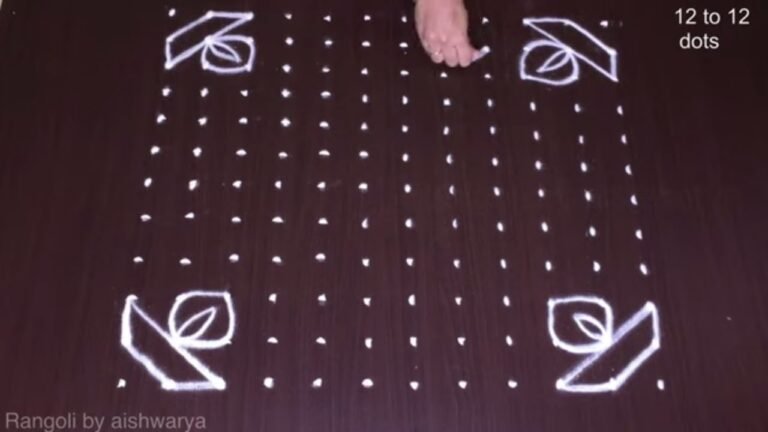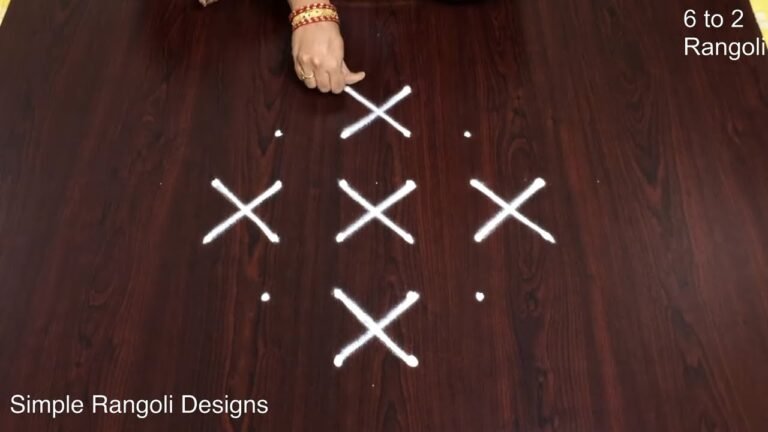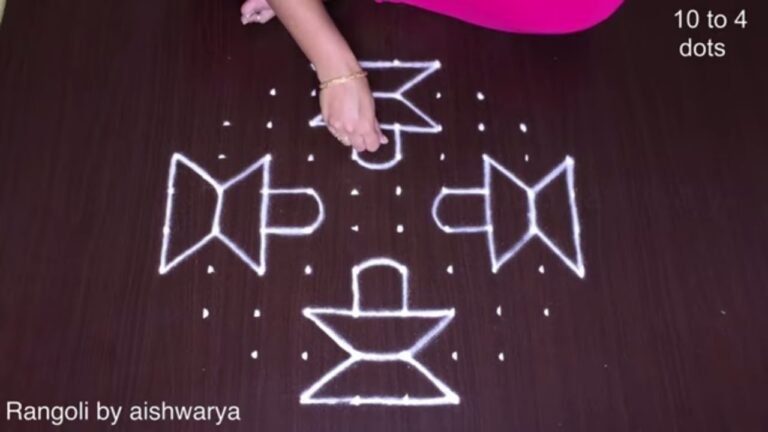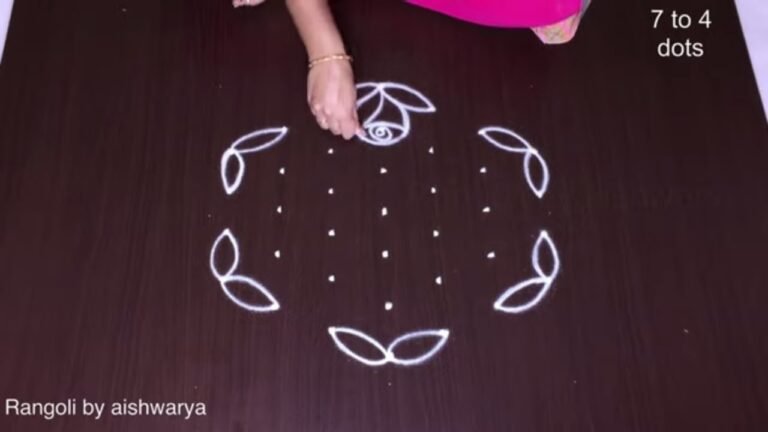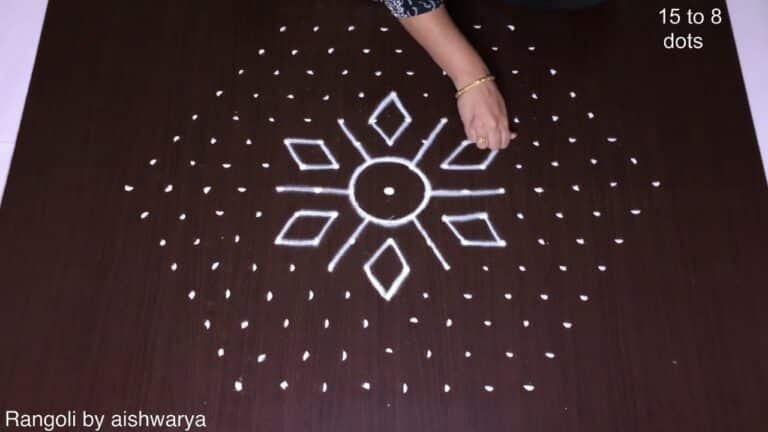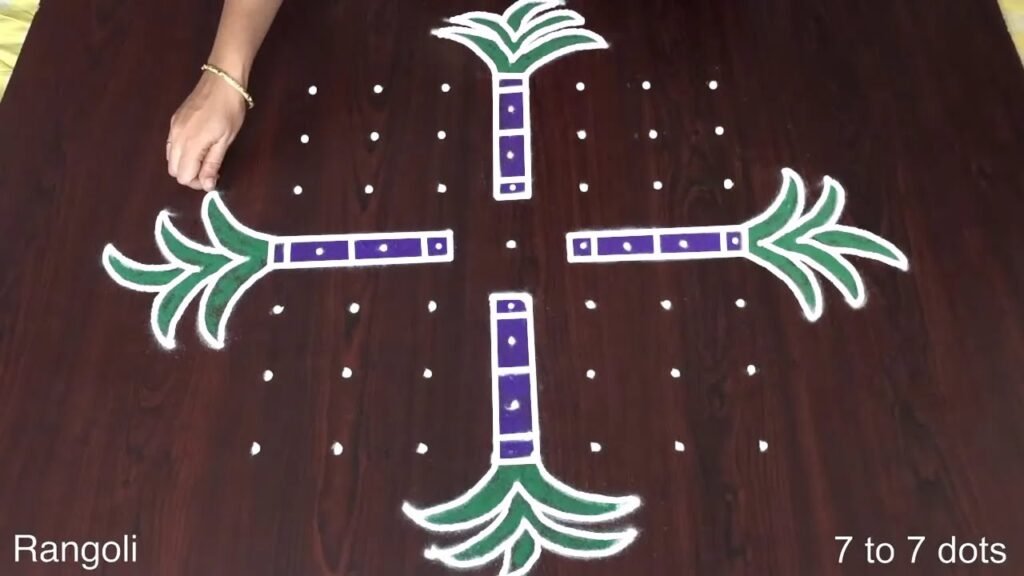
Chukkala Muggulu For Sankranthi is the kind of design that looks intricate but is genuinely beginner-friendly once you follow the dot grid.

Simple Rangoli Designs presents: Simple Rangoli Designs 7×7 Dots Bhogi Kolam and New Sankranthi Chukkala Muggulu 🌸 In this video, learn a simple & easy rangoli step-by-step. Whether you need a daily rangoli for your home entrance or a beautiful festival rangoli, this design is perfect for beginners! Time: Just 5 minutes for instant, eye-catching beauty.
Style: Classic traditional Muggulu / Kolam vibes with a graceful touch. Perfect for: Everyday doorstep elegance, special Friday, quick festive entrances, or whenever you want your home to feel instantly blessed & welcoming. 🌟 Perfect occasions & styles:
Everyday Home Entrance Rangoli Special Friday Rangoli Pongal Kolam & Sankranti celebrations
Diwali Rangoli Lotus Rangoli Graceful Peacock Rangoli
Door Rangoli Designs Chukkala Muggulu (dot-based patterns) Easy Rangoli Designs / Rangoli with Dots
Chukkala Muggulu / Traditional Kolam Beginners Rangoli / Border Rangoli Latest Rangoli Trends
Tip: A slightly damp brush along the edges gives a sharper finish, especially for festival photographs.
Chukkala Muggulu for Sankranthi is a delightful representation of traditional artistry, typically designed using a grid of 7×7 dots. This specific pattern is especially significant during the Sankranthi festival, where it symbolizes prosperity and welcomes the harvest season. The simplicity of the design makes it ideal for beginners, allowing them to quickly create an inviting atmosphere at their doorsteps. For more inspiration, you can also check out our Sankranthi Special Bhogi Kundala Muggulu.
The elegant curves and symmetrical patterns of Chukkala Muggulu reflect the rich cultural heritage of India. It is often embellished with vibrant colors, bringing a sense of joy and celebration to the festivities. This design can also be adapted for various occasions, making it a versatile choice for daily use or special events. For those looking to explore similar designs, consider visiting our post on Karthika Masam Deepala Muggulu or learn more about rangoli on Wikipedia.
About this design: Chukkala Muggulu For Sankranthi is a beginner-friendly pattern that comes together in just a few minutes. Once you have practised the chukkala muggulu for sankranthi dot grid, you can scale it up for festival mornings or scale it down for a daily doorstep. Many learners on our channel make this chukkala muggulu for sankranthi their go-to design once they get the rhythm of the curves.
Chukkala Muggulu For Sankranthi — Step by Step Guide
Here is how to draw it, line by line. Take your time on the corners and the symmetry will take care of itself.
- Clear a flat surface and set down your dot grid using rice flour or chalk.
- Confirm the dot spacing is even — uneven dots are the biggest cause of wobbly curves.
- Begin tracing from the centre outward, following the curves shown in the video above.
- Fill the petals and sections with your chosen colours, working one area at a time.
- Finish the edges with a fine line for a sharp, photograph-ready result.
What You Will Learn
- 7X7 Dots Rangoli
- Bhogi Kolam With Dots
- Sankranthi Chukkala Muggulu
- 7X7 Dots Kolam
- Rangoli With Dots
- Dot Kolam Designs
Frequently Asked Questions
How do I draw this rangoli?
Set down the dot grid in pencil or chalk, then follow the loops one petal at a time. If a curve goes off, wipe it and retry — kolam is forgiving.
Is this suitable for beginners?
Yes — this design is shaped specifically with newcomers in mind. The dot grid is small enough to manage, and the curves are gentle. Most learners get it right by the second try.
What materials do I need?
Powder (white for outlines, colours for filling), a flat surface, and a dot stencil if you want absolute precision. Beyond that, just your hand and a steady pace.
How long does it take?
Plan for roughly 5 min 41 sec to watch and 15 minutes to draw. The second attempt is always cleaner than the first — that is the nature of dot kolam.
This is one of those designs that grows on you. The first attempt is for learning; the second is for muscle memory; the third is when it starts to feel like your own.


Leave a Reply