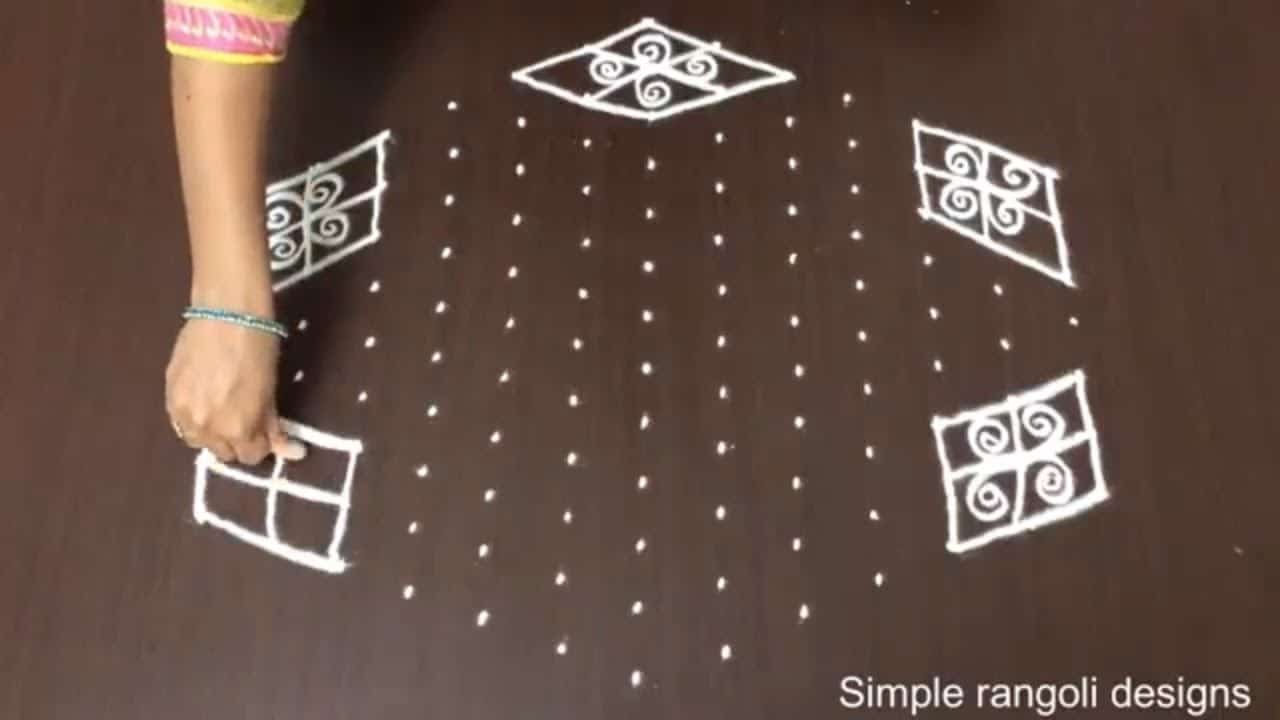
This dhanurmasam muggulu 13×7 dots tutorial walks you through every step from the dot grid to the final pattern.
For another beginner-friendly variation, try Friday Designs 6 Into 6 Lakshmi Kolam.
Learn more about the tradition of Rangoli on Wikipedia.
Dhanurmasam Muggulu 13 7 Dots has become a favourite among learners on our channel — and once you try it, you will see why.
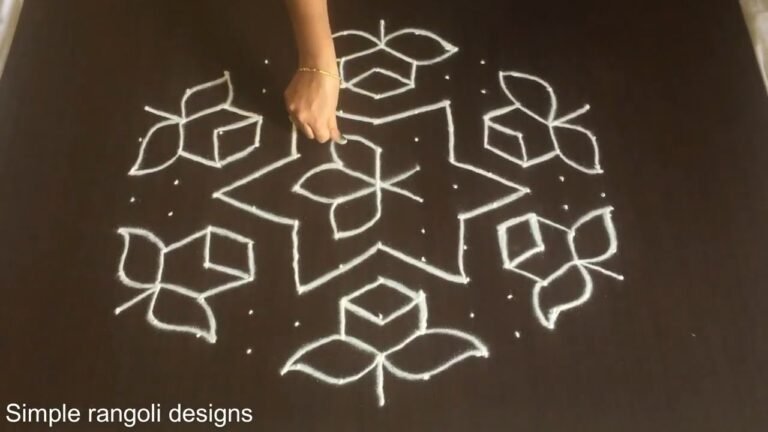
Looking for a grand 13×7 dots kolam for Dhanurmasam and Pongal? This easy festival muggulu design combines tradition, symmetry, and festive elegance. In this video, we create a 13×7 dots Dhanurmasam kolam, structured on a wide decreasing grid that forms a bold and balanced layout. The 13-7 format gives enough space to shape smooth curves and decorative extensions while maintaining perfect alignment.
🌾 What You’ll Learn Step by Step: Proper placement of the 13×7 decreasing dot grid Building a symmetrical base framework
Extending curves evenly on both sides Clean finishing techniques for a refined festive look Dhanurmasam and Pongal seasons are known for expansive and meaningful kolam designs drawn at the entrance of homes. A 13×7 grid creates a strong visual presence, making it ideal for courtyards and spacious thresholds.
Even though the grid is larger than beginner layouts, the structured dots naturally guide spacing and proportion. The step-by-step approach makes the design manageable and satisfying to complete. Watch till the end to see the complete symmetrical reveal — the final alignment highlights how the 13-7 dot structure transforms into a beautiful seasonal kolam. If you enjoy large festive grids, explore other harvest formats like 11-6 and 15-8 to expand your Pongal rangoli collection.
Save this design and recreate it to brighten your Dhanurmasam celebration beautifully.
Tip: Keep your powder bowl close to your dominant hand. Small movements give cleaner curves.
About this design: Dhanurmasam Muggulu 13X7 Dots is a beginner-friendly pattern that comes together in just a few minutes. Once you have practised the dhanurmasam muggulu 13×7 dots dot grid, you can scale it up for festival mornings or scale it down for a daily doorstep. Many learners on our channel make this dhanurmasam muggulu 13×7 dots their go-to design once they get the rhythm of the curves.
Dhanurmasam Muggulu 13X7 Dots — Step by Step Guide
Here is how to draw it, line by line. Take your time on the corners and the symmetry will take care of itself.
- Clear a flat surface and set down your dot grid using rice flour or chalk.
- Confirm the dot spacing is even — uneven dots are the biggest cause of wobbly curves.
- Begin tracing from the centre outward, following the curves shown in the video above.
- Fill the petals and sections with your chosen colours, working one area at a time.
- Finish the edges with a fine line for a sharp, photograph-ready result.
What You Will Learn
- 13X7 Dots Dhanurmasam Kolam
- Pongal Festival Rangoli 13-7
- Easy 13-7 Muggulu Design
- 13-7 Dots Kolam Pattern
- Dhanurmasam Muggulu With Dots
- 13X7 Pulli Kolam
Frequently Asked Questions
How do I draw this rangoli?
Begin with the dot grid — this is the skeleton of the design. With rice flour or chalk, place each dot at equal intervals. Then trace the curves slowly, one section at a time.
Is this suitable for beginners?
Beginner-friendly is exactly the right description. The video walks through every line clearly and you can match the pace.
What materials do I need?
White rice flour for the outline, coloured powders for the fill, and a clean dry floor. That is the essentials list — you can add a stencil if you prefer.
How long does it take?
The full demonstration takes 3 min 36 sec. Most people find their own drawing time settles to about 15 minutes once the grid is familiar.
This is one of those designs that grows on you. The first attempt is for learning; the second is for muscle memory; the third is when it starts to feel like your own.

Leave a Reply