Whether you are decorating for a festival or your daily morning ritual, Navaratri Kolam Special Diya is an excellent design to keep handy.
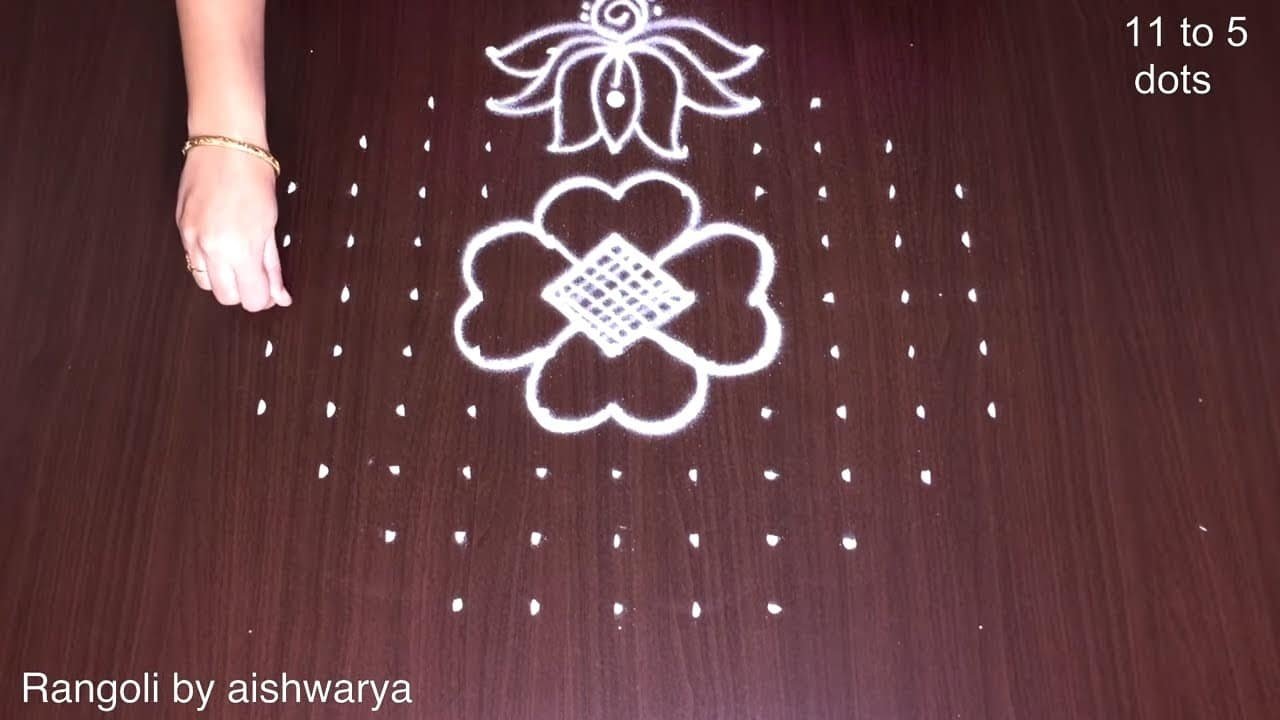
Navaratri Kolam Special Diya Kolam | 11×5 Lotus Pedha Muggulu Panduga Rangoli. This tutorial will show you how to draw Beautiful Indian traditional art Diwali Rangoli patterns using materials such as dry rice flour, colored sand or flower petals Rangoli designs by Aishwarya. Simple rangoli Kutti Kolam pattern is created on the floor in living rooms or courtyards. Draw the Lines step by step as it is shown in this video and will be awesome Rangoli Design. 😲 The Diwali rangoli pattern here is one of the amazing latest kolam designs. Simple Rangoli Designs and easy rangoli designs by Aishwarya with dots for beginners and intermediate.
1. Diwali Rangoli 2. Pongal kolams 3. Easy rangoli designs
4. Rangoli design 5. Chukkala muggulu 6. Dot rangoli designs
7. Dots rangoli 8. Easy rangoli 9. Easy rangoli designs
10. Kolam designs 11. Kolam with dots 12. Muggulu designs
13. Muggulu designs with dots 14. Small rangoli designs 15. Muggulu chukkala muggulu
Tip: A slightly damp brush along the edges gives a sharper finish, especially for festival photographs.
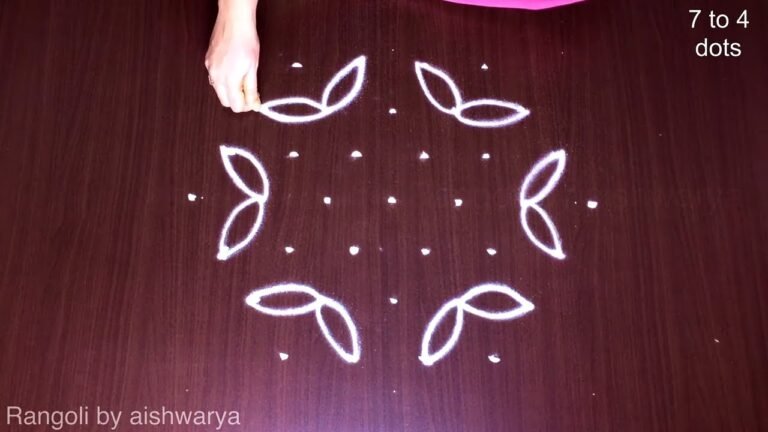
The Navaratri Kolam Special Diya features an intricate design that beautifully combines traditional elements with the festive spirit of the season. With an 11 to 5 dot pattern, this kolam showcases delicate lotus petals that symbolize purity and divinity, making it a perfect addition to the festive celebrations. The use of vibrant colors enhances its visual appeal, and it can be created using materials like rice flour or colored sand. For more ideas, you can also explore Sankranthi Pedha Chukkala Muggulu for inspiration.
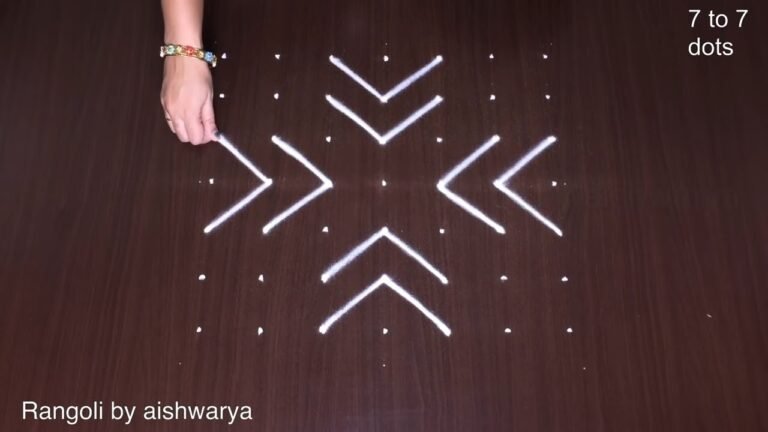
This kolam not only serves as a decorative piece but also as a welcoming gesture to guests during the Navaratri festivities. The diya motifs incorporated into the design highlight the significance of light and positivity during this auspicious time. For beginners, following a step-by-step guide can simplify the process, making it accessible to everyone. If you’re looking to expand your rangoli repertoire, you might find the 7 Se 7 Dots Rangoli for Learners helpful. To learn more about the rich history of this art form, visit Rangoli.
Navaratri Kolam Special Diya — Step by Step Guide
Each step takes only a moment. The whole design comes together in just a few minutes once the grid is in place.
- Clear a flat surface and set down your dot grid using rice flour or chalk.
- Confirm the dot spacing is even — uneven dots are the biggest cause of wobbly curves.
- Begin tracing from the centre outward, following the curves shown in the video above.
- Fill the petals and sections with your chosen colours, working one area at a time.
- Finish the edges with a fine line for a sharp, photograph-ready result.
What You Will Learn
- Simple Rangoli Designs
- Rangoli
- Muggulu
- Rangoli Designs
- Rangoli Kolam
- Kolam
Frequently Asked Questions
How do I draw this rangoli?
Start by marking an even dot grid on a flat, clean surface. Once the grid is in place, connect the dots following the curves shown in the video. Even spacing between dots is the single biggest factor for a clean finish.
Is this suitable for beginners?
Yes, and it is one we recommend to first-timers. The small grid keeps the design manageable while still teaching the core technique.
What materials do I need?
Powder (white for outlines, colours for filling), a flat surface, and a dot stencil if you want absolute precision. Beyond that, just your hand and a steady pace.
How long does it take?
Roughly 8 min 49 sec to watch end-to-end, and 10–20 minutes to draw yourself depending on grid size and how careful you are with the curves.
Whenever you finish your version, share a photo with us. Seeing your work is the best part of running this channel.

Leave a Reply