Drawing Sankranthi Pedha Chukkala Muggulu is a relaxing, almost meditative practice. The dots guide your hand and the design unfolds naturally.

Simple Rangoli Designs presents: Sankranthi Simple Rangoli Designs 11×6 Dots Pedha Chukkala Muggulu 🌸 In this video, learn a simple & easy rangoli step-by-step. Whether you need a daily rangoli for your home entrance or a beautiful festival rangoli, this design is perfect for beginners! Time: Just 9 minutes for instant, eye-catching beauty.
Style: Classic traditional Muggulu / Kolam vibes with a graceful touch. Perfect for: Everyday doorstep elegance, special Friday, quick festive entrances, or whenever you want your home to feel instantly blessed & welcoming. 🌟 Perfect occasions & styles:
Everyday Home Entrance Rangoli Special Friday Rangoli Pongal Kolam & Sankranti celebrations
Diwali Rangoli Lotus Rangoli Graceful Peacock Rangoli
Door Rangoli Designs Chukkala Muggulu (dot-based patterns) Easy Rangoli Designs / Rangoli with Dots
Chukkala Muggulu / Traditional Kolam Beginners Rangoli / Border Rangoli Latest Rangoli Trends
Tip: Use chalk to lightly mark your dot grid first — it wipes away cleanly once your rangoli is finished.
The Sankranthi Pedha Chukkala Muggulu is a delightful design that embodies the festive spirit of Sankranthi, celebrated with joy and enthusiasm across India. This design uses an 11×6 dot grid, making it accessible for beginners while still allowing for creativity. The traditional patterns often incorporate elements that symbolize abundance and prosperity, making them perfect for welcoming the harvest season. For a similar style, you might enjoy creating the Perfect Geometrical Shapes Rangoli, which also emphasizes structured beauty.
This muggulu can be adorned with vibrant colors and floral motifs, enhancing its appeal for festive occasions. The use of natural colors and designs not only beautifies your entrance but also invites positivity into your home. While celebrating Sankranthi, you can also consider other designs like the 12 to 4 Dots Flower Pot Rangoli, which brings a touch of floral elegance. For more information on the art of rangoli, you can explore this page to learn about its history and significance.
About this design: Sankranthi Pedha Chukkala Muggulu is a beginner-friendly pattern that comes together in just a few minutes. Once you have practised the sankranthi pedha chukkala muggulu dot grid, you can scale it up for festival mornings or scale it down for a daily doorstep. Many learners on our channel make this sankranthi pedha chukkala muggulu their go-to design once they get the rhythm of the curves.
Sankranthi Pedha Chukkala Muggulu — Step by Step Guide
The video above shows the full sequence; the steps below summarise each stage so you can glance back as you draw.
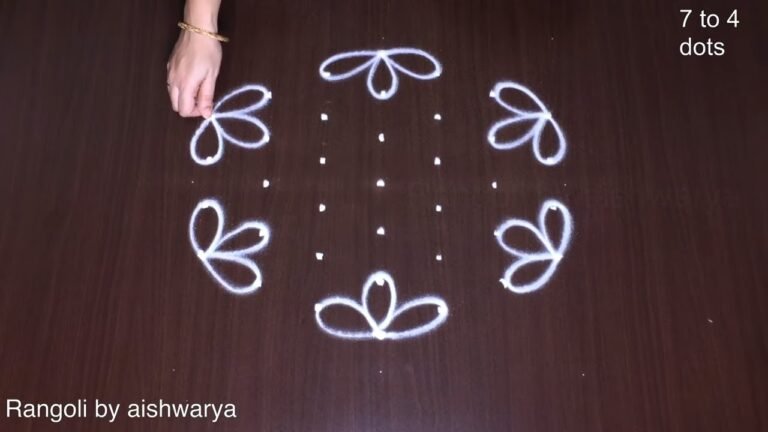
- Mark the 11-to-6 dot grid (a large diamond, eleven dots across the centre down to six at the tips).
- In the middle draw a small round flower, then wrap five pointed petals around it to form the central bloom.
- At the upper-left and upper-right, draw fan-shaped floral motifs: pointed petals on top sitting over a pair of rolled spiral scrolls at the base.
- Repeat larger rose-like blooms at the left, right and lower positions – each an outer ring of pointed petals with S-shaped spiral curls filling the base.
- Link the blooms to the centre with curved connecting lines that follow the dot rows.
- Add dotted accents in the petal centres and along the scrolls to finish; keep the whole muggulu in white.
What You Will Learn
- 11X6 Dots Rangoli
- Pedha Chukkala Muggulu
- Sankranthi Rangoli With Dots
- 11X6 Dots Kolam
- Pongal Kolam With Dots
- Rangoli With Dots
Frequently Asked Questions
How do I draw this rangoli?
Start by marking an even dot grid on a flat, clean surface. Once the grid is in place, connect the dots following the curves shown in the video. Even spacing between dots is the single biggest factor for a clean finish.
Is this suitable for beginners?
Absolutely. You can pause and rewind the video at every step. The pattern is straightforward once you have the grid down.
What materials do I need?
Powder (white for outlines, colours for filling), a flat surface, and a dot stencil if you want absolute precision. Beyond that, just your hand and a steady pace.
How long does it take?
A 9 min 13 sec video shows the complete sequence. On paper or floor, expect to spend around a quarter of an hour from grid to finished pattern.
Once you get the rhythm of this design, try scaling it up or experimenting with colours. The grid stays the same; the personality changes.

Leave a Reply