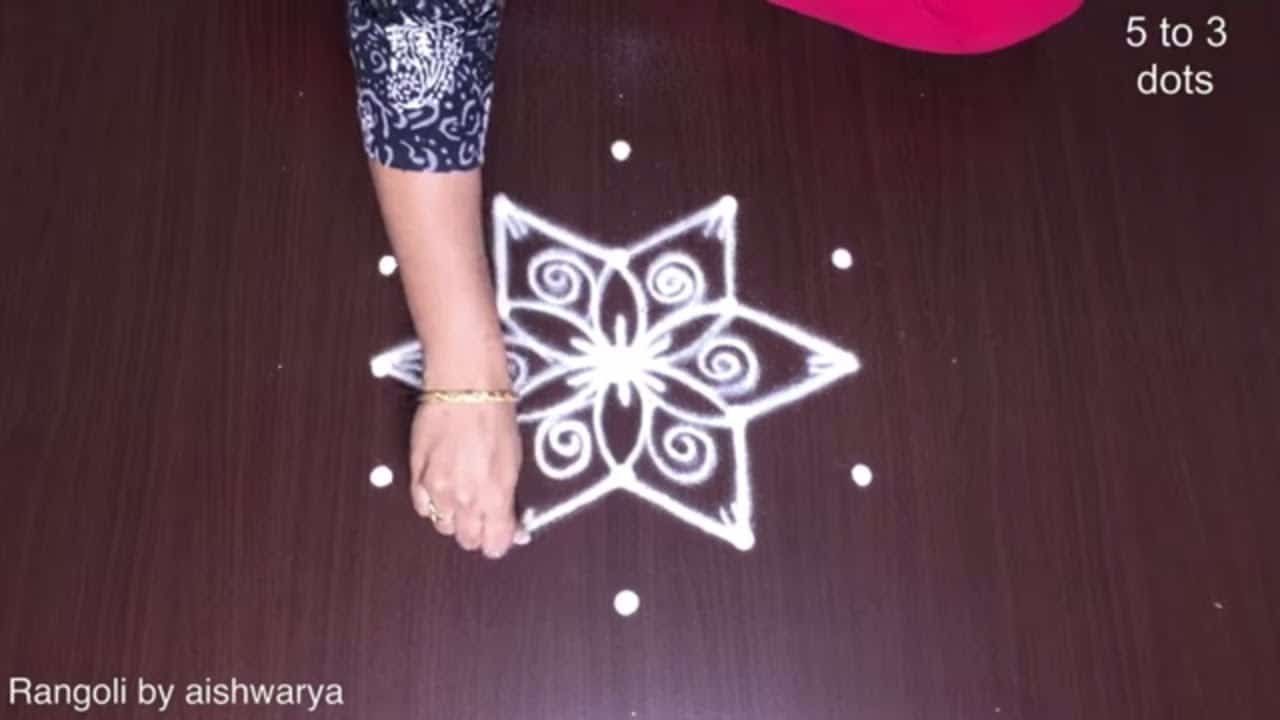
Looking to learn 5-3 Interlaced Dots Muggulu? This step-by-step guide walks you through every line, dot, and curve.
For another beginner-friendly variation, try Daily Simple Small Rangoli 6x2x2dots Kolam.
Creative festival art kolam rangoli designs | 5-3 interlaced dots muggulu rojuvari. This tutorial will show you how to draw Beautiful Indian traditional art Diwali Rangoli patterns using materials such as dry rice flour, colored sand or flower petals Rangoli designs by Aishwarya. Simple rangoli Kutti Kolam pattern is created on the floor in living rooms or courtyards. Draw the Lines step by step as it is shown in this video and will be awesome Rangoli Design. 😲 The Diwali rangoli pattern here is one of the amazing latest kolam designs. Simple Rangoli Designs and easy rangoli designs by Aishwarya with dots for beginners and intermediate.
1. Diwali Rangoli 2. Pongal kolams 3. Easy rangoli designs
4. Rangoli design 5. Chukkala muggulu 6. Dot rangoli designs
7. Dots rangoli 8. Easy rangoli 9. Easy rangoli designs
10. Kolam designs 11. Kolam with dots 12. Muggulu designs
13. Muggulu designs with dots 14. Small rangoli designs 15. Muggulu chukkala muggulu
Tip: Practice on paper first if you are new to dot kolam. The grid is the same; only the surface changes.
This design belongs to the broader tradition of rangoli and kolam art practised across South India. Explore more in our 5 to 3 dots Rangoli Designs collection.
The 5-3 interlaced dots muggulu is a delightful design that captures the essence of traditional Indian artistry. This pattern is perfect for festivals like Diwali, where vibrant designs adorn entrances to welcome guests. Created with a simple dot grid, this muggulu allows for intricate detailing and creativity in filling spaces with colors, whether using rice flour, colored sand, or flower petals. For those looking to explore similar designs, the 9 to 3 Dots Roja Puvvula Muggulu is another beautiful option to consider.
As you practice the 5-3 interlaced dots muggulu, you’ll find that it serves as an excellent introduction to the world of kolam designs. The design’s interlacing technique can help beginners develop their skills in symmetry and pattern-making. Additionally, if you’re seeking more complex patterns, the 11 by 6 Simple Kolam provides a great challenge while still being manageable. To learn more about the cultural significance and variety of these colorful designs, you can visit the Rangoli Wikipedia page.
5-3 Interlaced Dots Muggulu — Step by Step Guide
Use the steps below as a reference card while the video plays. Most learners finish on the second attempt.
- Clear a flat surface and set down your dot grid using rice flour or chalk.
- Confirm the dot spacing is even — uneven dots are the biggest cause of wobbly curves.
- Begin tracing from the centre outward, following the curves shown in the video above.
- Fill the petals and sections with your chosen colours, working one area at a time.
- Finish the edges with a fine line for a sharp, photograph-ready result.
What You Will Learn
- Simple Rangoli Designs
- Rangoli
- Muggulu
- Rangoli Designs
- Rangoli Kolam
- Kolam
Frequently Asked Questions
How do I draw this rangoli?
Set down the dot grid in pencil or chalk, then follow the loops one petal at a time. If a curve goes off, wipe it and retry — kolam is forgiving.
Is this suitable for beginners?
Yes — this design is shaped specifically with newcomers in mind. The dot grid is small enough to manage, and the curves are gentle. Most learners get it right by the second try.
What materials do I need?
Rice flour, coloured rangoli powders, and a clean stretch of floor or paper. Some draw with chalk first to set the grid before powdering over it.
How long does it take?
Roughly 3 min 14 sec to watch end-to-end, and 10–20 minutes to draw yourself depending on grid size and how careful you are with the curves.
Once this design feels familiar, switch the colours or rotate the grid by a step. Small tweaks keep daily kolam practice interesting.
Leave a Reply