Looking to learn Rose Rangoli Designs 8-8? This step-by-step guide walks you through every line, dot, and curve.
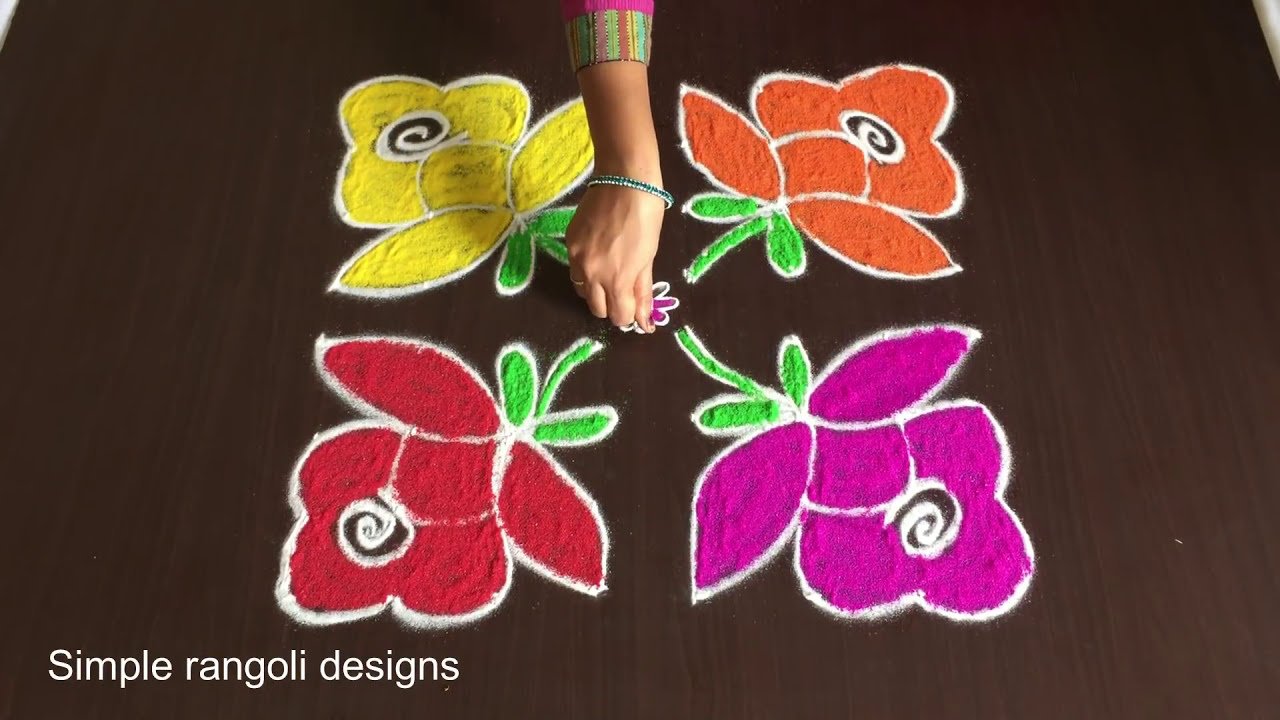
Looking for a graceful 8-8 dots rose rangoli that looks detailed yet easy to draw? This beautiful muggulu kolam design brings floral elegance to your entrance. In this video, we create an 8-8 dots easy rose rangoli design using a balanced square grid. The 8 by 8 dot structure offers strong symmetry and enough space to shape soft rose petals with clean curves and smooth flow.
🌸 What You’ll Learn Step by Step: Correct placement of the 8-8 dot grid How to form rose petal patterns evenly
Maintaining symmetry across all sides Clean finishing techniques for a neat floral look The 8-8 format is perfect for medium-sized entrances, pooja areas, and apartment thresholds. The rose pattern adds a soft and welcoming touch while maintaining the traditional structure of dot kolam.
Even though the design looks detailed, the step-by-step progression makes it easy to follow. The grid acts as a guide, helping you maintain proportion and alignment throughout the drawing process. Watch till the end to see the full symmetrical floral reveal — the completed rose structure creates a satisfying and elegant finish. If you enjoy 8-8 dot kolam, explore other floral grids like 7-7 and 9-9 designs to expand your creative dot-series collection.
Save this design and recreate it at your entrance for a fresh and beautiful look.
Tip: Work from the centre outward. It keeps the symmetry honest and prevents the design from drifting off-balance.
The 8-8 dots rose rangoli design beautifully combines floral aesthetics with a structured approach, making it an ideal choice for beginners. With a balanced square grid, this design allows for the creation of soft, flowing rose petals while ensuring symmetry throughout. The use of the 8-8 dot format provides ample space for detailing, enabling the artist to achieve a neat and elegant finish. For those who enjoy floral patterns, this design can serve as a perfect introduction to more intricate creations, such as Daily Kolams Latest Rangoli Designs.
This rangoli is particularly suited for festive occasions or welcoming guests at home, especially in pooja areas or apartment entrances. The rose pattern adds a warm and inviting touch, embodying traditional artistry while remaining accessible. As you practice this design, you can further explore variations and styles, like the 7-7 dot designs featured in Beautiful Rangoli With 7 Dots. To learn more about the cultural significance and techniques behind rangoli, visit this informative page.
About this design: Rose Rangoli Designs 8-8 is a beginner-friendly pattern that comes together in just a few minutes. Once you have practised the rose rangoli designs 8-8 dot grid, you can scale it up for festival mornings or scale it down for a daily doorstep. Many learners on our channel make this rose rangoli designs 8-8 their go-to design once they get the rhythm of the curves.
Rose Rangoli Designs 8-8 — Step by Step Guide
If you have drawn dot rangoli before, this will feel familiar. If you have not, the dot grid will guide you.
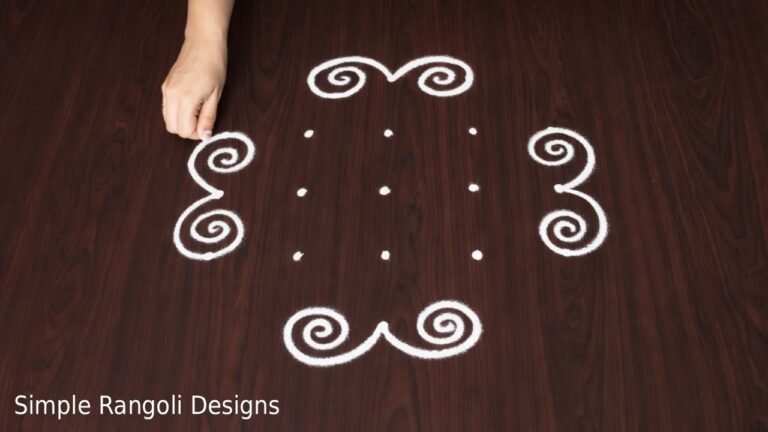
- Mark the 8 by 8 dot grid and split it into four equal quarters.
- In each quarter start a rose with a small spiral coil for the tightly rolled centre.
- Wrap each coil with three to four layers of overlapping curved petals, each layer a little larger, so the bloom opens outward.
- Add a couple of pointed outer petals and a short stem at the base of every rose.
- Draw green leaves fanning from each stem into the gaps between the four roses.
- Colour the roses in four shades — yellow, orange, red and magenta — keep white spiral highlights in the centres, and fill the leaves green.
What You Will Learn
- 8-8 Dots Rose Rangoli
- Easy 8X8 Kolam Design
- Beautiful Rose Muggulu
- 8-8 Dots Rangoli Design
- Floral Dot Kolam 8X8
- 8 By 8 Pulli Kolam
Frequently Asked Questions
How do I draw this rangoli?
Begin with the dot grid — this is the skeleton of the design. With rice flour or chalk, place each dot at equal intervals. Then trace the curves slowly, one section at a time.
Is this suitable for beginners?
Yes, and it is one we recommend to first-timers. The small grid keeps the design manageable while still teaching the core technique.
What materials do I need?
Powder (white for outlines, colours for filling), a flat surface, and a dot stencil if you want absolute precision. Beyond that, just your hand and a steady pace.
How long does it take?
About 3 min 27 sec on screen, perhaps 15 minutes for a relaxed first attempt. By the second try most people are noticeably quicker.
Half the skill of kolam is learning to slow down. Put on some music, give yourself the time, and let the curves come naturally.


Leave a Reply