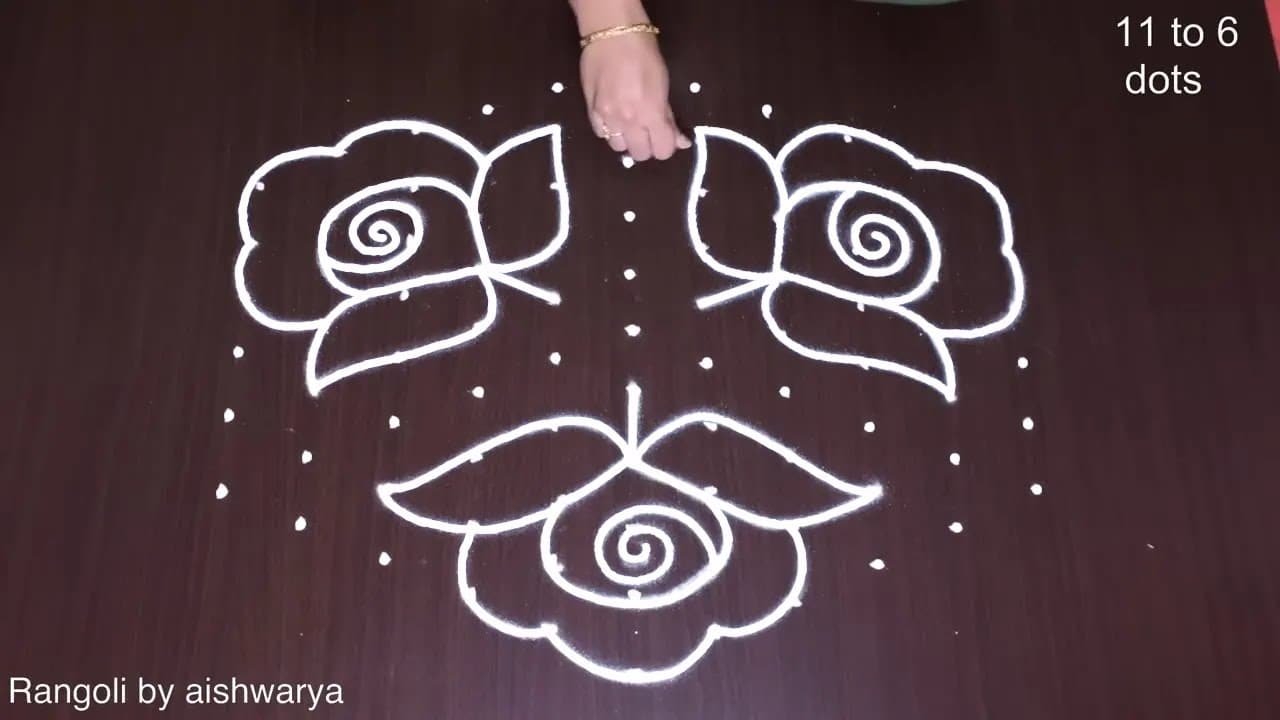
Simple Rose Flower Muggulu has become a favourite among learners on our channel — and once you try it, you will see why.
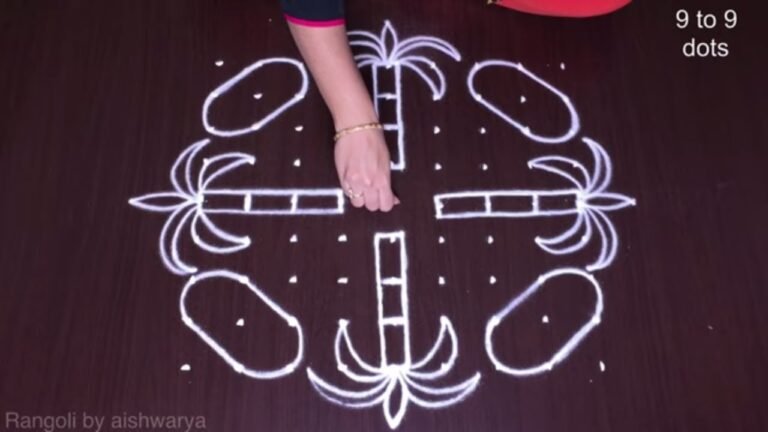
For another beginner-friendly variation, try Latest Flower Rangoli Designs 9 Dots.
Learn more about the tradition of Rangoli on Wikipedia.
Learn how to create Gulabi Muggulu: 11×6 Dots Easy Rose Rangoli Kolam | Simple Rangoli Designs in this easy tutorial! Perfect for beginners, this simple rangoli with dots uses everyday materials like dry rice flour, colored sand, or vibrant flower petals. Designed by Aishwarya, this kolam pattern is ideal for decorating your living room floor, courtyard, or doorstep. Follow along as we guide you through drawing the lines effortlessly to achieve an awesome rangoli result. Drawing kolam every morning is a cherished Indian tradition that invites positive energy and vibrations into your home. Rangoli, also known as kolam or muggulu (in Andhra Pradesh and Telangana), is a timeless part of Indian culture, handed down through generations. Crafted with kolam powder (muggu pindi or crushed limestone), rice flour, or a blend of both, these designs come in various styles like dots kolam, sikku kolam, padi kolam, and Margazhi kolam. Elevate your celebrations with special festival rangoli! Create deepam kolam for Diwali (Deepavali), large Dhanurmasam muggulu for Sankranthi (Pongal), or intricate patterns for Vijaya Dashami (Dasara). It's believed that drawing muggulu at your doorstep brings good luck and prosperity to your family. Enhance your designs with fresh flowers for any occasion. For more #simplerangolidesigns freehand and dotted rangoli tutorials, including creative kolam ideas for all skill levels. Watch now and master beautiful rangoli designs today! My Simple Rangoli Designs Channel Contains :
1. Rangoli 2. Muggulu 3. Rangoli Designs
4. Kolam 5. Simple Rangoli 6. Chukkala Muggulu
7. Simple Rangoli Designs 8. Muggulu Designs 9. Kolam Designs
10. Sankranthi Muggulu 11. Rangoli Design 12. Tipkyanchi Rangoli
13. Pongal Kolam 14. New Year Muggulu 15. Kolangal
Tip: Keep your powder bowl close to your dominant hand. Small movements give cleaner curves.
About this design: Simple Rose Flower Muggulu is a beginner-friendly pattern that comes together in just a few minutes. Once you have practised the simple rose flower muggulu dot grid, you can scale it up for festival mornings or scale it down for a daily doorstep. Many learners on our channel make this simple rose flower muggulu their go-to design once they get the rhythm of the curves.
Simple Rose Flower Muggulu — Step by Step Guide
Pace yourself through the steps — kolam rewards patience more than speed.
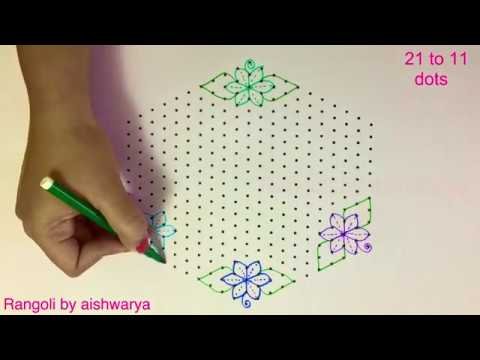
- Mark the 11-to-6 dot grid.
- Around the grid, mark positions for a ring of roses — upper-left, upper-right, left, right and bottom.
- At each position draw a rose: a small spiral at the centre, then three or four rounded petals wrapped around it so they overlap like a cabbage rose.
- Between the roses add small pointed leaves with a curl.
- In the centre, draw a small pointed-leaf diamond linking the middle dots.
- Space the roses evenly, then outline in white and colour red-pink with green leaves.
What You Will Learn
- 11X6 Dots Rangoli
- Gulabi Muggulu Designs
- Rose Rangoli With Dots
- 11X6 Dots Kolam
- Flower Rangoli With Dots
- Rangoli With Dots
Frequently Asked Questions
How do I draw this rangoli?
The grid comes first. Use a soft chalk to dot the surface, count twice to confirm the spacing, then start connecting them following the video. Work from the centre outward.
Is this suitable for beginners?
It is one of the more forgiving designs in our collection. Beginners often pick it as a confidence-builder before moving on to larger grids.
What materials do I need?
Powder (white for outlines, colours for filling), a flat surface, and a dot stencil if you want absolute precision. Beyond that, just your hand and a steady pace.
How long does it take?
The video runs 2 min 58 sec. In practice, most learners take between 10 and 20 minutes — a little longer the first time, faster as the pattern becomes familiar.
A reminder that beautiful art does not need expensive materials — just a steady hand, a clean surface, and a few pinches of rice flour.

Leave a Reply