
Sankranthi Pongal 6 Se has become a favourite among learners on our channel — and once you try it, you will see why.

For another beginner-friendly variation, try Draw Beautiful Deepam Deepala Simple Kolam.
Learn more about the tradition of Rangoli on Wikipedia.
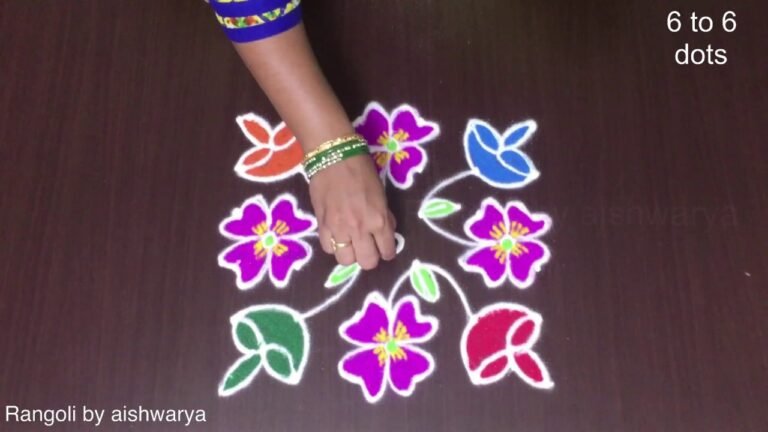
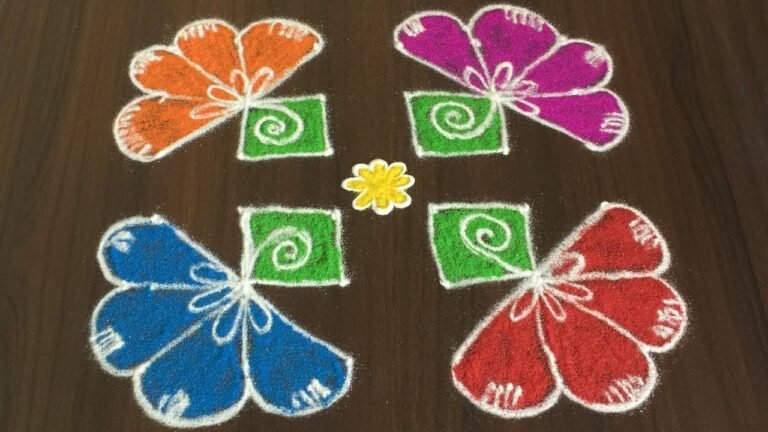
Want to draw a neat and festive 6×6 dots kolam for Sankranthi and Pongal? This easy festival muggulu tutorial makes it simple and satisfying to recreate. In this video, we demonstrate how to draw a 6×6 dots Sankranthi Pongal kolam, starting from proper dot placement to the final symmetrical finish. The 6-6 square grid provides a strong foundation, making the design balanced and visually appealing.
🌾 What You’ll Learn Step by Step: Correct placement of the 6×6 dot grid Building a symmetrical base structure
Smooth curve techniques for clean finishing Simple festive detailing to enhance the look Sankranthi and Pongal celebrations are known for beautifully decorated entrances. A 6×6 grid is perfect for medium-sized spaces, giving enough detail without becoming complicated.
Even beginners can confidently follow this structure because the square grid naturally guides spacing and alignment. The tutorial format allows you to pause, follow each step, and complete the design with ease. Watch till the end to see the full symmetrical reveal — the final alignment highlights how the 6×6 dot structure transforms into a festive and elegant kolam. If you enjoy structured square grids, explore other harvest formats like 7×7 and 9-5 to expand your Sankranthi rangoli collection.
Save this design and recreate it for a bright and joyful Pongal celebration.
Tip: A slightly damp brush along the edges gives a sharper finish, especially for festival photographs.
This design belongs to the broader tradition of rangoli and kolam art practised across South India. Explore more in our 6 to 6 dots Rangoli Designs collection.
About this design: Sankranthi Pongal 6 Se is a beginner-friendly pattern that comes together in just a few minutes. Once you have practised the sankranthi pongal 6 se dot grid, you can scale it up for festival mornings or scale it down for a daily doorstep. Many learners on our channel make this sankranthi pongal 6 se their go-to design once they get the rhythm of the curves.
Sankranthi Pongal 6 Se — Step by Step Guide
Pace yourself through the steps — kolam rewards patience more than speed.
- Clear a flat surface and set down your dot grid using rice flour or chalk.
- Confirm the dot spacing is even — uneven dots are the biggest cause of wobbly curves.
- Begin tracing from the centre outward, following the curves shown in the video above.
- Fill the petals and sections with your chosen colours, working one area at a time.
- Finish the edges with a fine line for a sharp, photograph-ready result.
What You Will Learn
- 6X6 Dots Sankranthi Kolam Tutorial
- Pongal Festival Kolam 6-6
- Easy 6X6 Muggulu Design
- 6-6 Dots Rangoli Pattern
- Sankranthi Entrance Kolam 6X6
- 6X6 Pulli Kolam
Frequently Asked Questions
How do I draw this rangoli?
Start by marking an even dot grid on a flat, clean surface. Once the grid is in place, connect the dots following the curves shown in the video. Even spacing between dots is the single biggest factor for a clean finish.
Is this suitable for beginners?
Absolutely. You can pause and rewind the video at every step. The pattern is straightforward once you have the grid down.
What materials do I need?
Just three things: powder (white plus any colours you want), a flat dry surface, and a few minutes of focus. A small bowl per colour helps keep things tidy.
How long does it take?
Roughly 3 min 5 sec to watch end-to-end, and 10–20 minutes to draw yourself depending on grid size and how careful you are with the curves.
Once this design feels familiar, switch the colours or rotate the grid by a step. Small tweaks keep daily kolam practice interesting.

Leave a Reply