There is something timeless about 9 Dots Gruhapravesam Muggulu — the symmetry, the rhythm of the dots, and the soft curves it produces.
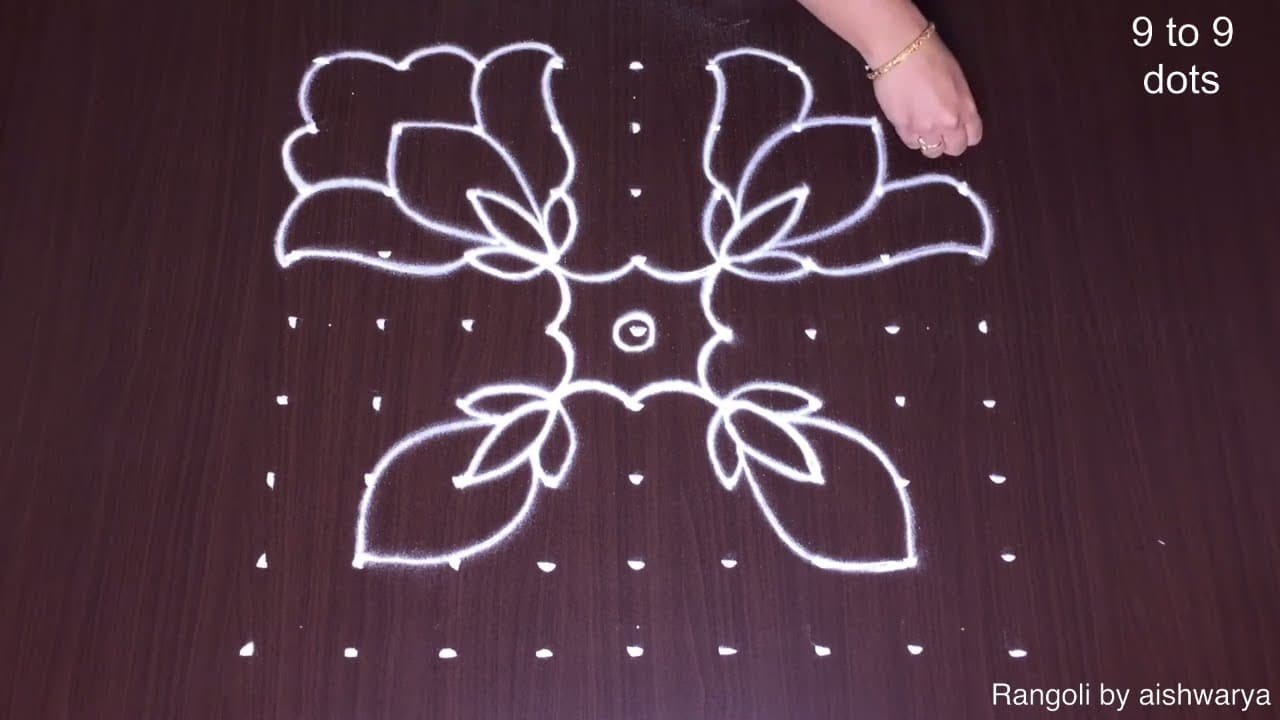
House warming flower kolam on floor designs in front of the main door | 9 dots Gruhapravesam muggulu. This tutorial will show you how to draw Beautiful Indian traditional art sankranthi muggulu patterns using materials such as dry rice flour, colored sand or flower petals Rangoli designs by Aishwarya. Simple rangoli designs with dots Kolam pattern is created on the floor in living rooms or courtyards. Draw the Lines step by step as it is shown in this video and will be awesome Rangoli Design. 😲 The rangoli design for diwali pattern here is one of the amazing latest simple kolam designs. Simple Rangoli Designs and easy rangoli designs by Aishwarya with dots for beginners and intermediate.
1. Diwali Rangoli 2. Pongal kolams 3. Easy rangoli designs
4. Rangoli design 5. Chukkala muggulu 6. Dot rangoli designs
7. Rangoli for diwali 8. Rangoli Simple 9. Easy rangoli designs
10. Kolam designs 11. Simple rangoli design 12. Muggulu designs
13. Muggulu designs with dots 14. Small rangoli designs 15. Muggulu chukkala muggulu
Tip: Keep your powder bowl close to your dominant hand. Small movements give cleaner curves.
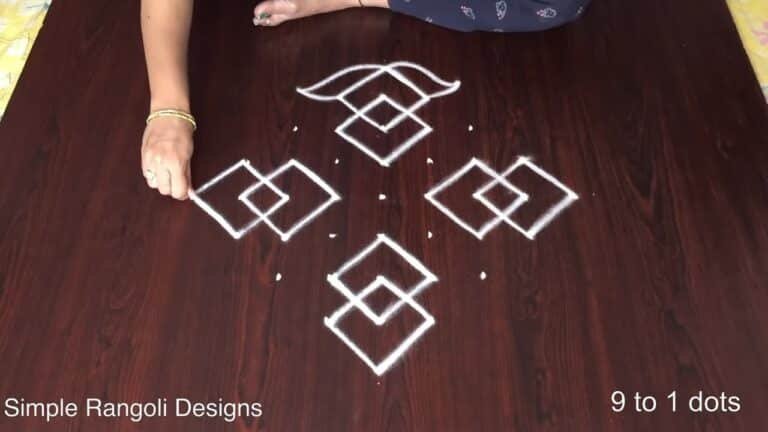
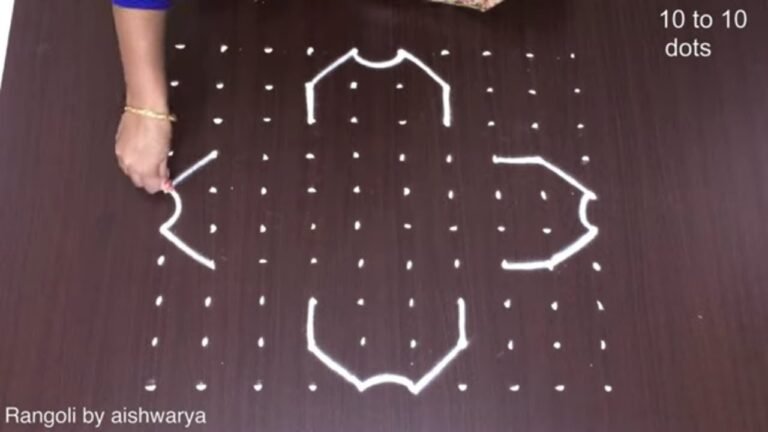
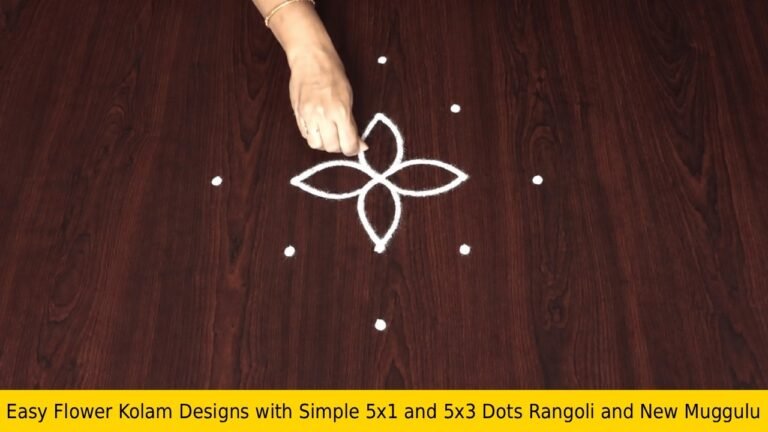
The 9 dots gruhapravesam muggulu is a beautiful and traditional design often created during housewarming ceremonies in India. This rangoli pattern is simple yet elegant, making it perfect for beginners. The design usually features a symmetrical arrangement of dots that can be connected through various geometric shapes and floral motifs, symbolizing prosperity and welcoming good fortune into a new home. For more inspiration on easy designs, you might enjoy exploring the 12 to 4 Dots Flower Pot Rangoli as well.
Creating this muggulu involves using rice flour or colored powders to outline and fill in the design, allowing for personalization with colors that resonate with the occasion. It’s common to see variations that incorporate additional elements, like flowers or small decorative items, enhancing the festive spirit. If you’re interested in exploring more traditional designs, the Traditional Friday Diya Pulli Designs Rangoli can also serve as a great reference. For those curious about the cultural significance of rangoli, you can read more on Wikipedia.
9 Dots Gruhapravesam Muggulu — Step by Step Guide
Follow the steps below to recreate this design at home. Pause the video whenever you need — there is no hurry.
- Clear a flat surface and set down your dot grid using rice flour or chalk.
- Confirm the dot spacing is even — uneven dots are the biggest cause of wobbly curves.
- Begin tracing from the centre outward, following the curves shown in the video above.
- Fill the petals and sections with your chosen colours, working one area at a time.
- Finish the edges with a fine line for a sharp, photograph-ready result.
What You Will Learn
- Simple Rangoli Designs
- Rangoli
- Muggulu
- Rangoli Designs
- Rangoli Kolam
- Kolam
Frequently Asked Questions
How do I draw this rangoli?
Begin with the dot grid — this is the skeleton of the design. With rice flour or chalk, place each dot at equal intervals. Then trace the curves slowly, one section at a time.
Is this suitable for beginners?
It is one of the more forgiving designs in our collection. Beginners often pick it as a confidence-builder before moving on to larger grids.
What materials do I need?
Powder (white for outlines, colours for filling), a flat surface, and a dot stencil if you want absolute precision. Beyond that, just your hand and a steady pace.
How long does it take?
Roughly 3 min 38 sec to watch end-to-end, and 10–20 minutes to draw yourself depending on grid size and how careful you are with the curves.
Once you get the rhythm of this design, try scaling it up or experimenting with colours. The grid stays the same; the personality changes.
Leave a Reply