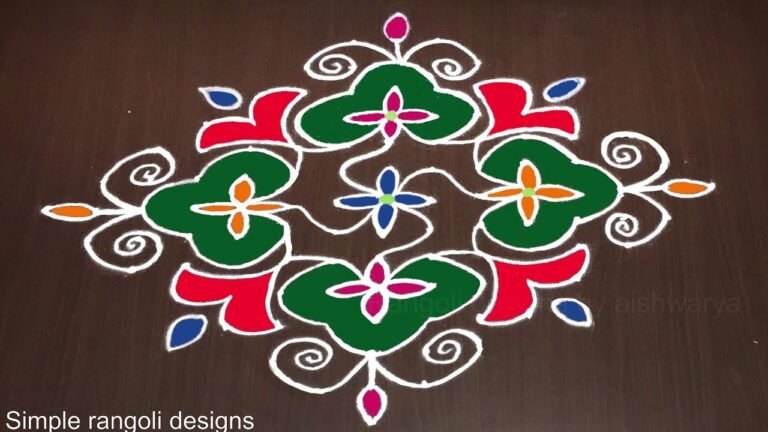
Beautiful Flower Kolam Designs is the kind of design that looks intricate but is genuinely beginner-friendly once you follow the dot grid.
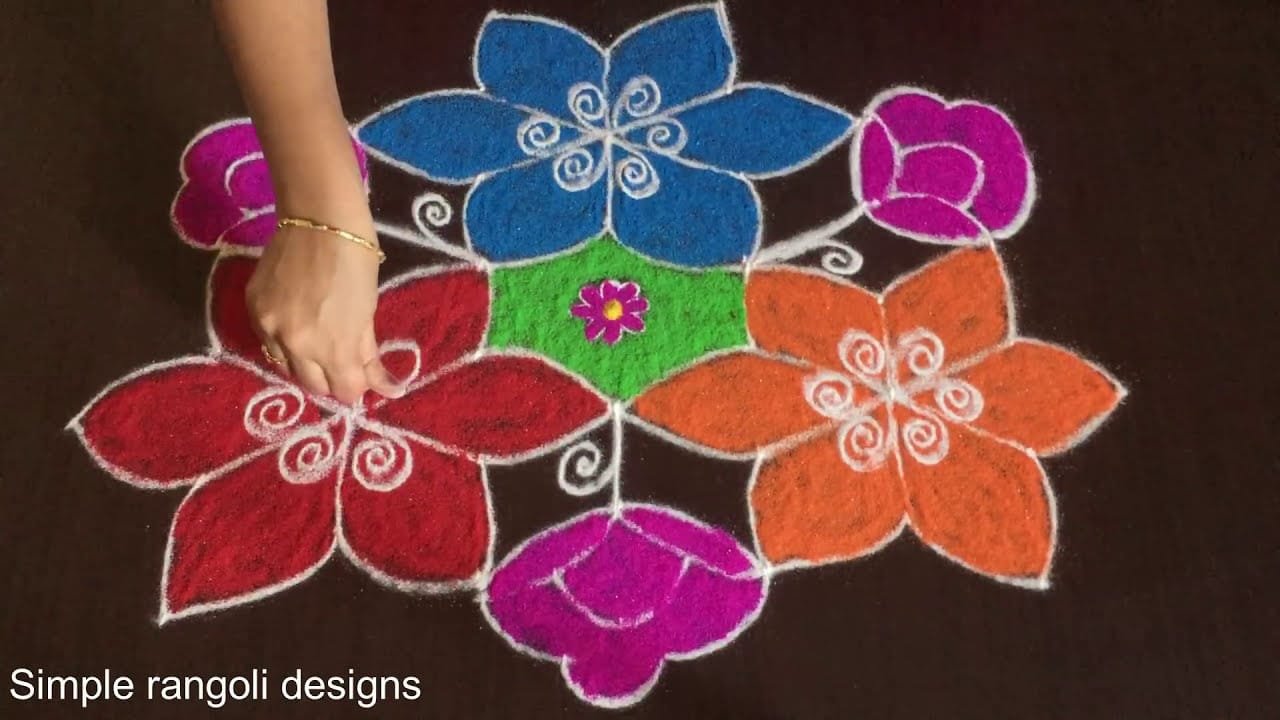
For another beginner-friendly variation, try Easy Pongal Pot Kolam.
Learn more about the tradition of Rangoli on Wikipedia.
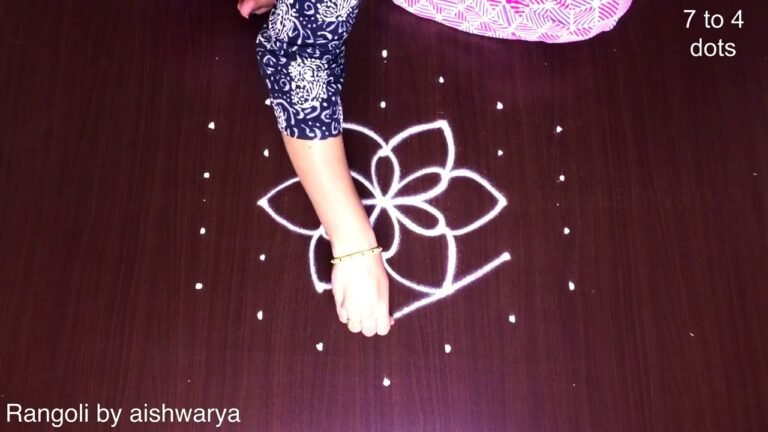
Looking for a neat and festive 7×4 dots flower kolam for Sankranthi? This easy floral muggulu design brings balance, colour, and celebration to your entrance. In this video, we create a 7×4 dots flower kolam for Sankranthi, using a structured decreasing grid that forms a clean and symmetrical layout. The 7-4 format is ideal for medium-sized entrances, giving enough space to shape smooth and graceful petals.
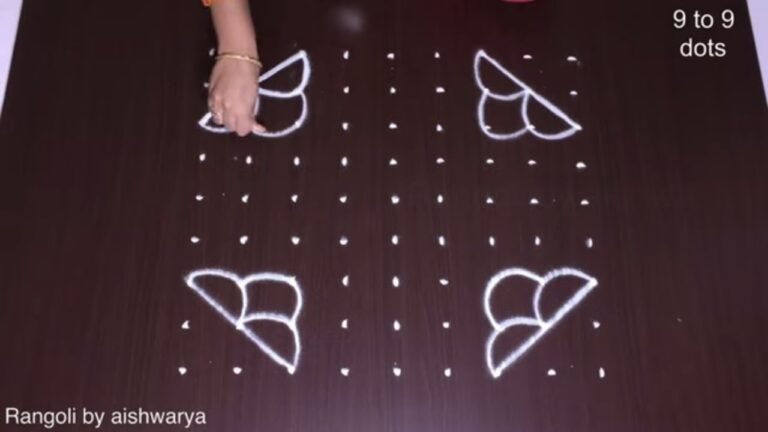
🌸 What You’ll Learn Step by Step: Proper placement of the 7×4 decreasing dot grid Forming balanced flower petals with smooth curves
Maintaining symmetry across the center axis Simple finishing techniques for a festive look Sankranthi is known for vibrant entrances decorated with meaningful kolam. A 7×4 dot structure makes the design compact yet visually attractive, perfect for apartment doorways and home thresholds.
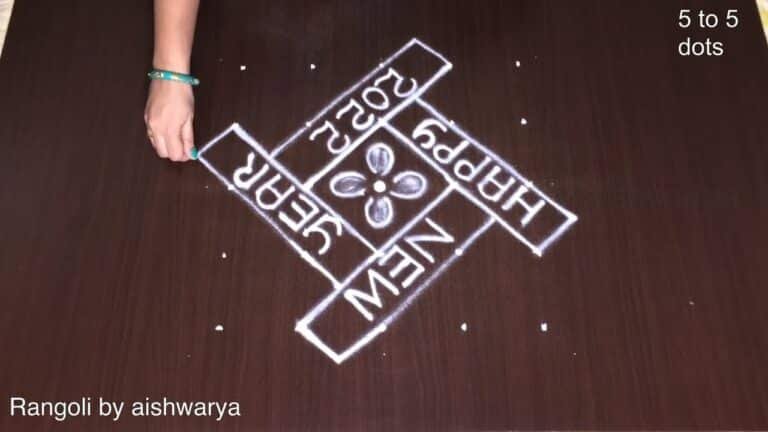
Even beginners can confidently follow this layout because the dot grid naturally guides spacing and proportion. The step-by-step approach ensures a neat and polished final result. Watch till the end to see the complete floral reveal — the final symmetrical alignment highlights how the 7×4 dot structure transforms into a beautiful Sankranthi kolam. If you enjoy 7×4 floral designs, explore other festive grids like 5×5 and 9-5 to expand your seasonal rangoli collection.
Save this design and recreate it to brighten your Sankranthi celebration.
Tip: Work from the centre outward. It keeps the symmetry honest and prevents the design from drifting off-balance.
About this design: Beautiful Flower Kolam Designs is a beginner-friendly pattern that comes together in just a few minutes. Once you have practised the beautiful flower kolam designs dot grid, you can scale it up for festival mornings or scale it down for a daily doorstep. Many learners on our channel make this beautiful flower kolam designs their go-to design once they get the rhythm of the curves.
Beautiful Flower Kolam Designs — Step by Step Guide
Use the steps below as a reference card while the video plays. Most learners finish on the second attempt.
- Clear a flat surface and set down your dot grid using rice flour or chalk.
- Confirm the dot spacing is even — uneven dots are the biggest cause of wobbly curves.
- Begin tracing from the centre outward, following the curves shown in the video above.
- Fill the petals and sections with your chosen colours, working one area at a time.
- Finish the edges with a fine line for a sharp, photograph-ready result.
What You Will Learn
- 7X4 Dots Sankranthi Kolam
- Flower Kolam 7-4 Dots
- Easy Festival Rangoli 7X4
- Sankranthi Muggulu 7-4
- 7-4 Dots Kolam Design
- 7X4 Pulli Kolam
Frequently Asked Questions
How do I draw this rangoli?
The grid comes first. Use a soft chalk to dot the surface, count twice to confirm the spacing, then start connecting them following the video. Work from the centre outward.
Is this suitable for beginners?
Yes, and it is one we recommend to first-timers. The small grid keeps the design manageable while still teaching the core technique.
What materials do I need?
Rice flour, coloured rangoli powders, and a clean stretch of floor or paper. Some draw with chalk first to set the grid before powdering over it.
How long does it take?
Roughly 2 min 51 sec to watch end-to-end, and 10–20 minutes to draw yourself depending on grid size and how careful you are with the curves.
There is real pleasure in finishing a kolam at your own doorstep — even more so when the pattern is one you have practised before. Make this one of those.
Leave a Reply