Drawing Beautiful Flower Muggulu Rangoli is a relaxing, almost meditative practice. The dots guide your hand and the design unfolds naturally.
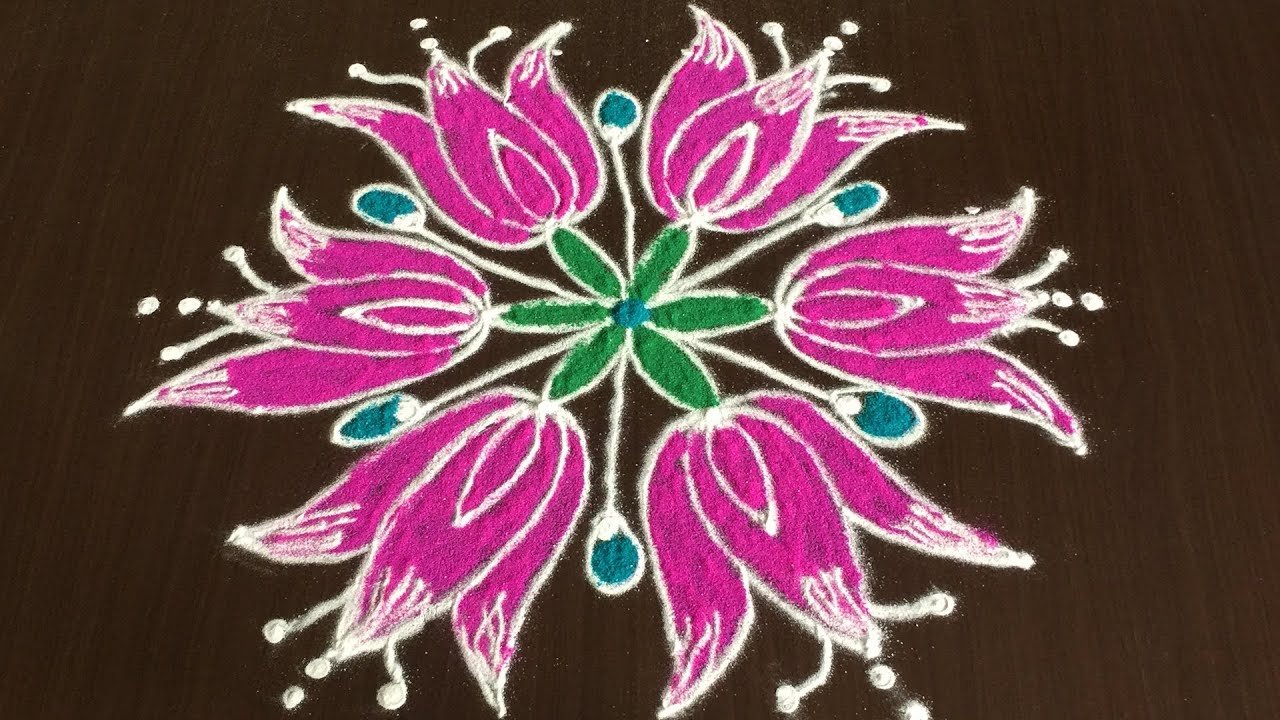
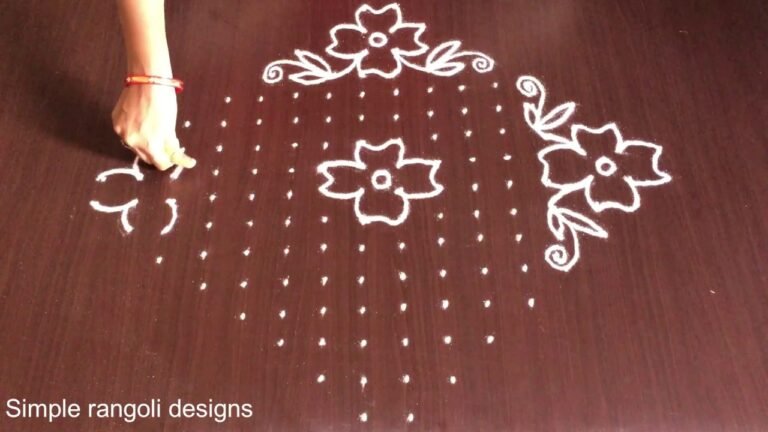
Want to create a graceful lotus flower kolam using a 7-4 dot grid? This beautiful muggulu design is structured, elegant, and easy to follow step by step. In this video, we demonstrate how to make a 7-4 dots lotus flower kolam, starting from correct dot placement to forming smooth and balanced petals. The 7 to 4 decreasing grid creates a compact yet well-proportioned layout, perfect for entrances and pooja spaces.
🌸 What You’ll Learn Step by Step: Proper placement of the 7-4 decreasing dot grid Forming symmetrical lotus petals smoothly
Maintaining alignment along the central axis Simple finishing touches for a neat and polished look The lotus symbolizes purity and positivity, making it a meaningful choice for home decoration and festive occasions. The 7-4 format is ideal for medium-sized entrances because it offers enough detailing without becoming complex.
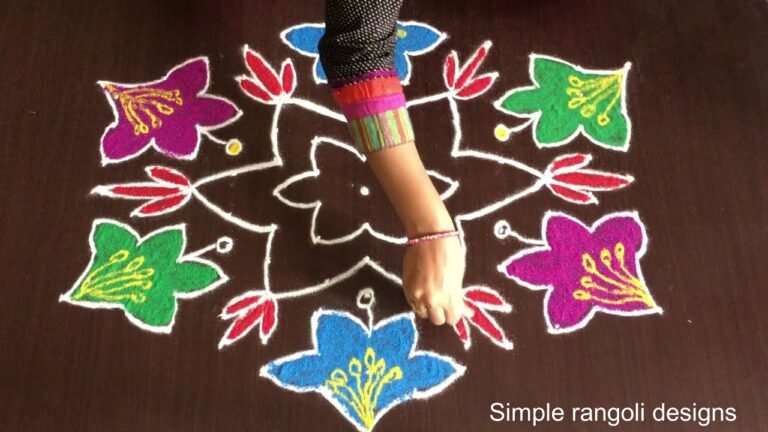
Even beginners can confidently follow this tutorial, as the structured dot layout naturally guides spacing and curve control. Watch till the end to see the complete floral transformation — the final symmetrical reveal highlights how the 7-4 dot structure turns into an elegant lotus kolam. If you enjoy medium floral grids, explore other formats like 5-3 and 9-5 to expand your creative rangoli collection.
Save this design and recreate it to enhance your entrance beautifully.
Tip: Practice on paper first if you are new to dot kolam. The grid is the same; only the surface changes.
This beautiful flower muggulu rangoli, designed on a 7-4 dot grid, captures the essence of grace and elegance. The lotus flower, a symbol of purity, is perfect for festive occasions and home decoration, especially in pooja spaces. The structured layout not only makes the design visually appealing but also simple for beginners to execute. For those interested in more geometrical designs, the Perfect Geometrical Shapes Rangoli offers additional inspiration.
Creating this rangoli involves careful dot placement and smooth petal formation, all while maintaining symmetry along the central axis. As you progress through the steps, you’ll find that the 7-4 format allows for detailed work without overwhelming complexity. The final reveal of the lotus showcases the beauty of this design. If you’re looking for other floral themes, the 12 to 4 Dots Flower Pot Rangoli is another delightful option to explore. For more information on the art of rangoli, visit this Wikipedia page.
About this design: Beautiful Flower Muggulu Rangoli is a beginner-friendly pattern that comes together in just a few minutes. Once you have practised the beautiful flower muggulu rangoli dot grid, you can scale it up for festival mornings or scale it down for a daily doorstep. Many learners on our channel make this beautiful flower muggulu rangoli their go-to design once they get the rhythm of the curves.
Beautiful Flower Muggulu Rangoli — Step by Step Guide
Follow the steps below to recreate this design at home. Pause the video whenever you need — there is no hurry.
- Clear a flat surface and set down your dot grid using rice flour or chalk.
- Confirm the dot spacing is even — uneven dots are the biggest cause of wobbly curves.
- Begin tracing from the centre outward, following the curves shown in the video above.
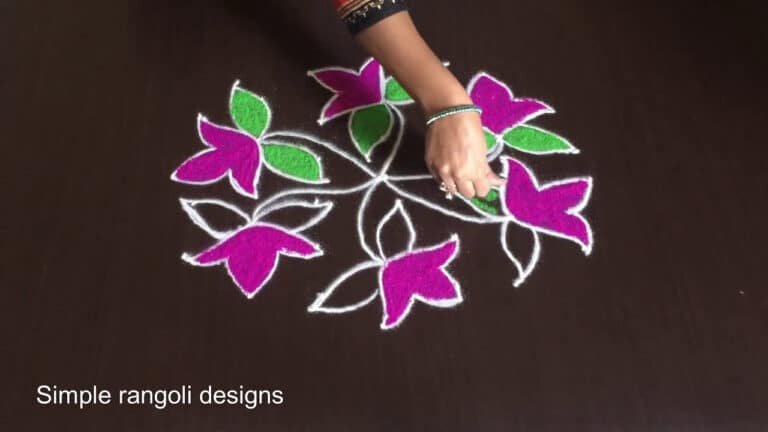
- Fill the petals and sections with your chosen colours, working one area at a time.
- Finish the edges with a fine line for a sharp, photograph-ready result.
What You Will Learn
- 7-4 Dots Lotus Kolam
- Beautiful Flower Muggulu 7-4
- Lotus Rangoli Tutorial 7-4
- 7-4 Dots Kolam Design
- Easy Floral Kolam 7-4
- 7-4 Pulli Kolam
Frequently Asked Questions
How do I draw this rangoli?
It looks complex but follows a simple rhythm: dots first, then loops. Mark the grid, take a breath, and trace the curves at a steady pace. The pattern emerges on its own.
Is this suitable for beginners?
Yes, and it is one we recommend to first-timers. The small grid keeps the design manageable while still teaching the core technique.
What materials do I need?
White rice flour for the outline, coloured powders for the fill, and a clean dry floor. That is the essentials list — you can add a stencil if you prefer.
How long does it take?
3 min 46 sec of video, perhaps 20 minutes of practice. The curves take a couple of attempts to feel natural, then it speeds up considerably.
Pin this for later or share with a friend learning kolam — and let us know in the comments which design you would like next.
Leave a Reply