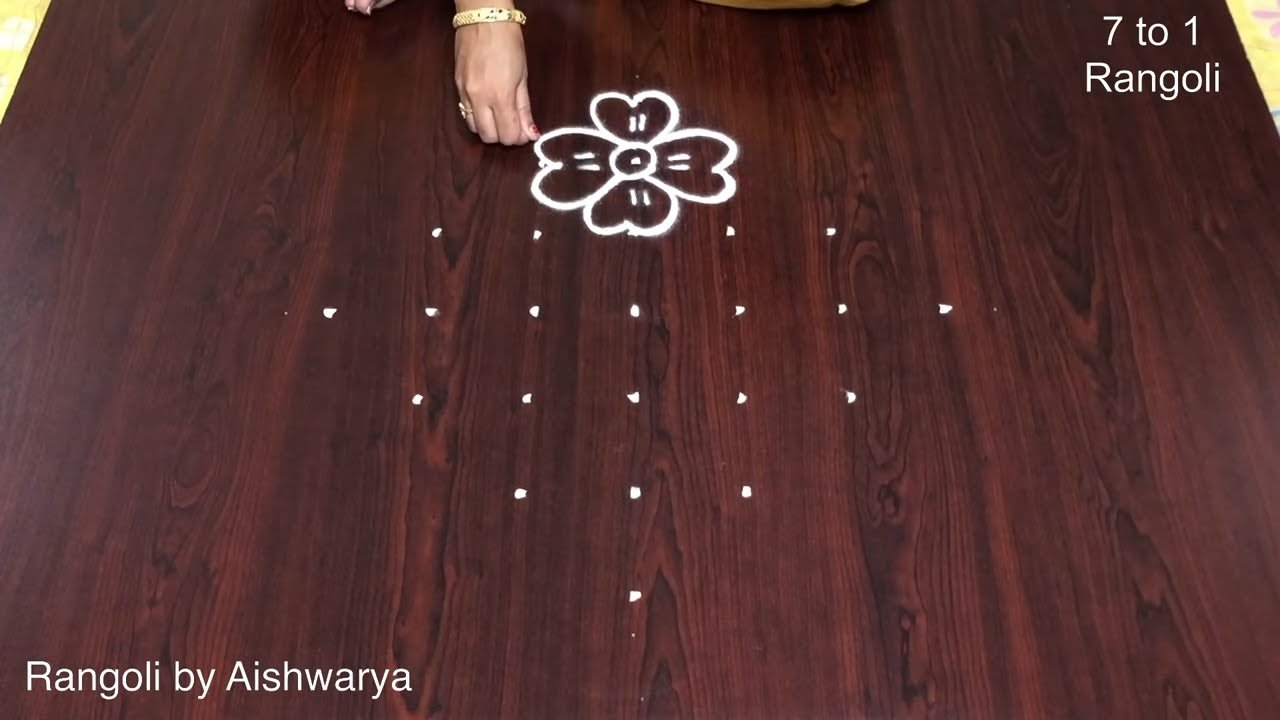
Vilakku Kolam With Dots

Intermediate ⏱ 7 min Updated Apr 30, 2026

7 to 1 dots Rangoli Designs · August 30, 2025

If you enjoy dot-grid muggulu, Vilakku Kolam With Dots is a satisfying pattern that comes together in just a few minutes.

Vilakku Kolam With Dots
Vilakku Kolam With Dots — step-by-step video tutorial

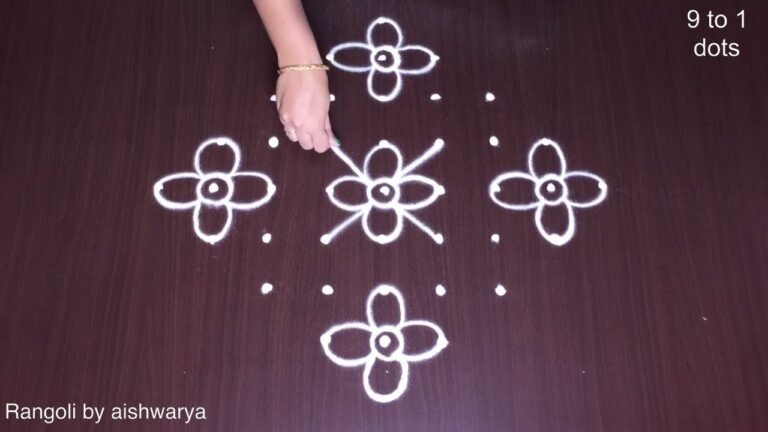
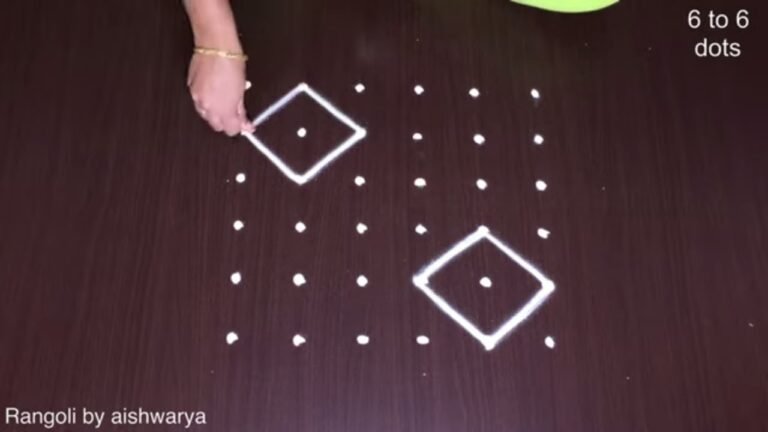
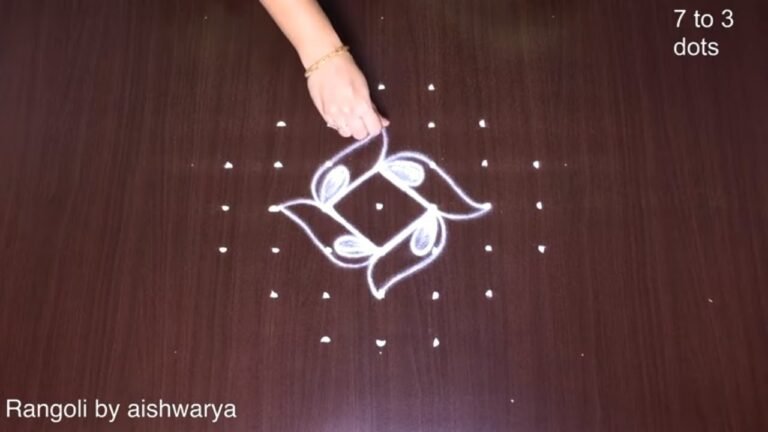
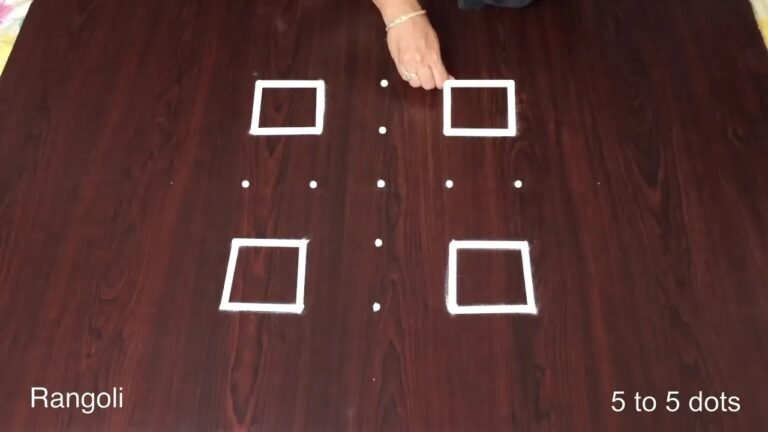
Vilakku Kolam With Dots | Easy & Simple Daily Rangoli Designs | 7 to 1 Chukkala Muggulu. This tutorial will show you how to draw Beautiful Indian traditional art sankranthi muggulu patterns using materials such as dry rice flour, colored sand or flower petals Rangoli designs by Aishwarya. Simple rangoli designs with dots Kolam pattern is created on the floor in living rooms or courtyards. Draw the Lines step by step as it is shown in this video and will be awesome Rangoli Design. 😲 The rangoli design for diwali pattern here is one of the amazing latest simple kolam designs. ⏱️⏱️VIDEO CHAPTERS⏱️⏱️

0:00 Intro 0:05 Vilakku Kolam With Dots 3:06 7 to 1 Chukkala Muggulu

Simple Rangoli Designs and easy rangoli designs by Aishwarya with dots for beginners and intermediate. 1. Diwali Rangoli 2. Pongal kolams

3. Easy rangoli designs 4. Rangoli design 5. Chukkala muggulu

6. Muggu designs 7. Rangoli for diwali 8. Rangoli Simple

9. Chukkala muggulu sankranthi 10. Kolam designs 11. Simple rangoli design

Tip: Work from the centre outward. It keeps the symmetry honest and prevents the design from drifting off-balance.

The Vilakku Kolam with dots is a delightful representation of traditional Indian art, perfect for festivals such as Diwali and Pongal. Utilizing a 7 to 1 dot pattern, this design allows beginners to create intricate and beautiful designs with relative ease. The vibrant colors and delicate lines can transform any space, making it a lovely addition to courtyards and living rooms during festive occasions. For further inspiration, you might enjoy exploring the Big Creative Deepam Rangoli or the 9 to 3 Dots Roja Puvvula Muggulu.

This kolam style not only enhances the festive spirit but also serves as a welcoming gesture for guests. Typically created using rice flour, colored sand, or flower petals, the Vilakku Kolam with dots is a reflection of cultural heritage and creativity. As you practice this art form, you can appreciate the intricate details that make each design unique. For those interested in learning more about the history and significance of rangoli, you can visit this informative page.

Vilakku Kolam With Dots — Step by Step Guide

Here is how to draw it, line by line. Take your time on the corners and the symmetry will take care of itself.

  1. Clear a flat surface and set down your dot grid using rice flour or chalk.
  2. Confirm the dot spacing is even — uneven dots are the biggest cause of wobbly curves.
  3. Begin tracing from the centre outward, following the curves shown in the video above.
  4. Fill the petals and sections with your chosen colours, working one area at a time.
  5. Finish the edges with a fine line for a sharp, photograph-ready result.

What You Will Learn

  • Simple Rangoli Designs
  • Rangoli
  • Muggulu
  • Rangoli Designs
  • Rangoli Kolam
  • Kolam

Frequently Asked Questions

How do I draw this rangoli?

It looks complex but follows a simple rhythm: dots first, then loops. Mark the grid, take a breath, and trace the curves at a steady pace. The pattern emerges on its own.

Is this suitable for beginners?

Yes — this design is shaped specifically with newcomers in mind. The dot grid is small enough to manage, and the curves are gentle. Most learners get it right by the second try.

What materials do I need?

Powder (white for outlines, colours for filling), a flat surface, and a dot stencil if you want absolute precision. Beyond that, just your hand and a steady pace.

How long does it take?

The video clocks in at 6 min 24 sec. Allow about quarter of an hour to draw the design at a comfortable pace.

Once this design feels familiar, switch the colours or rotate the grid by a step. Small tweaks keep daily kolam practice interesting.

Leave a Reply

Your email address will not be published. Required fields are marked *