There is something timeless about Kolam And Muggulu Sankranthi — the symmetry, the rhythm of the dots, and the soft curves it produces.

For another beginner-friendly variation, try 7 Into 7 Dots Festival Rangoli.
Learn more about the tradition of Rangoli on Wikipedia.
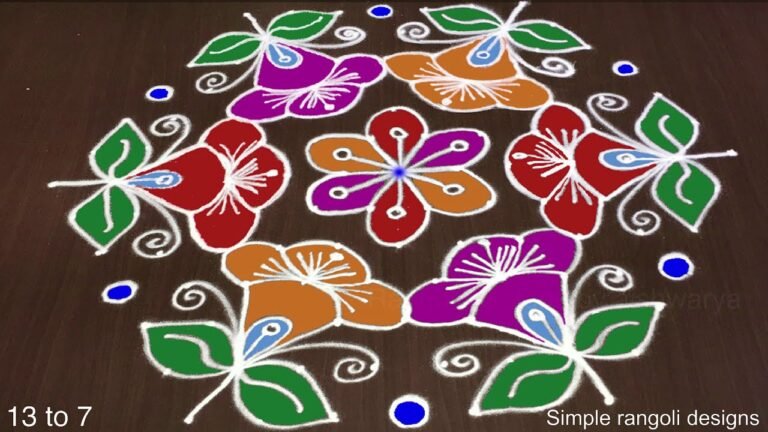
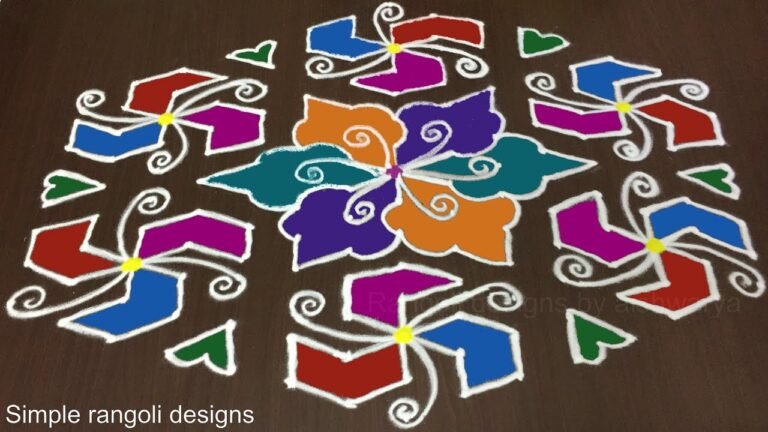
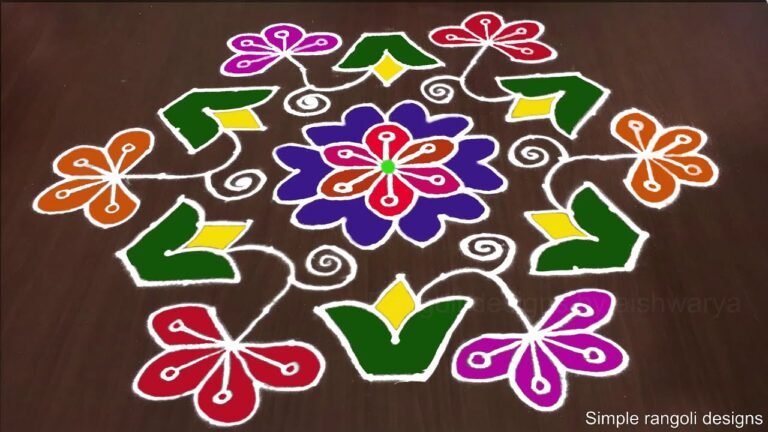
Looking for a beautiful Friday kolam that also suits Sankranthi and Pongal? This 13 to 7 dots flower rangoli is devotional, festive, and perfectly balanced. In this video, I guide you step by step to create a 13 to 7 decreasing dot grid flower kolam designed for Friday pooja as well as Sankranthi and Pongal celebrations. The structured layout gives the design strong symmetry, while the layered floral curves create a rich and traditional festive appearance.
We begin by placing a neat 13 to 7 straight dot structure, carefully aligned to maintain balance and proportion. Then, the outer floral framework is formed by smoothly connecting the dots into petal shapes. As the design develops, inner detailing enhances the center and gives the kolam a refined and complete finish. Even though the grid is medium-large, the step-by-step method makes it easy to follow. How to construct a proper 13–7 decreasing dot grid How to create symmetrical layered flower patterns
How to maintain balance in medium-large kolams Tips to make Friday and festival kolam look neat and vibrant This flower muggulu is ideal for Friday entrances, Sankranthi celebrations, and Pongal decoration spaces. The structured grid ensures a clean and impressive result suitable for both devotional and festive settings.
Watch till the end to see the full transformation from simple dots to a complete floral kolam — the final reveal highlights a beautifully balanced and festive design. If you enjoy structured dot kolams, explore more 13 to 7 dots rangoli, Friday special muggulu, and Sankranthi Pongal flower patterns on the channel.
Tip: Work from the centre outward. It keeps the symmetry honest and prevents the design from drifting off-balance.
About this design: Kolam And Muggulu Sankranthi is a beginner-friendly pattern that comes together in just a few minutes. Once you have practised the kolam and muggulu sankranthi dot grid, you can scale it up for festival mornings or scale it down for a daily doorstep. Many learners on our channel make this kolam and muggulu sankranthi their go-to design once they get the rhythm of the curves.
Kolam And Muggulu Sankranthi — Step by Step Guide
The video above shows the full sequence; the steps below summarise each stage so you can glance back as you draw.
- Clear a flat surface and set down your dot grid using rice flour or chalk.
- Confirm the dot spacing is even — uneven dots are the biggest cause of wobbly curves.
- Begin tracing from the centre outward, following the curves shown in the video above.
- Fill the petals and sections with your chosen colours, working one area at a time.
- Finish the edges with a fine line for a sharp, photograph-ready result.
What You Will Learn
- Friday Kolam 13 To 7 Dots
- Sankranthi Pongal Flower Rangoli
- 13 To 7 Dots Kolam Design
- Friday Special Muggulu 13 7
- 13 7 Chukkala Muggulu
- Decreasing Dot Grid Flower Kolam
Frequently Asked Questions
How do I draw this rangoli?
The grid comes first. Use a soft chalk to dot the surface, count twice to confirm the spacing, then start connecting them following the video. Work from the centre outward.
Is this suitable for beginners?
Absolutely. You can pause and rewind the video at every step. The pattern is straightforward once you have the grid down.
What materials do I need?
You will need rice flour or rangoli powder (white, plus your choice of colours), a flat surface like a clean floor or courtyard, and optionally a dot stencil if you are new to grid-drawing.
How long does it take?
The video clocks in at 3 min 53 sec. Allow about quarter of an hour to draw the design at a comfortable pace.
Try this design tomorrow morning at your doorstep. The compact grid makes it ideal for a daily ritual, not just festival days.
Leave a Reply