This to 3 dots tutorial walks you through every step from the dot grid to the final pattern.
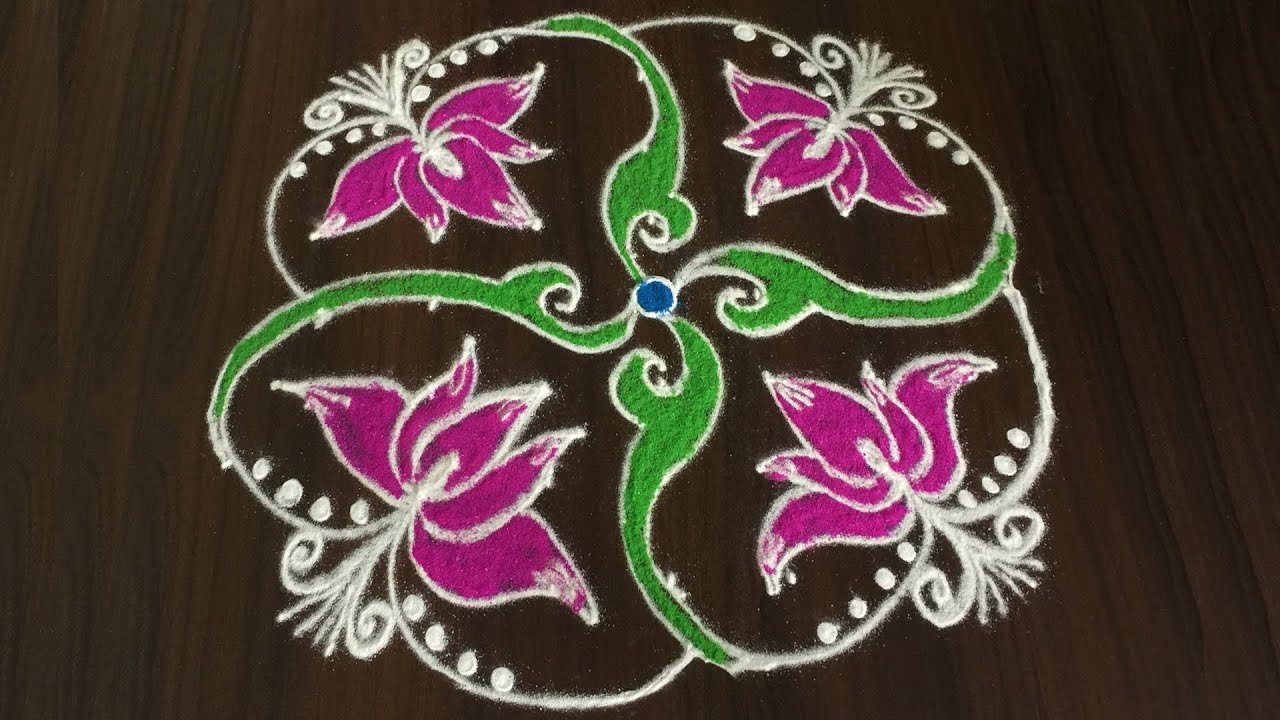
Rangoli Designs With 7 is the kind of design that looks intricate but is genuinely beginner-friendly once you follow the dot grid.
Want to draw a graceful lotus kolam using a simple 7 to 3 dot grid? This beautiful apartment-friendly rangoli design is compact, elegant, and easy to recreate. In this video, we create a 7 to 3 dots lotus flower kolam, built on a structured decreasing grid that naturally forms a balanced floral layout. The 7-3 format is ideal for small entrances and apartment thresholds where space is limited but symmetry matters.
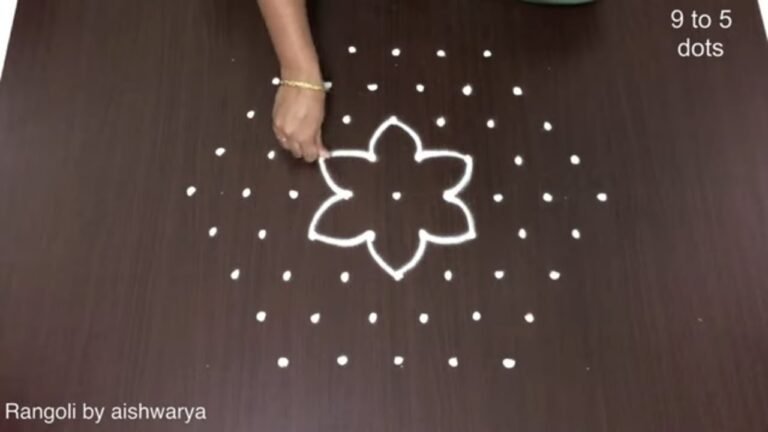
🌸 What You’ll Learn Step by Step: Proper placement of the 7 to 3 decreasing dot grid Forming smooth and symmetrical lotus petals
Maintaining balance across the center axis Clean finishing techniques for a neat look The lotus pattern symbolizes purity and positivity, making it a perfect choice for home entrances and pooja areas. Even though the design looks detailed, the dot structure makes it beginner-friendly and easy to follow.
This compact grid helps you maintain equal spacing and curve control, ensuring a polished final result. Watch till the end to see the complete lotus reveal — the final symmetrical alignment highlights how the 7-3 dot structure transforms into a beautiful floral kolam. If you enjoy small floral grids, explore other apartment-friendly formats like 5×5 and 9-5 to expand your creative dot-series collection.
Save this design and recreate it to enhance your entrance with a graceful lotus kolam.
Tip: Work from the centre outward. It keeps the symmetry honest and prevents the design from drifting off-balance.
The 7 to 3 dot grid is an excellent choice for creating a graceful lotus kolam that is both beautiful and compact, making it perfect for small spaces such as apartment entrances. The design’s symmetry and balance reflect the purity associated with the lotus flower, making it a popular choice for festive occasions and daily pooja rituals. Beginners will appreciate the straightforward structure, which simplifies the process of forming smooth and symmetrical petals. For those interested in exploring different floral designs, consider checking out the Birds Kolam Design Simple Steps for more inspiration.
This elegant rangoli design not only beautifies your home but also carries positive symbolism, enhancing the overall ambiance of your space. The 7 to 3 decreasing dot format is particularly beneficial for ensuring equal spacing and neat curves, allowing even novice artists to achieve polished results. As you create this lotus kolam, you may find it enjoyable to explore other festive designs like the 8 to 8 Navratri Durga Pooja Kolam for added variety. For a deeper understanding of the art form, you can also visit this article on Rangoli.
To 3 Dots — Step by Step Guide
Pace yourself through the steps — kolam rewards patience more than speed.
- Clear a flat surface and set down your dot grid using rice flour or chalk.
- Confirm the dot spacing is even — uneven dots are the biggest cause of wobbly curves.
- Begin tracing from the centre outward, following the curves shown in the video above.
- Fill the petals and sections with your chosen colours, working one area at a time.
- Finish the edges with a fine line for a sharp, photograph-ready result.
What You Will Learn
- 7 To 3 Dots Lotus Kolam
- Easy Apartment Flower Rangoli
- Lotus Dot Kolam 7-3
- 7-3 Dots Rangoli Design
- Small Space Lotus Kolam
- 7 To 3 Pulli Kolam
Frequently Asked Questions
How do I draw this rangoli?
Start by marking an even dot grid on a flat, clean surface. Once the grid is in place, connect the dots following the curves shown in the video. Even spacing between dots is the single biggest factor for a clean finish.
Is this suitable for beginners?
Absolutely. You can pause and rewind the video at every step. The pattern is straightforward once you have the grid down.
What materials do I need?
Rice flour, coloured rangoli powders, and a clean stretch of floor or paper. Some draw with chalk first to set the grid before powdering over it.
How long does it take?
The full demonstration takes 2 min 58 sec. Most people find their own drawing time settles to about 15 minutes once the grid is familiar.
There is real pleasure in finishing a kolam at your own doorstep — even more so when the pattern is one you have practised before. Make this one of those.

Leave a Reply