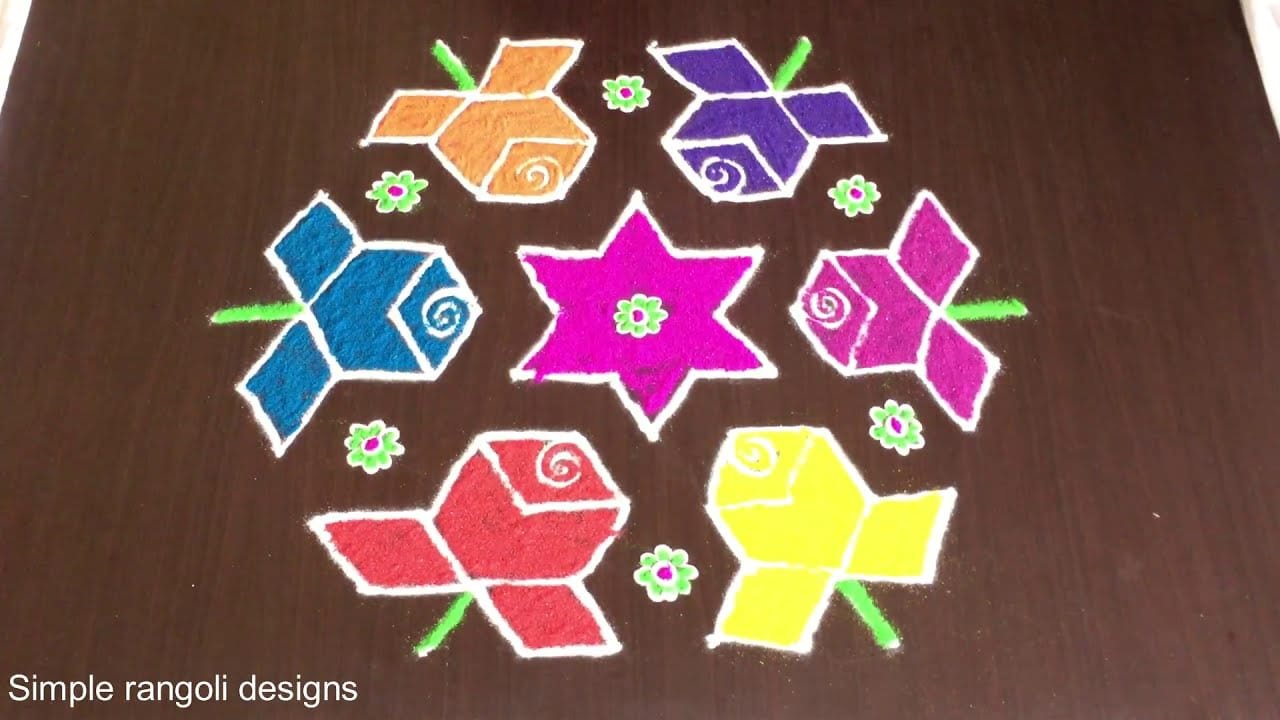
Rose Flowers Muggulu With 11 to 6 Dots

Beginner ⏱ 4 min Updated Apr 28, 2026

11 to 6 dots Rangoli Designs · August 10, 2025

If you enjoy dot-grid muggulu, Rose Flowers Muggulu With is a satisfying pattern that comes together in just a few minutes.

Rose Flowers Muggulu With 11 to 6 Dots
Rose Flowers Muggulu With 11 to 6 Dots — step-by-step video tutorial

For another beginner-friendly variation, try New Year 2021 Diya Kolams 6x2x2 Dots.

Learn more about the tradition of Rangoli on Wikipedia.

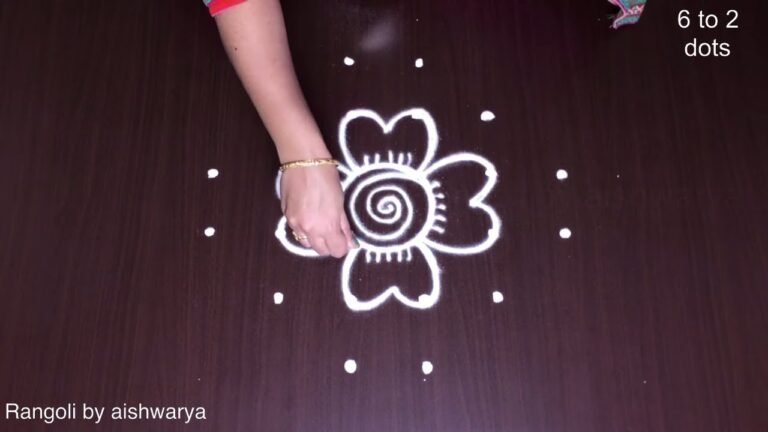
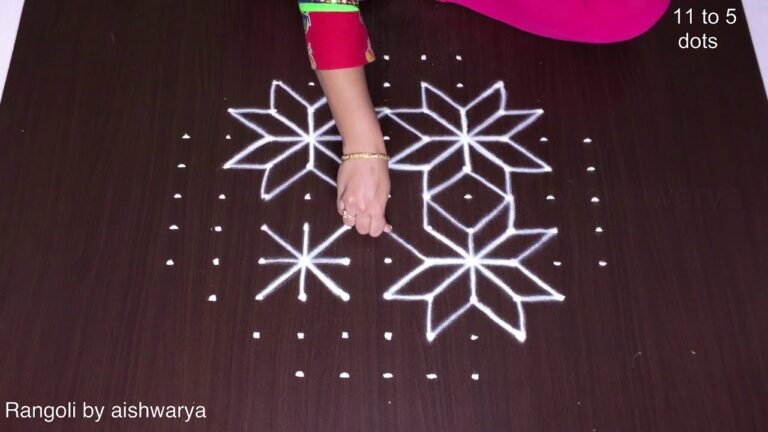
Want to learn how to draw a beautiful Sankranti rose kolam using an 11 to 6 dot grid? This step-by-step floral muggulu tutorial makes large festive designs easy to follow. In this video, we demonstrate how to draw an 11 to 6 dots Sankranti rose kolam, starting from correct dot placement to the final symmetrical finish. The 11-6 decreasing grid provides a wide base that allows detailed rose petals to form gracefully.

🌸 What You’ll Learn Step by Step: Proper placement of the 11 to 6 decreasing dots Creating layered rose petal patterns smoothly

Maintaining symmetry across the full layout Clean finishing techniques for a polished festive look Sankranti entrances are known for grand floral kolam that symbolize prosperity and celebration. The 11 to 6 format may look advanced, but with the right structure, it becomes easy and satisfying to complete.

This tutorial format helps you pause, follow each curve carefully, and build confidence while working on larger dot grids. The structured layout naturally guides spacing and proportion. Watch till the end to see the complete rose transformation — the final reveal highlights how the 11-6 dot arrangement turns into a stunning Sankranti floral kolam. If you enjoy large-grid tutorials, explore other festive formats like 9-5 and 13-7 to expand your Sankranti rangoli collection.

Save this design and recreate it for a grand and elegant harvest festival entrance.

Tip: Keep your powder bowl close to your dominant hand. Small movements give cleaner curves.

About this design: Rose Flowers Muggulu is a beginner-friendly pattern that comes together in just a few minutes. Once you have practised the rose flowers muggulu dot grid, you can scale it up for festival mornings or scale it down for a daily doorstep. Many learners on our channel make this rose flowers muggulu their go-to design once they get the rhythm of the curves.

Rose Flowers Muggulu — Step by Step Guide

Here is how to draw it, line by line. Take your time on the corners and the symmetry will take care of itself.

  1. Clear a flat surface and set down your dot grid using rice flour or chalk.
  2. Confirm the dot spacing is even — uneven dots are the biggest cause of wobbly curves.
  3. Begin tracing from the centre outward, following the curves shown in the video above.
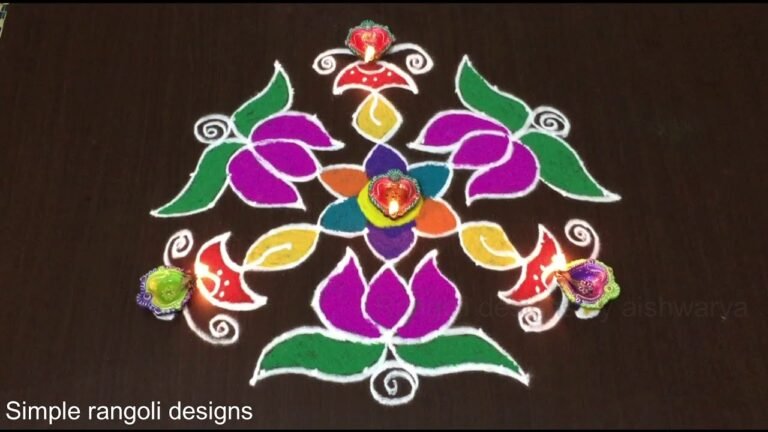
  4. Fill the petals and sections with your chosen colours, working one area at a time.
  5. Finish the edges with a fine line for a sharp, photograph-ready result.

What You Will Learn

  • 11 To 6 Dots Sankranti Rose Kolam
  • Step By Step 11-6 Floral Muggulu
  • Sankranti Flower Rangoli 11-6
  • 11-6 Dots Kolam Tutorial
  • Rose Muggulu With Dots 11-6
  • 11 To 6 Pulli Kolam

Frequently Asked Questions

How do I draw this rangoli?

Set down the dot grid in pencil or chalk, then follow the loops one petal at a time. If a curve goes off, wipe it and retry — kolam is forgiving.

Is this suitable for beginners?

Absolutely. You can pause and rewind the video at every step. The pattern is straightforward once you have the grid down.

What materials do I need?

White rice flour for the outline, coloured powders for the fill, and a clean dry floor. That is the essentials list — you can add a stencil if you prefer.

How long does it take?

Plan for roughly 3 min 23 sec to watch and 15 minutes to draw. The second attempt is always cleaner than the first — that is the nature of dot kolam.

When you draw this, focus on the first three dots — get those right and the whole pattern follows. The rest is just patience and a steady hand.

Leave a Reply

Your email address will not be published. Required fields are marked *