If you enjoy dot-grid muggulu, Pot Kolams For Pongal is a satisfying pattern that comes together in just a few minutes.
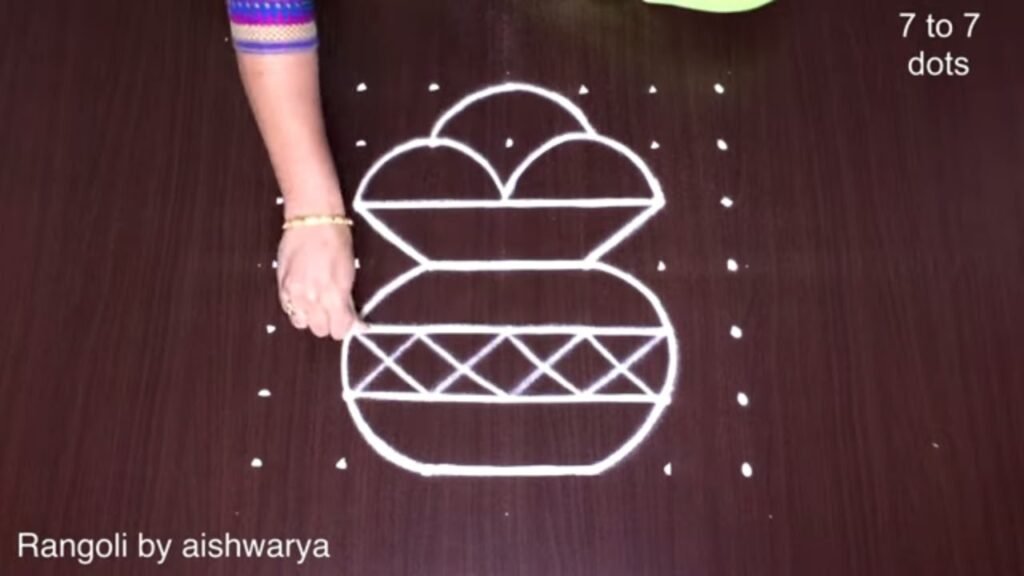
For another beginner-friendly variation, try Easy Pongal Pot Kolam.
Draw This Rangoli for Bhogi Small | Chukkala Muggulu 7×7 Dots Pot Kolams for Pongal Thank you so much for watching Channel
My Rangoli Channel Contains : Rangoli Designs Sankranthi Muggulu
Diwali Rangoli Ratham Muggulu Kolam Designs
Muggulu Designs Chukkala Muggulu Easy Rangoli
Simple Rangoli Easy Rangoli Designs Dhanurmasam Muggulu
Melikala Muggulu Geethala Muggulu Sivarathri Muggulu
Tip: Work from the centre outward. It keeps the symmetry honest and prevents the design from drifting off-balance.
Pot kolams for Pongal, especially those designed with a 7×7 dot grid, are a beautiful way to welcome the festival of harvest. These intricate patterns often depict traditional clay pots filled with the bounty of the season, symbolizing prosperity and abundance. The process of creating a pot kolam can be meditative and enjoyable, making it an excellent choice for beginners. You can explore more about similar designs in our Pongal Pot Kolam Colourful post.
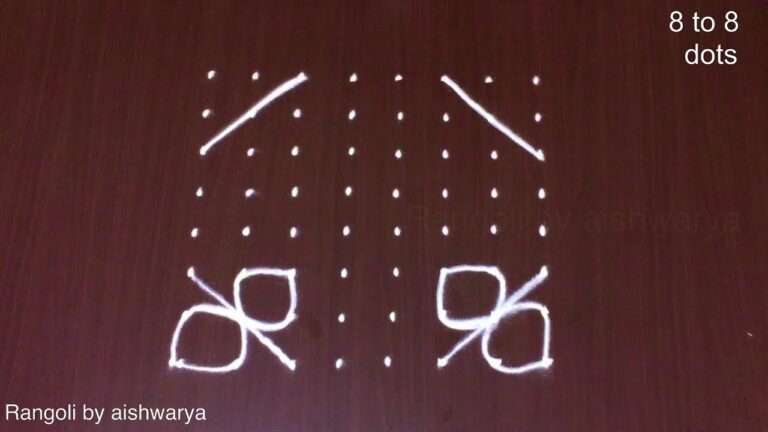
These kolams are typically drawn on the morning of Bhogi, a day dedicated to discarding old belongings and embracing new beginnings. The vibrant colors and detailed designs of pot kolams add joy and festivity to the household. For those looking to enhance their skills further, consider checking out our 8 to 8 Navratri Durga Pooja Kolam post, which offers unique patterns that can inspire your creativity. To learn more about the art of rangoli, visit this page.
Pot Kolams For Pongal — Step by Step Guide
Use the steps below as a reference card while the video plays. Most learners finish on the second attempt.
- Set out the dot grid – 7 to 7 dots – in the middle of your space and build outward; every element below repeats four times around that centre.
- In the middle draw one large closed outline with four fat rounded lobes, one pointing up, one down, one left and one right, pinched in between the lobes so the whole shape reads as a rounded four-leaf clover.
- In the pinched middle of the clover draw an upright spindle: a long narrow shape with a rounded head at the top and another at the bottom, and a small round bead set inside each head.
- Flank the spindle with an eye-shaped petal on the left and another on the right, each holding a comma-shaped curl inside, then add four long leaves pointing to the four diagonals and rule short parallel strokes across each leaf as veins.
- Off the tip of each clover lobe build a petal cluster: a wide eye-shaped leaf in the middle with a spiral coiled inside it, and two or three long pointed petals fanning around it, every tip aimed away from the centre.
- In each of the four diagonal corners, between two of those clusters, draw a spray of about six long teardrop petals radiating from a single point, and shade each petal solidly with close strokes.
- Run a short stem from each spray in toward the centre and hang small round berries along it in pairs, three or four pairs, with a little cluster at the tip.
- Leave the four clover lobes and the ground between the sprays empty so the shaded petals carry the contrast; add your chosen colours only if you want the design coloured.
What You Will Learn
- Simple Rangoli Designs
- Rangoli
- Muggulu
- Rangoli Designs
- Rangoli Kolam
- Kolam
Frequently Asked Questions
How do I draw this rangoli?
It looks complex but follows a simple rhythm: dots first, then loops. Mark the grid, take a breath, and trace the curves at a steady pace. The pattern emerges on its own.
Is this suitable for beginners?
Absolutely. You can pause and rewind the video at every step. The pattern is straightforward once you have the grid down.
What materials do I need?
You will need rice flour or rangoli powder (white, plus your choice of colours), a flat surface like a clean floor or courtyard, and optionally a dot stencil if you are new to grid-drawing.
How long does it take?
A 9 min 41 sec video shows the complete sequence. On paper or floor, expect to spend around a quarter of an hour from grid to finished pattern.
Half the skill of kolam is learning to slow down. Put on some music, give yourself the time, and let the curves come naturally.

Leave a Reply