This muggulu patterns with dots tutorial walks you through every step from the dot grid to the final pattern.
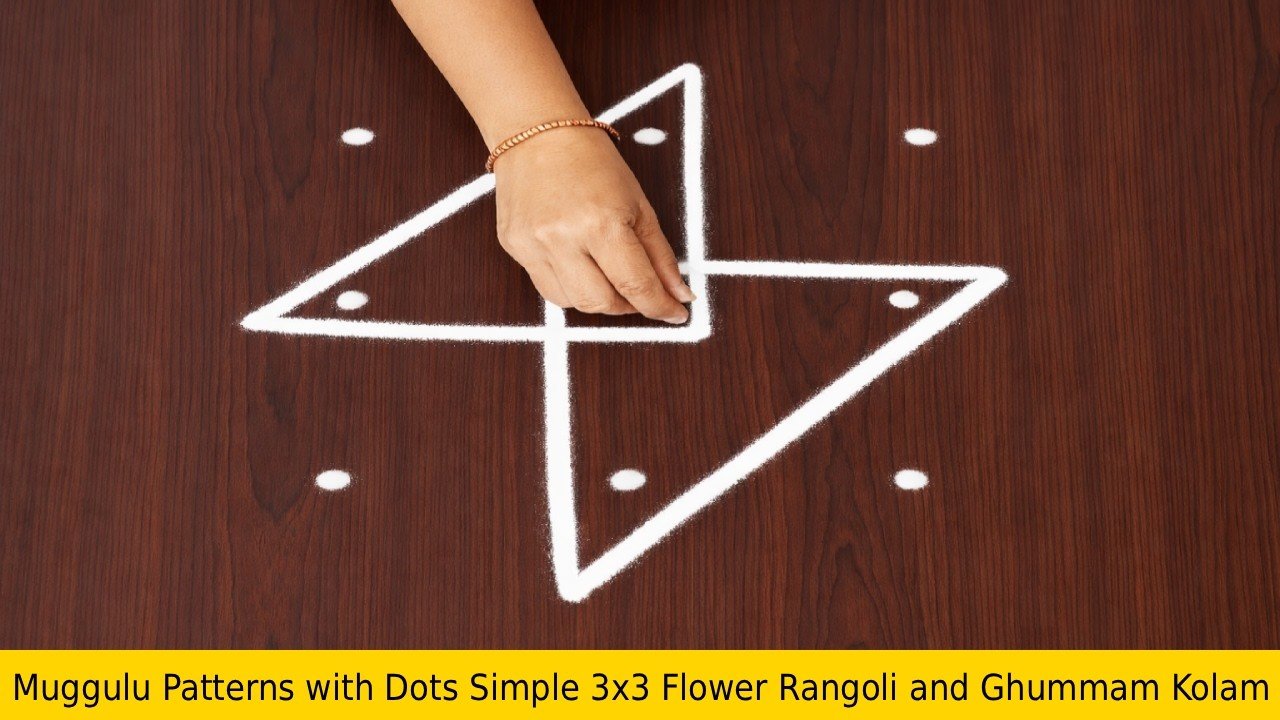
Drawing Rangoli 7 is a relaxing, almost meditative practice. The dots guide your hand and the design unfolds naturally.
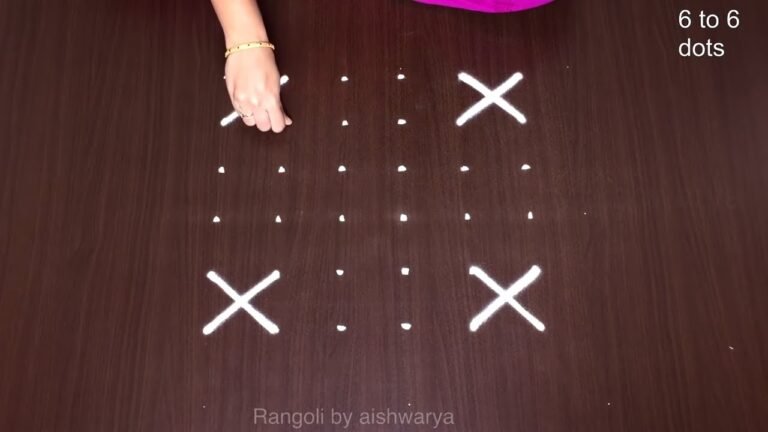
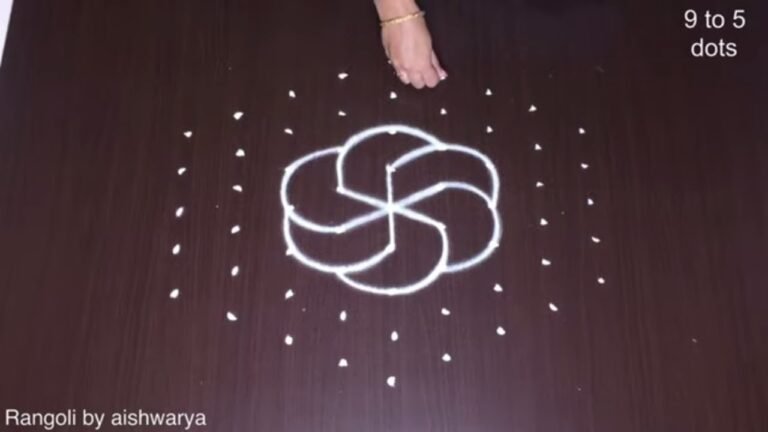
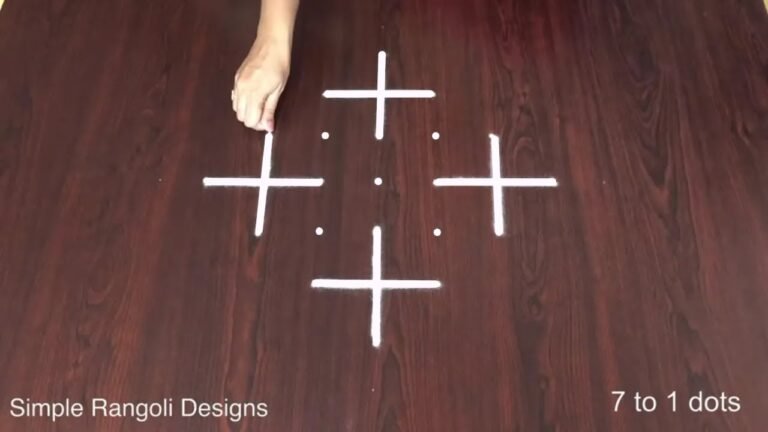
Looking for a compact and elegant 3×3 dots flower rangoli for your entrance? This simple ghummam kolam is perfect for small spaces and daily decoration. In this video, I guide you step by step to create neat muggulu patterns with dots simple 3×3 using a clear square grid. If you enjoy symmetrical and beginner-friendly rangoli with dots, this tutorial will help you draw smooth curves and maintain balance.
We begin by placing the 3×3 dot structure carefully to form a strong base. Then the floral framework develops gradually into a graceful and compact pattern. Because of the small grid, this design is easy to recreate and ideal for apartments and narrow entrances. How to construct a proper 3×3 dot grid How to create balanced flower rangoli designs
How to refine curves in ghummam kolam style How to draw neat and symmetrical muggulu patterns with dots This design works beautifully as a ghummam kolam for doorways and also fits under daily rangoli designs categories. The small layout makes it beginner-friendly while still looking elegant and decorative.
If you are searching for compact dot kolam designs, simple floral muggulu, or neat entrance patterns, this 3×3 design will help you practice structured dot placement confidently. Watch till the end to see how the simple 3×3 grid transforms into a charming and symmetrical kolam.
Tip: Use chalk to lightly mark your dot grid first — it wipes away cleanly once your rangoli is finished.
This elegant 3×3 flower rangoli is a delightful addition to your Diwali celebrations, offering a compact yet striking design suitable for small spaces. The ghummam kolam style emphasizes smooth curves and symmetry, making it an ideal choice for beginners. By carefully placing the dots and gradually developing the floral framework, you can create a beautiful pattern that enhances your entrance. For more inspiration, you might enjoy exploring Big Dot Rangoli Muggulu or Attractive Simple Kolam Design.
The simplicity of this design doesn’t compromise its elegance, making it perfect for daily decoration as well as festive occasions. As you progress through the tutorial, you’ll gain confidence in your ability to create balanced patterns and refine your techniques. This rangoli not only celebrates the spirit of Diwali but also reflects the rich tradition of rangoli art in Indian households. Its compact layout ensures that even in limited spaces, you can add a touch of beauty and festivity to your home.
Muggulu Patterns With Dots — Step by Step Guide
These steps are written for absolute beginners. Watch once, draw once, then watch again — that is how the pattern locks in.
- Clear a flat surface and set down your dot grid using rice flour or chalk.
- Confirm the dot spacing is even — uneven dots are the biggest cause of wobbly curves.
- Begin tracing from the centre outward, following the curves shown in the video above.
- Fill the petals and sections with your chosen colours, working one area at a time.
- Finish the edges with a fine line for a sharp, photograph-ready result.
What You Will Learn
- Rangoli
- Muggulu
- Rangoli Designs
- Kolam
- Chukkala Muggulu
- Simple Rangoli
Frequently Asked Questions
How do I draw this rangoli?
It looks complex but follows a simple rhythm: dots first, then loops. Mark the grid, take a breath, and trace the curves at a steady pace. The pattern emerges on its own.
Is this suitable for beginners?
It is one of the more forgiving designs in our collection. Beginners often pick it as a confidence-builder before moving on to larger grids.
What materials do I need?
Just three things: powder (white plus any colours you want), a flat dry surface, and a few minutes of focus. A small bowl per colour helps keep things tidy.
How long does it take?
The video clocks in at 1 min 41 sec. Allow about quarter of an hour to draw the design at a comfortable pace.
Pin this for later or share with a friend learning kolam — and let us know in the comments which design you would like next.
Leave a Reply