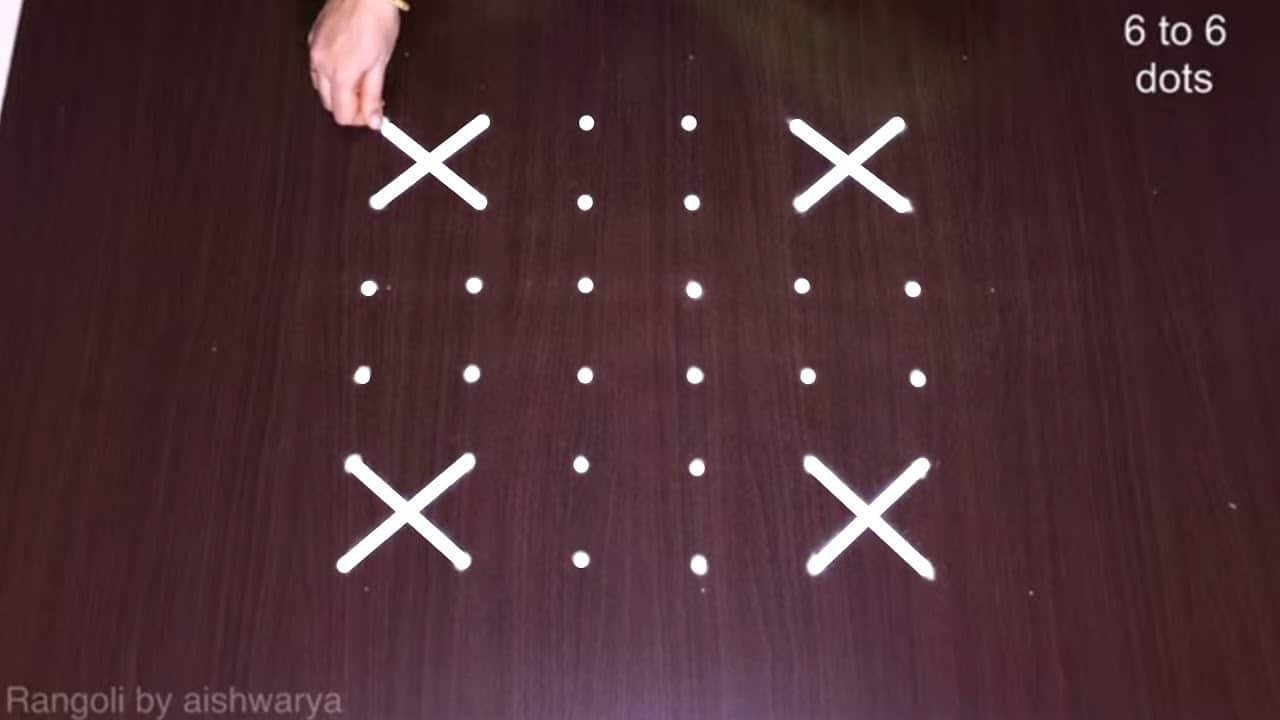
Imagine a curator trying to keep a kolam the way a museum keeps a bronze. Within hours the powder scatters, the lines soften, the object is gone — and nothing important has been lost, because the tradition was never in the object. It is in the knowledge that draws it, and that knowledge is alive in another pair of hands a street away. This is what heritage scholarship calls intangible cultural heritage: culture preserved in skills, custom, and practice rather than in things — and rangoli is as clean an example as exists.
Heritage without objects
The intangible-heritage idea recognises that much of what matters in human culture never takes durable physical form: performing arts, oral traditions, craft knowledge, festivals, social custom. Such traditions survive exactly as long as people continue to practise them — no archive of recordings can keep a song sung or a design drawn. Rangoli belongs squarely here. Its designs are deliberately temporary; its continuity has never depended on any of them surviving; and a world with every kolam photographed but no one drawing would have lost the tradition entirely. The category has a governing instrument behind it, and its wording is strikingly apt. UNESCO’s 2003 Convention for the Safeguarding of the Intangible Cultural Heritage defines intangible heritage as the “practices, representations, expressions, knowledge, skills” that communities “recognize as part of their cultural heritage”, and describes it as “transmitted from generation to generation” and “constantly recreated” — a phrase that reads like a description of a threshold redrawn each morning. Its named domains include social practices, rituals and festive events, and traditional craftsmanship. Its definition of safeguarding is equally pointed: measures ensuring viability, in which documentation appears as one item in a list running through research, promotion and revitalisation, with transmission through formal and non-formal education named explicitly. What applies here is that framework, not a listing: no Indian floor-art tradition is inscribed on the Convention’s lists.
Knowledge in the hands
What the practising population holds cannot be fully written down. The steadiness of a pour, the judgement of spacing, the rhythm that keeps a line even — these are embodied knowledge, acquired through the watching-and-repeating apprenticeship described in How the Hand Learns, and they exist only in people. A recorded design is a reference; it becomes heritage again at the moment someone draws it. This is why the tradition’s true archive has always been its practitioners, and why conserving the art means, before anything else, keeping that population practising.
The custodians
The institution that has done most of the conservation is the household. Families introduced each generation to technique, style, and custom, in a cycle where every learner eventually becomes a teacher; neighbourhoods and local communities widened the circle, sharing designs, discussing innovations, and holding the collective memory of regional styles. These custodians preserved the tradition not by preventing change but by keeping the essential knowledge in continuous use — a method that has outperformed every archive ever built, because it stores the ability rather than the artefact.
What documentation does
None of which makes the record worthless — it makes its role precise. Books, photography, film, and digital archives hold what memory might drop: rare patterns, regional variants, the work of practitioners who leave no students. Research documents techniques and histories; museums, unable to collect the ephemeral object, preserve the process instead — demonstrations, interpretation, education. Newer computational tools extend the same support, organising large collections and finding recurring motifs across thousands of images. All of it serves practice and none of it substitutes for practice: documentation is the tradition’s insurance, not its life. That insurance is unevenly distributed, and the gap is worth naming: some traditions carry a century of scholarship while others survive almost entirely in oral transmission within rural communities, undocumented in any language a researcher is likely to read. This encyclopedia states where it stands on that map — several tradition entries remain unwritten precisely because the regional scholarship needed to write them responsibly does not yet exist, and the chapters say so rather than filling the space.
What a maintained reference work adds
A reference work is a form of conservation in its own right, and a specific one. Exhibitions close and individual studies age, but a continuously maintained encyclopedia can hold two things at once: stable identities — one entry per concept, consistent terminology, fixed references that later scholarship can cite against — and evolving knowledge, revised as research arrives. That combination is what lets regional traditions be compared on equal terms instead of described in isolation, and it is why the gaps and gates recorded here matter as much as the entries: a reader learns not only what is known, but how securely.
Change is not the enemy
Safeguarding a living tradition is routinely confused with freezing it, and the tradition’s own history refutes the confusion. Rangoli has adapted continuously — new materials, shrinking urban thresholds, printed patterns, digital communities — and remains recognisably itself, because what defines it was never a fixed set of designs but a body of knowledge and a practising community. Heritage work that supports practitioners, teaches learners, and documents diversity preserves the tradition; heritage work that tries to fix its historical form preserves only a moment of it. Adaptation outside the tradition carries its own obligations, and they are worth stating in a chapter about safeguarding: understand the regional context a motif comes from, represent it without misleading about its origin, credit the communities whose knowledge it is, and keep the line clear between an inherited form and an original composition. Borrowing that observes those four things extends the tradition’s reach; borrowing that ignores them quietly detaches the work from the people who made it possible.
Kept by being done
The conclusion is the one the practice itself draws every morning. Each day’s design is an act of conservation — knowledge exercised, demonstrated, and passed within reach of whoever is watching. The archive that matters is the practising population; the preservation plan that works is participation. An art with no originals turns out to have the most robust conservation model of all: it is kept by being done, and it is done again tomorrow.
References
- Vijaya Nagarajan, Feeding a Thousand Souls: Women, Ritual, and Ecology in India — An Exploration of the Kōlam, Oxford University Press, 2018.
- UNESCO, Convention for the Safeguarding of the Intangible Cultural Heritage, Paris, 17 October 2003 (in force 20 April 2006).
- Marcia Ascher, “The Kolam Tradition”, American Scientist 90(1), 2002.
Further Reading
- Jyotsna Kilambi, “Toward an Understanding of the Muggu: Threshold Drawings in Hyderabad”, RES: Anthropology and Aesthetics 10, 1985.
This entry publishes at Evidence Level E2: its claims rest on at least two independently verified sources.
Cite this entry: “Heritage That Lives Through Practice.” Rangoli Encyclopedia, Rangoli Designs, https://rangolidesigns.net/encyclopedia/heritage-through-practice/ — a permanent URL under the encyclopedia’s stable-identity policy. Entry last reviewed 2026-07-30.