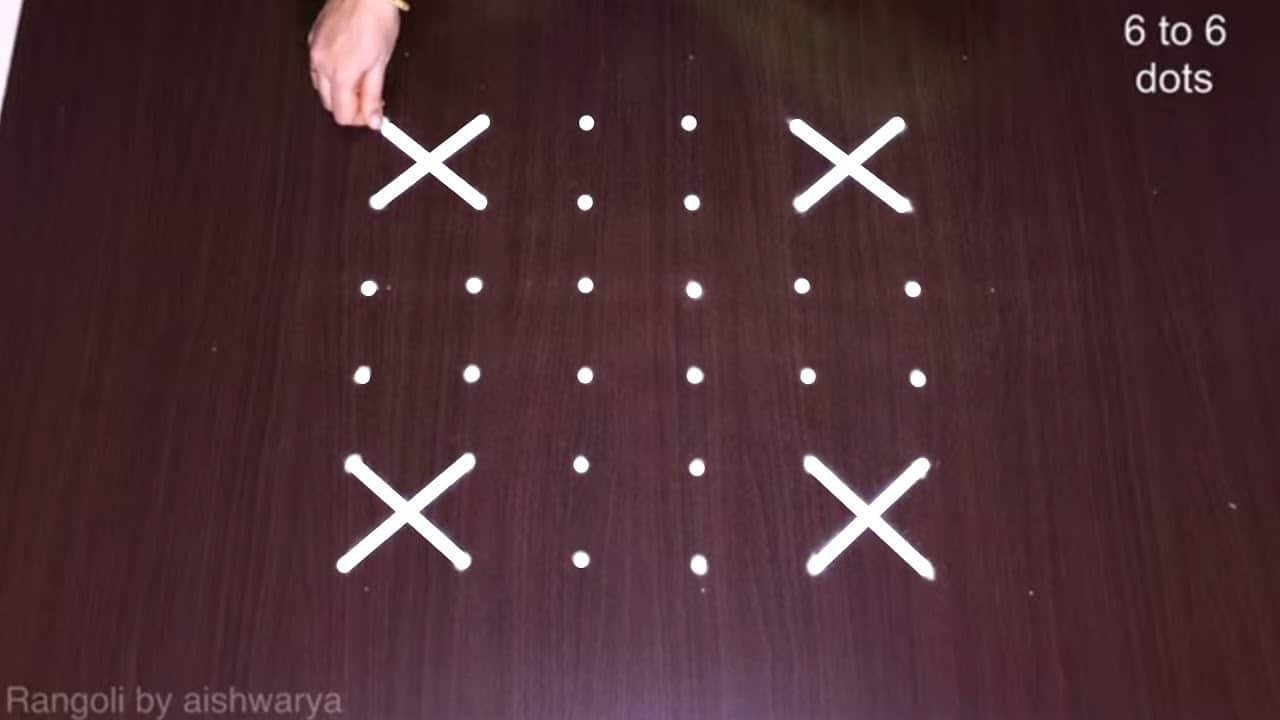
The tool-kit of this art is famously small, and its centrepiece cannot be bought. The hand — fingers metering the powder, wrist shaping the curve, arm carrying the line — is the instrument the whole tradition is built around, and everything else in the kit exists to serve it.
The original instrument
In the traditional method a pinch of powder rides between thumb and forefinger, and the line exists because the fingers release it evenly while the hand travels. Nothing in the modern catalogue has replaced this: the finger-drawn line responds to pressure, speed, and intention with a sensitivity no dispenser matches, and the accessibility that made the art universal begins here — a practitioner needs powder, ground, and a trained hand, nothing more. The training is the price: the metering that looks effortless is years of muscle memory, which is why the technique essays of this encyclopedia’s Techniques chapter treat the hand at length.
The quiet kit
Around the hand sits a modest inventory refined by practicality. Bowls, plates, and trays keep colours separate, dry, and reachable; coconut shells and small vessels have served for centuries. Sieves and fine mesh spread even fields of colour over large areas — backgrounds laid by sifting, outlines still drawn by hand. For big ceremonial layouts, string, chalk marks, and simple measures rough out centres and proportions before the freehand work begins: planning aids, abandoned the moment the real drawing starts.
The newer helpers
The modern additions are cones and dispensers — narrow-mouthed tools that regulate flow for fine detail and lettering, valuable to beginners and detail-work alike — and stencils, which reproduce a pattern instantly and teach structure to a learner, at the cost of everything freehand practice builds. The tradition’s verdict on both is consistent and sensible: useful servants, poor masters. Experienced practitioners fold them in where they help and set them aside where they would substitute for skill. The same applies at the digital end — design software, projection, tablets — which now assist planning, teaching, and preservation without touching the actual act of drawing.
Tools follow skill
The kit’s lesson is its proportions: after centuries of refinement, the art’s equipment still fits in a basket, because the tradition invested in the practitioner instead. A master with bare hands outdraws a beginner with every aid ever manufactured; the tools extend ability but cannot supply it. In an art whose materials cost nearly nothing and whose instrument is the body, mastery is the only expensive component — and the only one that cannot be bought. That economy is also the tradition’s reach: an art requiring no workshop, no apparatus, and no purchase beyond a handful of powder could be practised by any household at any threshold, which is precisely how it came to be practised by nearly all of them. The smallness of the kit is not a limitation the practice tolerates; it is the design decision that made the practice universal.
References
- Vijaya Nagarajan, Feeding a Thousand Souls: Women, Ritual, and Ecology in India — An Exploration of the Kōlam, Oxford University Press, 2018.
- Jyotsna Kilambi, “Toward an Understanding of the Muggu: Threshold Drawings in Hyderabad”, RES: Anthropology and Aesthetics 10, 1985.
Further Reading
- Marcia Ascher, “The Kolam Tradition”, American Scientist 90(1), 2002.
This entry publishes at Evidence Level E2: its claims rest on at least two independently verified sources.
Cite this entry: “The Hand and Its Helpers.” Rangoli Encyclopedia, Rangoli Designs, https://rangolidesigns.net/encyclopedia/the-hand-and-its-helpers/ — a permanent URL under the encyclopedia’s stable-identity policy. Entry last reviewed 2026-07-29.