Definition
Pongal is the Tamil harvest festival, celebrated in mid-January when the sun enters Capricorn and the month of Thai begins — four days of thanksgiving at the close of Margazhi, and the summit of the kolam year: the weeks before it carry the tradition’s largest and most elaborate threshold drawings, and the festival mornings its most celebratory.
History
Nagarajan’s ethnography records Pongal as the culmination of the Margazhi kolam season — the month of pre-dawn practice that precedes it — with households competing informally in scale and intricacy as the festival approaches. The festival itself is ancient in the Tamil record as the harvest thanksgiving of the solar transition; its four days each carry a name and a focus — Bhogi, the day of discarding the old; Thai Pongal, the boiling of the new rice; Mattu Pongal, the honouring of cattle; Kaanum Pongal, the day of visiting — and the drawing follows the sequence, renewed each morning through the cycle.
Description
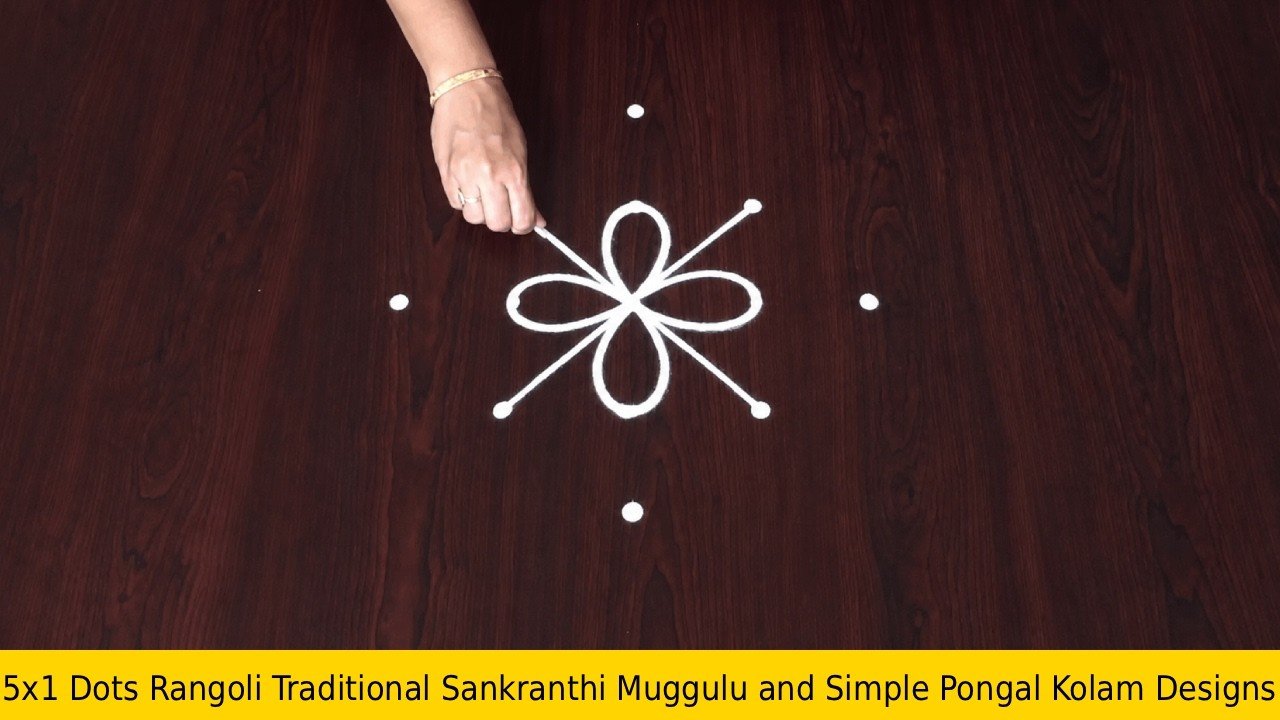
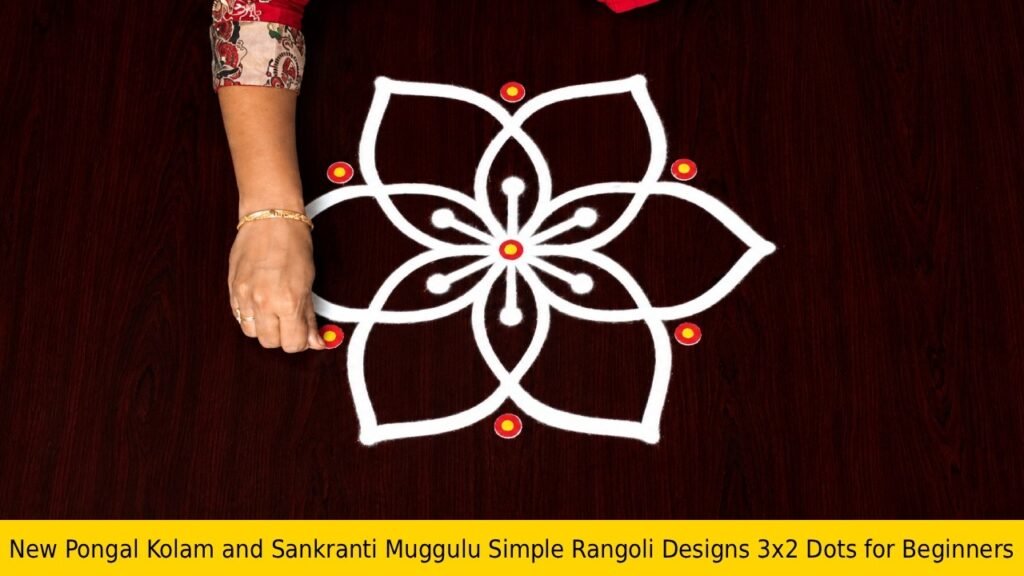
Pongal-season kolams grow in every dimension: grid counts rise, colour joins the customary white, and designs spill from thresholds across the street frontage. The festival’s own imagery dominates the drawing — the overflowing pot of boiling rice that gives Pongal its name, drawn brimming at the moment of sunrise; sugarcane stalks flanking the design as they flank the real doorway; the sun disc for the solar turn the festival marks — alongside the season’s grid and interlaced repertoire at its most ambitious. On Mattu Pongal, cattle imagery joins the vocabulary in households that keep the day’s honours.
Cultural Context
Practitioners commonly describe Pongal kolams as thanksgiving made visible — abundance drawn at the door of a household that has received it. The pot boiling over, the festival’s central act, is read as prosperity overflowing, and the morning’s cry of pongalo pongal as the boil rises belongs to the same gesture of announced plenty. The drawing shares the festival’s fresh-start grammar: Bhogi’s clearing of the old year’s things is followed by the new year’s finest designs on cleaned ground. These meanings are attributed, held broadly across Tamil practice.
Regional Variations
Pongal is Tamil; the same mid-January solar transition is kept in Telugu practice as Sankranti, with muggulu conventions of its own — the fullest treatment of that parallel season is Muggulu at Sankranti. Within Tamil Nadu, urban and village practice differ mainly in scale and the ground available: apartment thresholds take compact festival designs, while village frontages carry the street-wide work the season is famous for.
Related Topics
The month of preparation is Margazhi; the everyday practice the festival amplifies is described in Daily Practice and Kolam; the brimming pot the festival draws is the Kalash‘s harvest cousin, and the sun disc is Sun.
Gallery
References
- Vijaya Nagarajan, Feeding a Thousand Souls: Women, Ritual, and Ecology in India — An Exploration of the Kōlam, Oxford University Press, 2018.
Further Reading
- Marcia Ascher, “The Kolam Tradition”, American Scientist 90(1), 2002.
This entry publishes at Evidence Level E1: common knowledge within the tradition, anchored to a verified standard reference.
Cite this entry: “Pongal.” Rangoli Encyclopedia, Rangoli Designs, https://rangolidesigns.net/encyclopedia/pongal/ — a permanent URL under the encyclopedia’s stable-identity policy. Entry last reviewed 2026-07-28.