Definition
The moon motif — chandra — appears in two principal forms: the crescent, two intersecting curves tapering to points, and the full disc, often paired with stars or a lotus. Where the sun motif radiates, the moon reposes: it is the rangoli vocabulary’s figure of calm, and its gentle asymmetry gives artists a compositional tool no other celestial form provides.
The crescent is among the simplest constructions in the whole vocabulary — two curves and their enclosed negative space — and one of the most recognisable. Artists embellish it with floral ornament, dots, stars, and radiating patterns without ever obscuring the double curve that is its identity.
History
Lunar imagery runs through temple sculpture, manuscript painting, astronomical diagrams, devotional art, miniatures, and textiles. Its cultural weight is calendrical before it is artistic: the moon was humanity’s first visible calendar, and Indian practice still runs substantially on lunar reckoning — the timing of Diwali, Holi, and a long roll of observances depends on specific phases, and purnima, the full moon, names festival dates of its own. Generations that scheduled their year by the moon’s changes naturally drew what they watched.
Indian astronomy formalised that watching early and thoroughly, tracking lunar cycles with the precision the calendar demanded; the observatories of the early modern period stand as late monuments to that long habit of exact attention. The drawn crescent inherits both registers — the poet’s moon and the astronomer’s.
Description
Design practice values the crescent for a specific service: it introduces asymmetry without breaking balance. A composition of circles and radial figures can turn static; a crescent set among them adds direction and movement while its curves keep the family resemblance. The standard repertoire includes the single crescent, the full moon with stars, moon-and-lotus pairings of celestial calm and floral purity, and lunar festival designs keyed to phase-dated occasions.
The full-disc form works oppositely: pure completeness, usually reserved for centres and for compositions about fulfilment. Between crescent and disc the artist has, in effect, the whole lunar cycle to draw from — and some festival designs render the phases in sequence, the calendar made visible.
Cultural Context
The moon’s attributed meanings grow from its observed behaviour. It changes continually and always returns: waxing and waning became the culture’s standing image of impermanence with continuity — decline followed by renewal, endings opening into beginnings. Its light is reflective and cool where the sun’s is radiant and hot, so the moon gathered the inward qualities: serenity, contemplation, emotional balance, quiet wisdom. Literature amplified all of this; few objects in nature have carried more poetry, from moonlit landscapes to the moon as metaphor for beauty and compassionate calm.
In Hindu iconography Chandra personifies the moon, depicted on a celestial chariot and crowned with the crescent; lunar associations with coolness, nourishment, and the measure of time run through ritual life. The sun-moon pairing is the deep structure: complementary forces — day and night, action and rest, radiance and reflection — and compositions that include both are quietly stating that completeness requires the pair. These are attributed meanings in this encyclopedia’s sense, carried by two curves and a circle.
Before printed calendars, the moon organised the community’s year in fact: agriculture, travel, festivals, and observances were all scheduled by its dependable cycle, and that practical intimacy is why the motif never feels abstract. A household drawing a crescent for a phase-dated festival is continuing the oldest habit the symbol records — watching the sky to know the time, and marking the ground to honour it.
Regional Variations
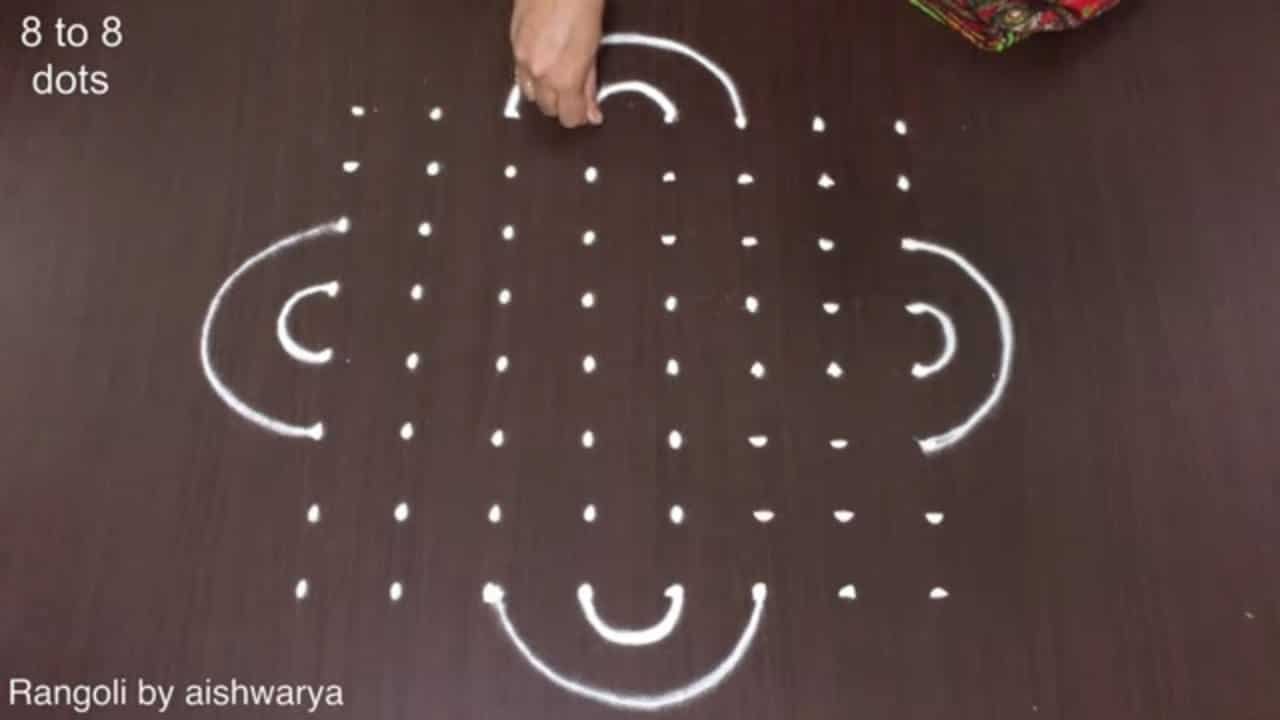
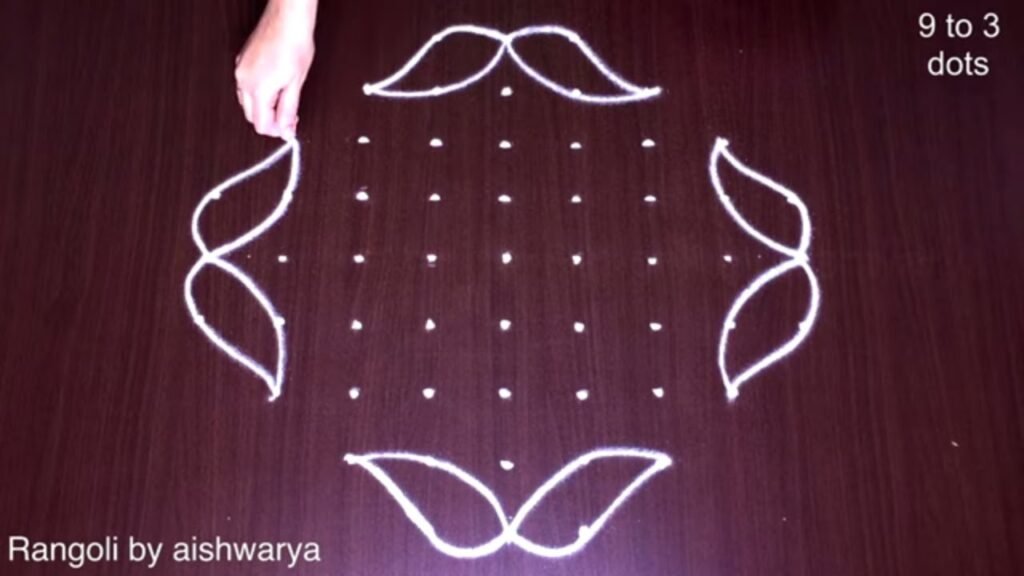
Lunar motifs appear across the regional traditions wherever phase-dated festivals are drawn for: crescents among the northern and western festival vocabularies, counted-grid moons in southern practice, painted discs in the eastern rice-paste arts. Contemporary design uses the crescent everywhere from children’s materials to graphic identity, and modern artists increasingly pair the traditional symbolism with astronomical literacy — the same object, watched by both traditions.
Related Topics
The moon’s counterpart is the Sun; its companion figures are the Star and Lotus; its phase-dated occasions include Diwali and Varalakshmi Vratam; the philosophy of its cycle is treated in Chapter 1’s essay on impermanence.
Gallery
References
- Vijaya Nagarajan, Feeding a Thousand Souls: Women, Ritual, and Ecology in India — An Exploration of the Kōlam, Oxford University Press, 2018.
Further Reading
- Jyotsna Kilambi, “Toward an Understanding of the Muggu: Threshold Drawings in Hyderabad”, RES: Anthropology and Aesthetics 10, 1985.
This entry publishes at Evidence Level E1: common knowledge within the tradition, anchored to a verified standard reference.
Cite this entry: “Moon.” Rangoli Encyclopedia, Rangoli Designs, https://rangolidesigns.net/encyclopedia/moon/ — a permanent URL under the encyclopedia’s stable-identity policy. Entry last reviewed 2026-07-28.