Definition
Janmashtami — Krishna Jayanthi in Tamil, Krishnashtami or Gokulashtami in Telugu — marks Krishna’s birth, and it carries the one threshold convention in the calendar that is unmistakably narrative: small feet drawn entering the house.
History
The household observance welcomes the child Krishna into the home, and the drawn form follows the story literally. Where most threshold designs are patterns that mark an occasion, the Janmashtami footprints are a depiction of an arrival — set at the entrance and drawn walking inward, toward the room where the offering is placed.
Description
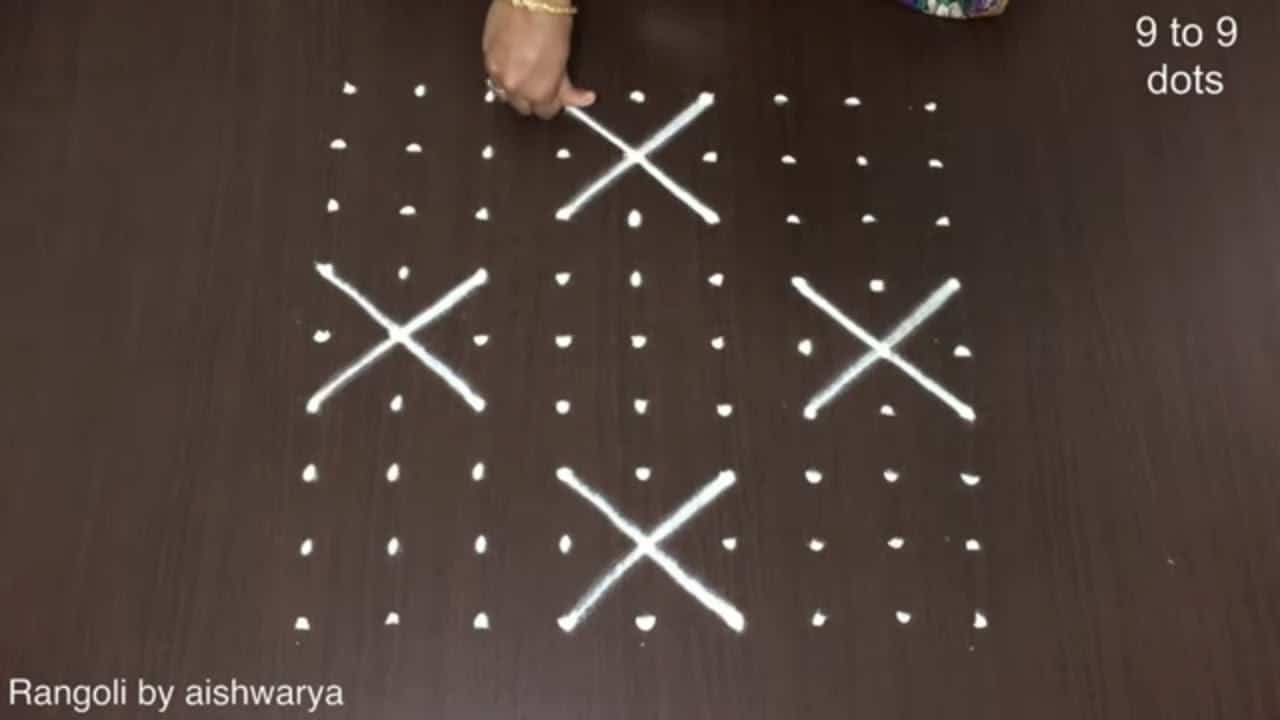
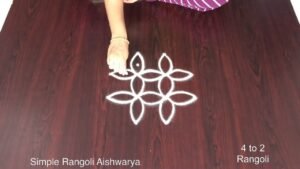
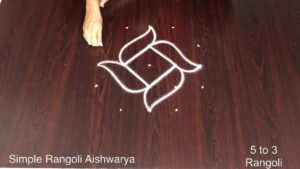
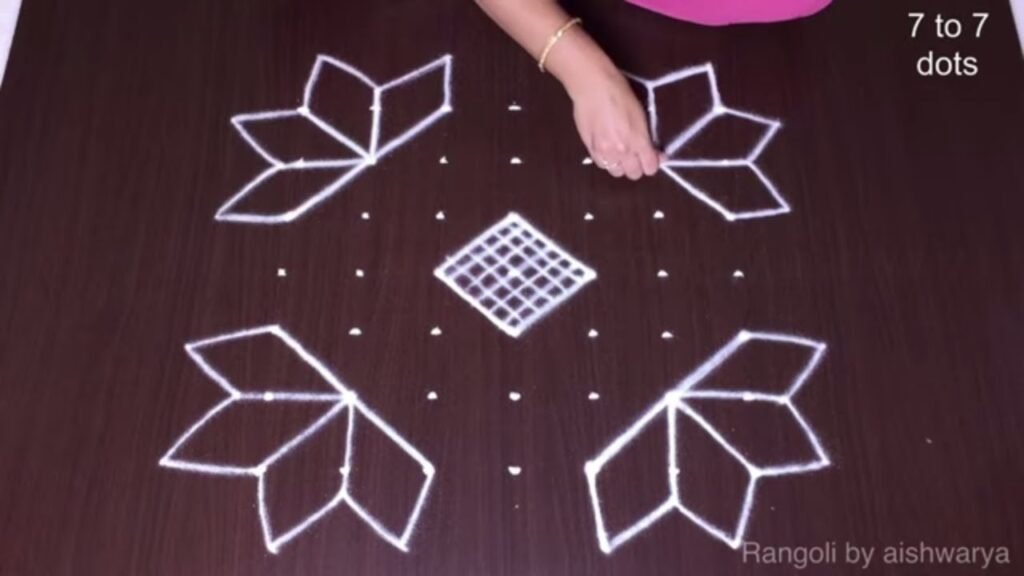
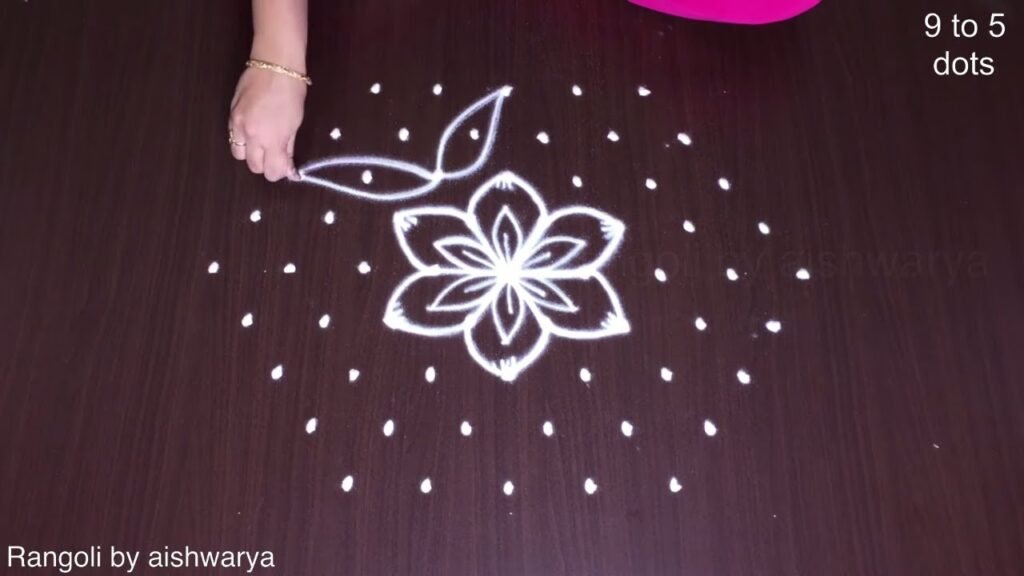
The design library shows the ordinary dot-grid vocabulary carrying the festival — Krishna Jayanthi Kolam Designs 7, Krishna Jayanthi Kolam 5 to 3 Dots, 9×9 Krishnastami Rangoli Small — with dot counts in the usual range rather than anything exceptional. The regional names travel together on a single design in Gokulastami and Krishnastami Rangoli, which is a useful record in itself: the same practice, titled twice, for two audiences.
Cultural Context
The footprint convention is worth separating from the pattern work around it. A kolam is drawn to be walked over; the Janmashtami feet are drawn to represent walking. It is a rare case of the threshold design becoming representational about the threshold itself, and it explains why the festival’s designs are often placed asymmetrically — oriented along the path of entry rather than centred for symmetry.
Regional Variations
Tamil households keep it as Krishna Jayanthi and draw kolam; Telugu households as Krishnashtami or Gokulashtami and draw muggulu; the northern Janmashtami shares the observance without the same daily threshold-drawing tradition. The corpus carries all three names.
Related Topics
Gallery
References
- Vijaya Nagarajan, Feeding a Thousand Souls: Women, Ritual, and Ecology in India — An Exploration of the Kōlam, Oxford University Press, 2018.
Further Reading
- Jyotsna Kilambi, “Toward an Understanding of the Muggu: Threshold Drawings in Hyderabad”, RES: Anthropology and Aesthetics 10, 1985.
This entry publishes at Evidence Level E1: common knowledge within the tradition, anchored to a verified standard reference.
Cite this entry: “Janmashtami.” Rangoli Encyclopedia, Rangoli Designs, https://rangolidesigns.net/encyclopedia/janmashtami/ — a permanent URL under the encyclopedia’s stable-identity policy. Entry last reviewed 2026-07-31.