

Definition
Daily practice is the foundation the festivals amplify: the modest threshold design drawn every ordinary morning — white, quick, and renewed after each day erases it. In the regions where it is strongest it is not an event but a habit, as embedded in the morning as sweeping the ground it is drawn on.
History
The dailiness is the practice’s most studied trait: Nagarajan’s ethnography is built around the everyday kolam — its dawn timing, its transmission from mother to daughter, and its quiet persistence through urbanisation — and Kilambi documents the same daily rhythm for the Hyderabad muggu.
Description
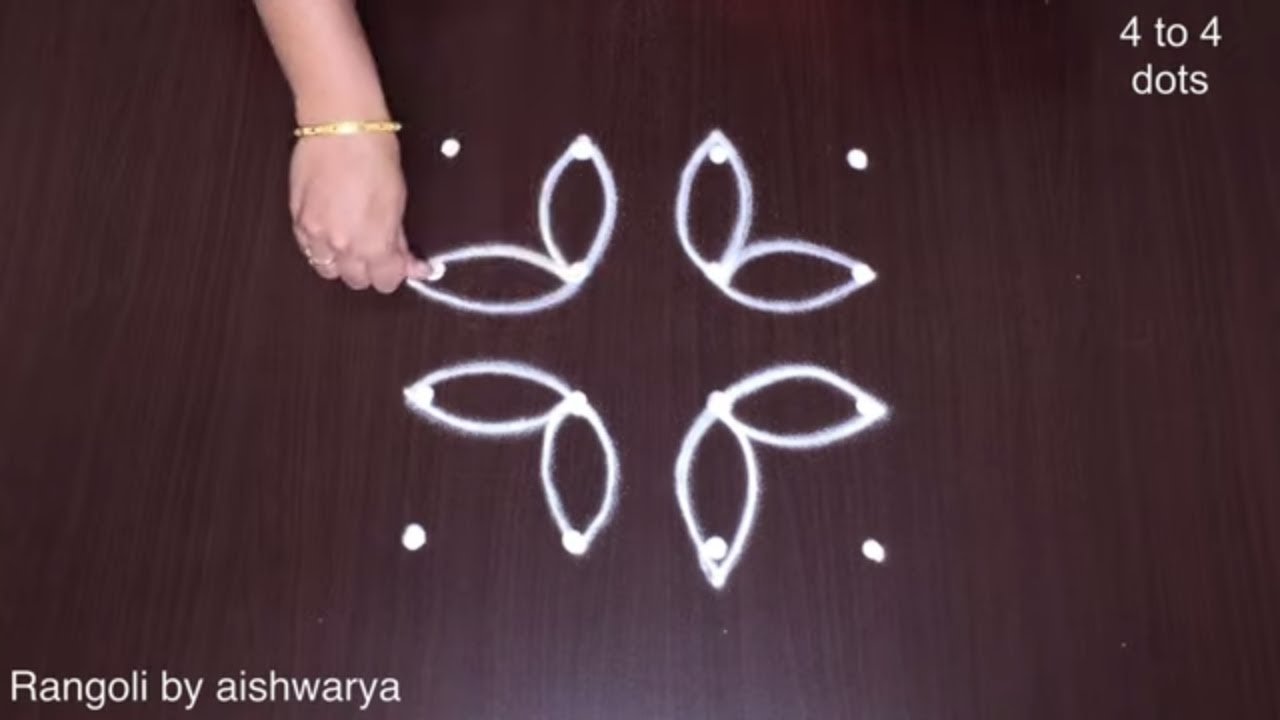
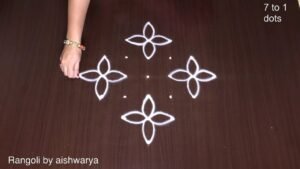
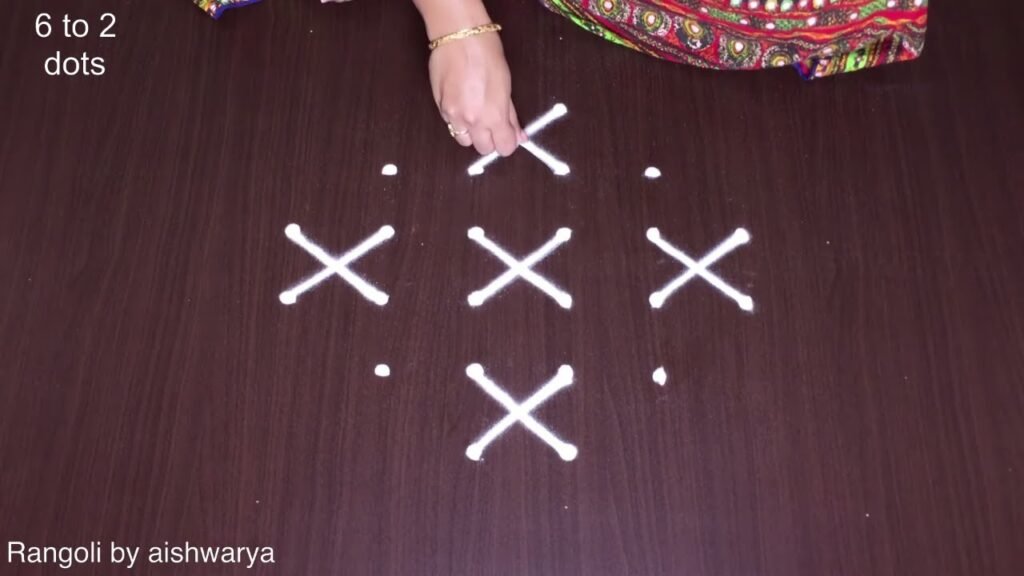
The ground is swept and often dampened; a small grid or freehand design goes down in rice flour in a few practised minutes, before the household’s day begins. Ordinary-day designs are white and modest — Fridays and minor observances raise them slightly — and by evening the drawing has been walked into memory, to be replaced at the next dawn.
Cultural Context
The daily design is commonly read as the household’s morning signal — well-being made visible at the door — and its absence traditionally communicates mourning. Nagarajan documents the further, widely voiced understanding of the rice-flour drawing as a first act of feeding: an offering to ants and birds that begins the day with generosity. These meanings are attributed, held in varying combinations.
Regional Variations
Daily drawing is strongest in the south — Tamil kolam and Telugu muggulu keep it as a living everyday practice — while in much of the north and west the art is now chiefly festival-bound, returning to thresholds at Diwali and weddings.
Related Topics
The daily traditions are Kolam and Muggulu; the season that intensifies the habit is Margazhi; the fastest daily forms use the Line Structure.
Gallery
References
- Vijaya Nagarajan, Feeding a Thousand Souls: Women, Ritual, and Ecology in India — An Exploration of the Kōlam, Oxford University Press, 2018.
- Jyotsna Kilambi, “Toward an Understanding of the Muggu: Threshold Drawings in Hyderabad”, RES: Anthropology and Aesthetics 10, 1985.
Further Reading
- Marcia Ascher, “The Kolam Tradition”, American Scientist 90(1), 2002.
This entry publishes at Evidence Level E2: its claims rest on at least two independently verified sources.
Cite this entry: “Daily Practice.” Rangoli Encyclopedia, Rangoli Designs, https://rangolidesigns.net/encyclopedia/daily-practice/ — a permanent URL under the encyclopedia’s stable-identity policy. Entry last reviewed 2026-07-28.