



Definition
Aadi is the Tamil month spanning mid-July to mid-August — a goddess-focused stretch of the ritual year whose Tuesdays and Fridays (Aadi chevvai, Aadi velli) are marked at thresholds with larger and more careful kolams than an ordinary morning receives.
History
The ethnography documents the Tamil year’s drawing intensity as seasonal — rising in goddess-focused months and peaking in Margazhi — and Aadi’s heightened Fridays belong to that documented rhythm. The month’s own calendar is full: Amman temple festivals run through it, and Aadi Perukku on its eighteenth day keeps the rivers’ rising — the monsoon’s gift acknowledged at the water’s edge. The month is otherwise treated within general practice, and this article stays within that frame.
Description
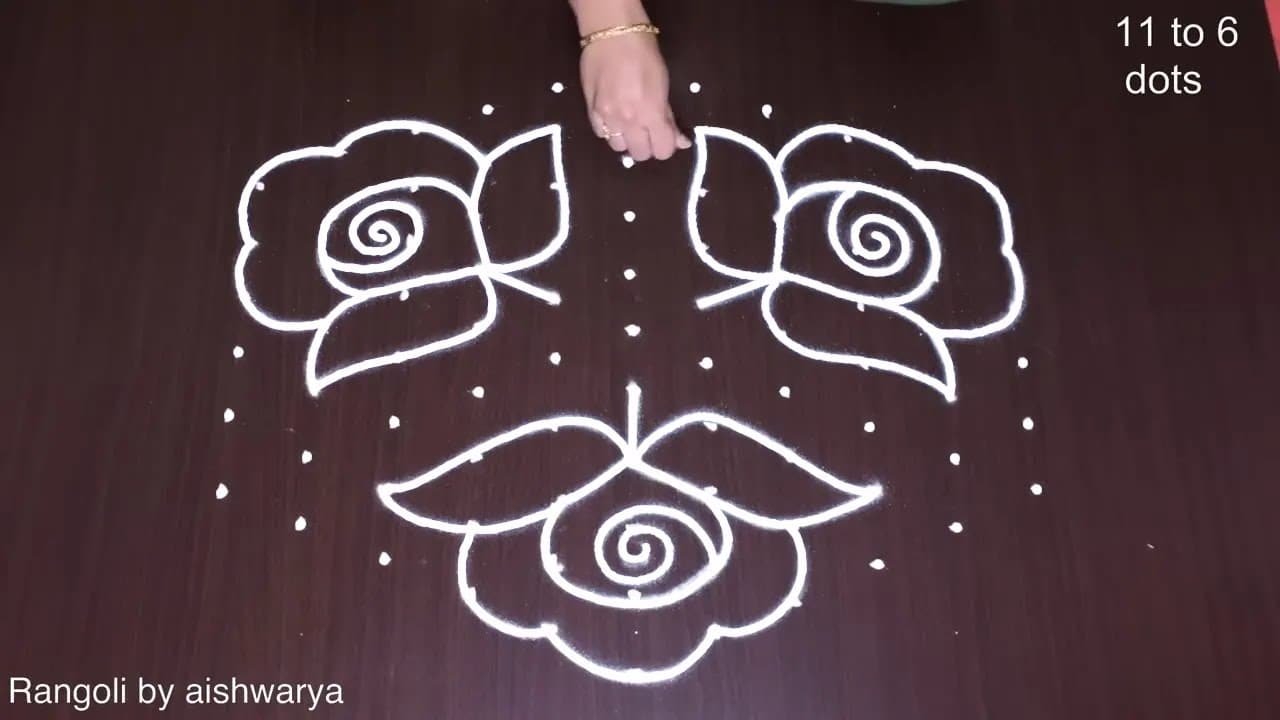
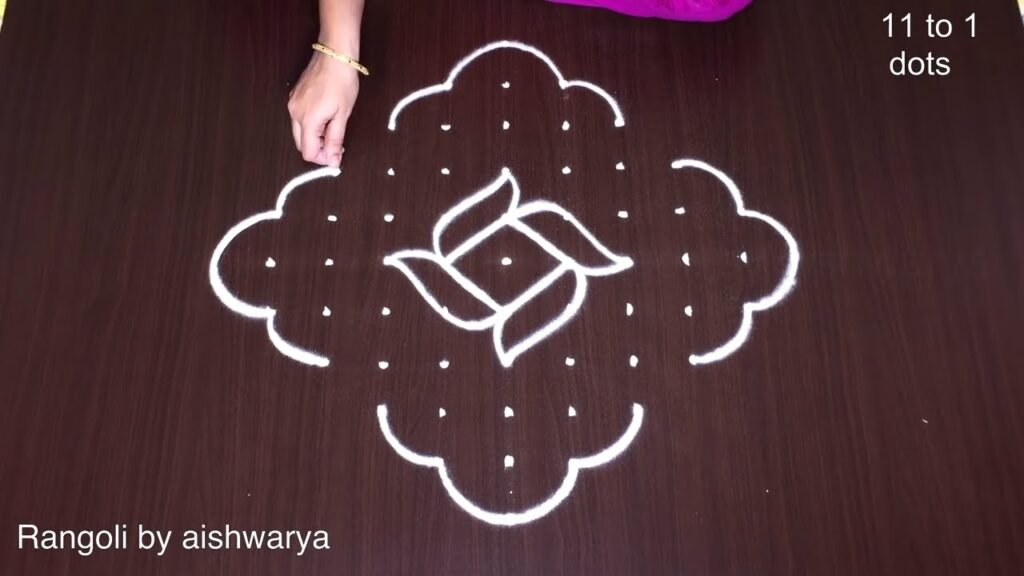
Aadi drawing is a weekly cadence rather than a single festival morning: ordinary days keep the modest white kolam, while the month’s Tuesdays and Fridays bring red-bordered designs — flour edged with kavi ochre — and goddess emblems at the door. Amman temple festivals through the month extend the same conventions to temple streets, and households observing Aadi Perukku carry the day’s thanksgiving into the morning’s design.
Cultural Context
Aadi is commonly described in Tamil practice as the goddess’s own month — a time of heightened care at boundaries and thresholds — and the intensified Friday kolam as that care made visible. The southwest monsoon’s arrival threads through the month’s observances: rain, rivers, and sowing give Aadi its agricultural weight, and the month’s reputation as paused time — new ventures traditionally deferred — concentrates attention on observance instead. All these framings are attributed.
Regional Variations
Aadi is Tamil; the Telugu calendar’s Shravana, which overlaps it, carries the corresponding goddess Fridays — including Varalakshmi Vratam — with muggulu conventions of its own. The red-edged Aadi border is the month’s most recognisable regional signature, and the kavi that draws it is among the materials described in The Natural Palette.
Related Topics
The Friday peak within the month is Varalakshmi Vratam‘s southern-calendar counterpart; the baseline it intensifies is Daily Practice; the red-edged bands are described under Line Structure.
Gallery
References
- Vijaya Nagarajan, Feeding a Thousand Souls: Women, Ritual, and Ecology in India — An Exploration of the Kōlam, Oxford University Press, 2018.
Further Reading
- Jyotsna Kilambi, “Toward an Understanding of the Muggu: Threshold Drawings in Hyderabad”, RES: Anthropology and Aesthetics 10, 1985.
This entry publishes at Evidence Level E1: common knowledge within the tradition, anchored to a verified standard reference.
Cite this entry: “Aadi.” Rangoli Encyclopedia, Rangoli Designs, https://rangolidesigns.net/encyclopedia/aadi/ — a permanent URL under the encyclopedia’s stable-identity policy. Entry last reviewed 2026-07-28.